National Dance Company's Choreographer Project spotlights 3 emerging artists
A body struggling to keep its balance. Another unable to find rest under the midnight sun. A boxer counting the seconds before getting back on his feet.
These are the starting points for three new works by emerging choreographers in the National Dance Company of Korea's 2026 Choreographer Project, which will present Lee Ei-sul's "Can't Kill It," Song Yun-joo's "White Night," and Seon Seung-hoon's "COUNT" from Friday through Sunday at the Daloreum Theater in Seoul.
Launched in 2023, the project aims to nurture the next generation of choreographers working in Korean dance. Previous participants, including Choi Ho-jong, Jung Bo-kyung and Lee Jae-hwa, have continued developing their work and gaining recognition on Korean and international stages.
This year's productions approach contemporary life through different physical experiences.
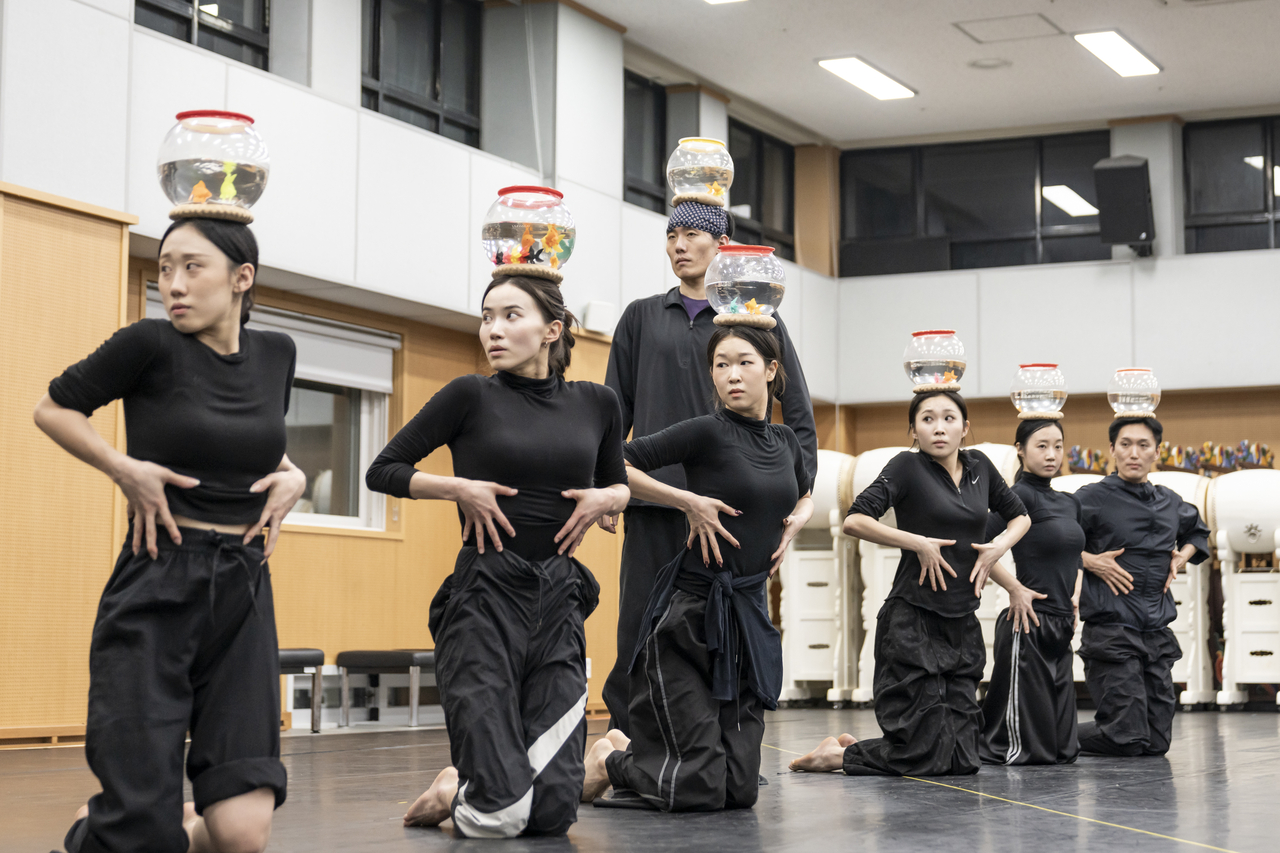
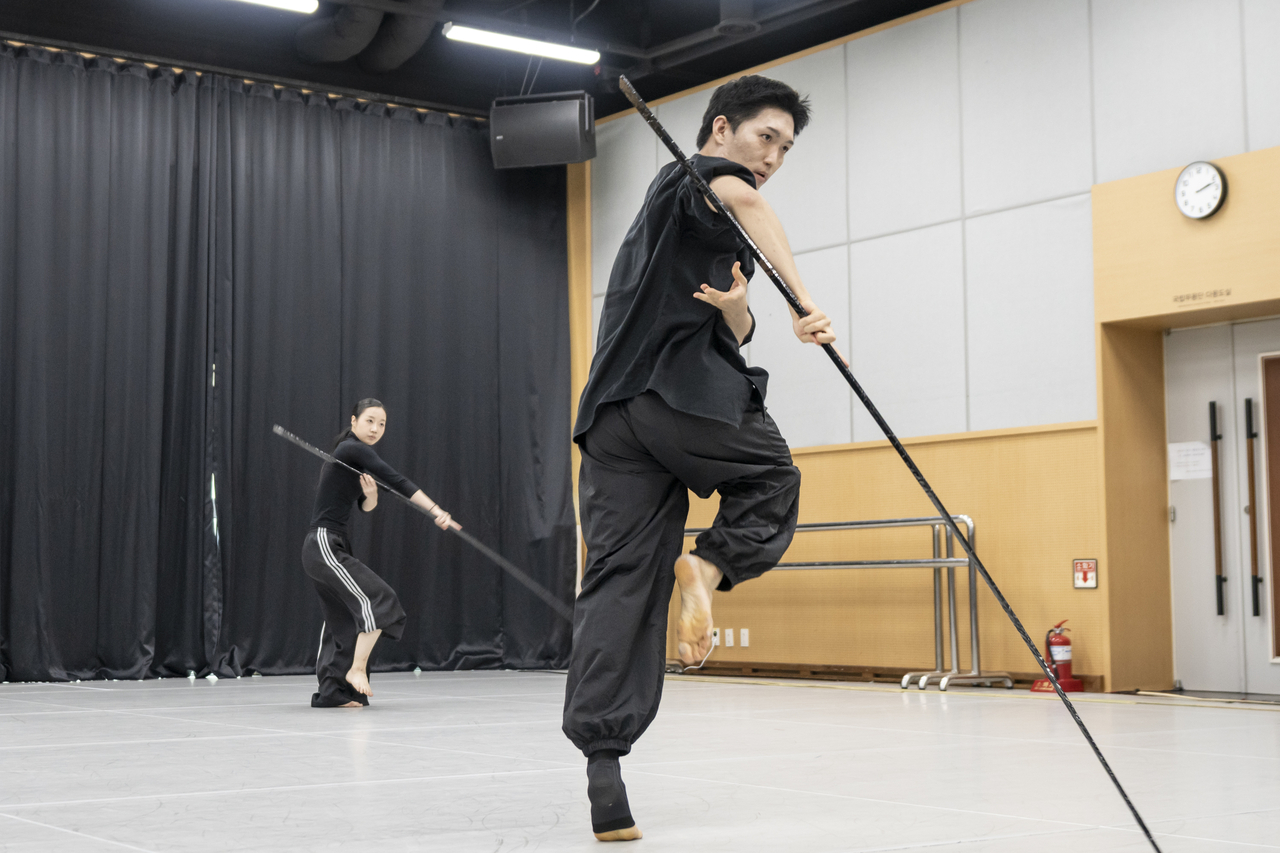
In "Can't Kill It," Lee Ei-sul examines a body conditioned to monitor and restrain itself according to others' expectations. Using traditional drumsticks and water vessels, she explores the standards imposed on the body and the weight it is expected to carry.
The drumsticks, in particular, reflect memories accumulated through years of studying traditional Korean dance. They were not simply for playing the janggu, a traditional hourglass-shaped drum, but also tools her teachers used to direct her gaze and correct her posture.
"When I was learning Korean dance, my teachers used the janggu sticks to guide my gaze and correct my posture," Lee said in a recent group interview. "Because they dictated the rhythms and directions I was expected to follow, I sometimes felt a sense of coercion."
She transforms these objects into measures against which the body is judged and disciplined, expressing the tension through movements that tilt, sway and struggle to maintain balance.
Song's "White Night" takes inspiration from the natural phenomenon in which the sky remains bright even at midnight. She examines the restless lives of people who struggle to stop and find time to rest.
Song sought traces of Korean dance in jazz syncopation and the dancers' movements. She said dancers trained in Korean dance retain its distinctive steps and breathing patterns even when performing contemporary choreography.
"People who have studied and practiced Korean dance, I believe, can never completely step outside of it, no matter what movements they perform," she said. "There has never been a work I've created that wasn't Korean in some way."
Seon's "Count," inspired by boxing, finds common ground between the sport and Korean dance in the way the feet meet the ground. The title refers to the count given to a boxer who has fallen in the ring, marking the time allowed to get back up.
Seon said he sees Korean dance as a form that begins with the placement of the feet and expands upward through the body. After experiencing boxing himself, he recognized a similar physical principle in the sport.
"Korean dance involves a lot of pressing down, but it also has a great deal of upward movement," he said. He incorporated the sensation of the upper body becoming freer as the body's center of gravity lowers and the legs grow more stable.
Kim Jong-deok, artistic director of the National Dance Company of Korea, said audiences could expect experimental and provocative movements from the emerging choreographers, whose approaches challenge established choreographic conventions.
The project's previous participants offer a glimpse of its potential. Choi's "Beasts" earned him an acting award at the 2023 Korean Dance Critics Association Awards. Jung's "Echo" was adapted into a dance film that entered the competition at Cinedans Fest in Amsterdam in March. Lee Jae-hwa's "Mask Off," meanwhile, joined the company's repertoire in June before expanding its international reach with performances in New York and Washington in November. An Asian tour, including Thailand and the Philippines, is planned for 2027.
hwangdh@heraldcorp.com