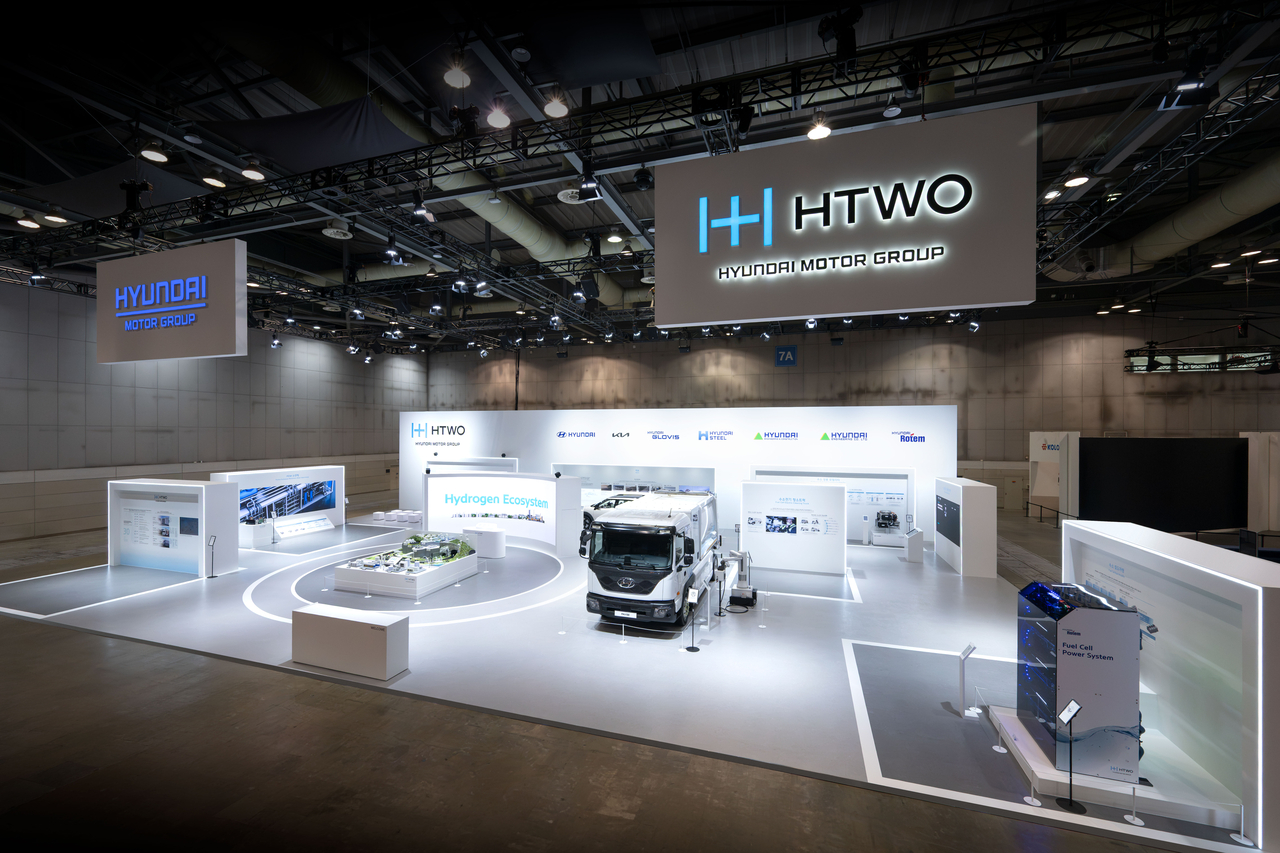
Hyundai Motor Group has unveiled an end-to-end hydrogen value chain vision at the World Hydrogen Expo 2026, showcasing how hydrogen can expand beyond traditional mobility to power AI data centers, manufacturing and advanced robotics in a zero-emission ecosystem.
The group presents integrated solutions spanning hydrogen production infrastructure, hydrogen fuel cell mobility and industrial ecosystem models at the Korea International Exhibition Center in Goyang, Gyeonggi Province, on Wednesday.
Leveraging over 30 years of hydrogen expertise, Hyundai demonstrates its advanced Proton Exchange Membrane electrolysis technology, which generates hydrogen by splitting water into hydrogen and oxygen.
The company showcases a 5-megawatt Electrolyzer Stack Module composed of 12 integrated PEM stacks for the first time. Based on the PEM technology, it can produce approximately 700 kilograms of hydrogen every day. These modules can be connected in parallel to scale up to hundreds of megawatts.
Expanding its production strategy, Hyundai highlights its Waste-to-Hydrogen (W2H) initiative, an energy model that converts organic waste into clean hydrogen fuel. Launched in July, its first HTWO Energy Cheongju facility produces 500 kilograms of hydrogen per day for local refueling, with plans to scale capacity up to 2 tons. This project is also currently being validated in Indonesia.
Hyundai’s mobility pavilion features the 2027 Nexo, the second-generation hydrogen fuel cell vehicle, offering a 720-kilometer range on a 5-minute charge. Launched in 2018, Nexo’s cumulative global sales have reached over 50,000 units as of September.
For the commercial vehicle market, Hyundai deploys the XCIENT truck and Elec City bus, which boast a competitive edge in long-distance, high-load transport compared with electrified vehicles. Notably, XCIENT fleets have sold approximately 4,000 units across 17 countries.
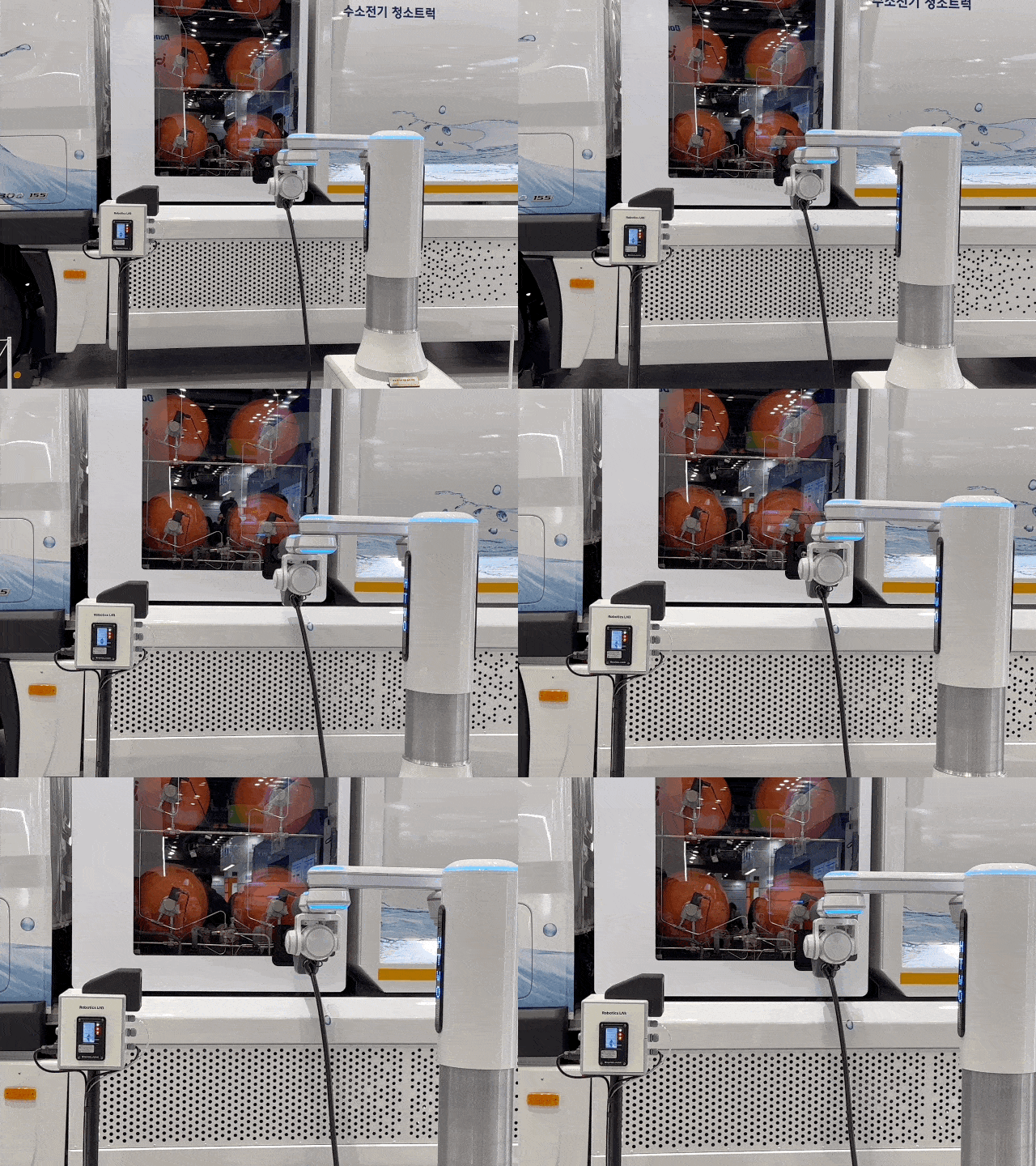
Expanding its footprint into public services and railroads, the company exhibits a clean hydrogen cleaning truck, supported by automated charging robots using vision-AI for 24-hour operations. In rail, Hyundai Rotem has designed the world’s largest 3-megawatt hydrogen locomotive to replace aging diesel trains on non-electrified routes.
Hyundai presents its future city vision that integrates its hydrogen value chain -- spanning production infrastructure, storage, supply and mobility -- into advanced industrial ecosystems.
In particular, its 9 trillion won ($6.73 billion) “Saemangeum AI Valley” project is a key model utilizing solar-generated renewable energy to produce green hydrogen, powering AI data centers, robot manufacturing plants and smart urban infrastructure.
Running from Wednesday through Friday, the WHE 2026 is co-hosted by the Korea Automobile & Mobility Association and H2KOREA.
hyejin2@heraldcorp.com