Questions remain over production, reliability, integration
South Korea launched its new military drone headquarters Monday, seeking to make uncrewed aircraft a common battlefield tool across the branches, but experts say the country needs to match production capabilities to military goals.
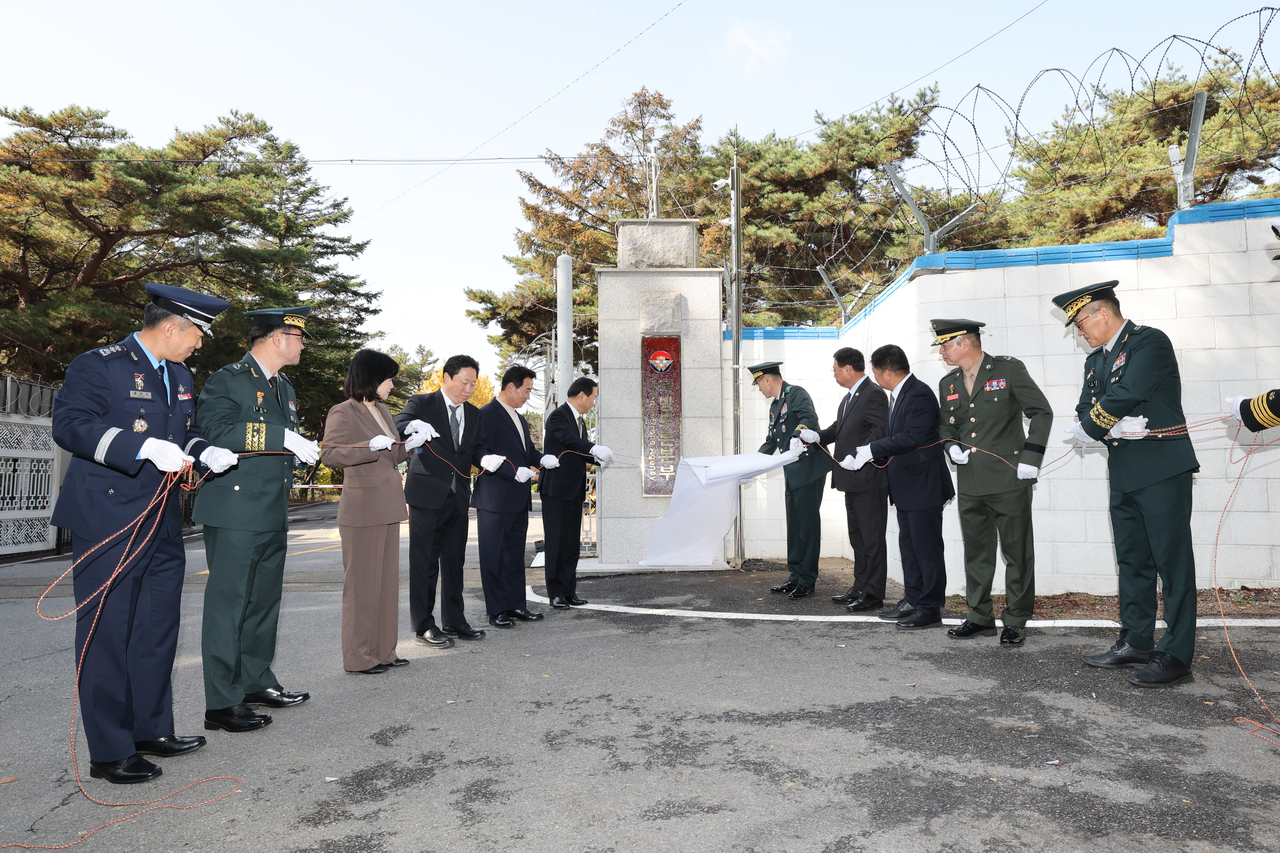
On Monday, the Ministry of National Defense held a ceremony marking the establishment of the Defense Drone Headquarters, which replaces the Drone Operations Command established in 2023.
Under the reorganization, the former command's operational units and missions will be transferred to operational commands under the Army, Air Force and Marine Corps, while the new headquarters will focus on developing combat concepts, testing new systems, supporting acquisition and promoting cooperation with the private sector.
The headquarters will have about 100 personnel, down from roughly 280 at the former command headquarters, as operational, logistics and combat-support functions are reduced.
The ministry said the change is intended to spread drone operations beyond a single specialized command, with drones eventually becoming a battlefield capability akin to a soldier's "second personal weapon."
"We must go beyond merely securing new technologies and develop them into practical combat capabilities that can be rapidly employed on the battlefield," Vice Defense Minister Lee Doo-hee said at Monday's ceremony.
Lee also called on the headquarters to link operational requirements from the individual services with civilian technologies and help ensure that equipment reaches troops quickly.
The reorganization comes as competition over uncrewed warfare capabilities between the two Koreas becomes increasingly visible.
According to Seoul's Unification Ministry, North Korea last week held what appeared to be its first exhibition devoted exclusively to drones, displaying more than 30 types according to media reports, including first-person-view attack drones and a large stealth-shaped uncrewed aircraft.
North Korean leader Kim Jong-un declared that achieving "absolute superiority" in drone technology is indispensable and ordered the rapid expansion of uncrewed aviation capabilities.
South Korea, meanwhile, plans to rapidly secure more than 20,000 low-cost, expendable drones, including short-range reconnaissance and small suicide drones, while pursuing K-Lucas for strategic strikes and suppressing enemy air defenses. The new headquarters will support such efforts through requirements planning, testing and acquisition support.
But some specialists have placed greater emphasis on how many drones South Korea can actually produce, field and integrate, rather than simply expanding the number of personnel able to operate them.
Lee Jun-gon, a professor at Konkuk University's department of defense acquisition, said a key question is whether South Korea has the production capacity to supply the right types of drones for different missions and command levels when they are needed.
"From a production perspective, the question is whether we can produce the right drones for different echelons and purposes in a timely manner — and whether we really have that capability and readiness," Lee said.
Lee noted that South Korea, despite being a major arms exporter, has yet to export military drones, saying that also reflects the limited operational validation of domestically developed systems.
Recent tests have underscored some of those challenges.
In August, a domestically developed suicide drone launched from the Navy's 14,000-ton ROKS Marado plunged into the sea seconds after takeoff during a combat trial. A second attempt ended the same way, preventing the planned strike against a maneuvering uncrewed surface target.
The Agency for Defense Development later attributed the failures to misalignment in the launch tube, saying the drone itself and other parts of the system had otherwise operated normally.
At a Defense Ministry-hosted drone technology demonstration in Pocheon, Gyeonggi Province, in September, six of 17 demonstrations also encountered problems, including crashes shortly after takeoff and systems failing to fly because of malfunctions.
For the new headquarters, the challenge may therefore go beyond spreading drones to more units.
"Another key question is how the drones and uncrewed aircraft we produce can be integrated across the Army, Navy and Air Force, both tactically and in terms of information sharing," Lee added.
flylikekite@heraldcorp.com