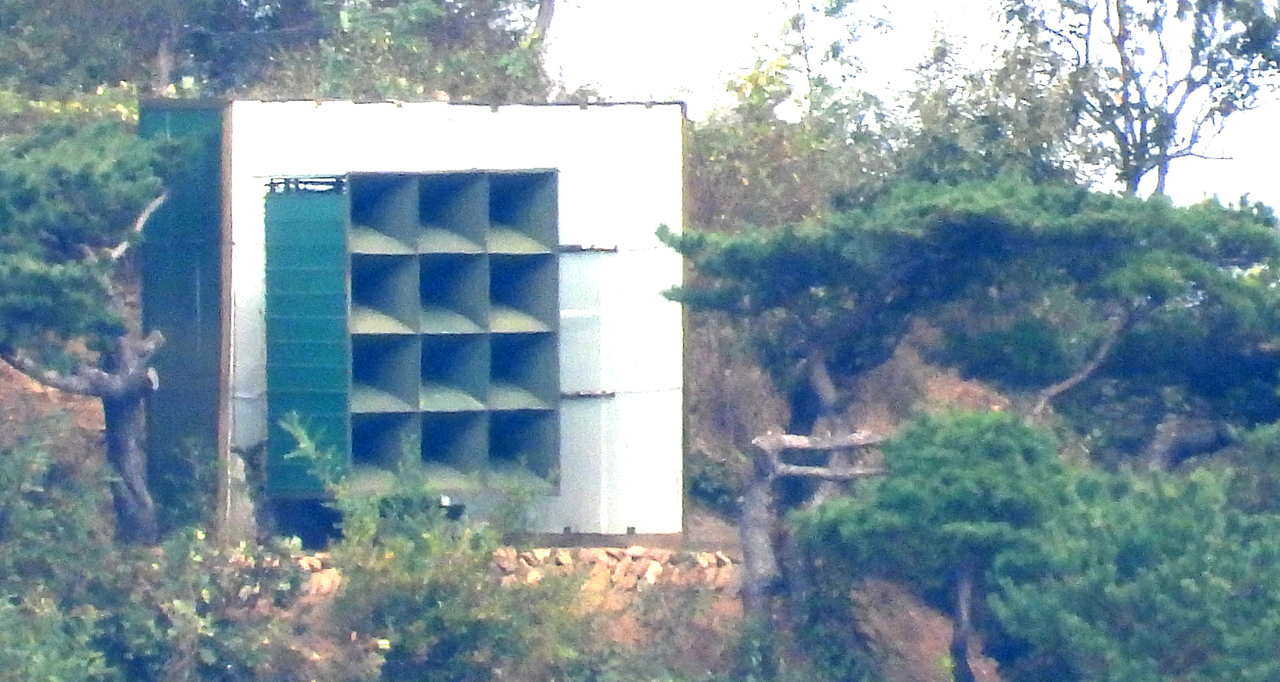
North Korea has not resumed loudspeaker broadcasts toward South Korea despite saying they would be put into operation across the inter-Korean border by the end of October, according to South Korea's Joint Chiefs of Staff.
"As of now, our military has not detected any operation of North Korea's loudspeakers toward South Korea," a JCS official said Monday.
Asked about reports from residents in border areas, including Paju, Gyeonggi Province, who said they had recently heard unusual sounds coming from the North, the official said there was insufficient evidence to conclude that Pyongyang had resumed its broadcasts.
The National Intelligence Service also told lawmakers last week that it had found no evidence that North Korea had activated its loudspeakers along the border, potentially lending more weight to the possibility of mistaken reports.
The assessment comes after Kim Yo-jong, a department director of the Central Committee of the Workers' Party of Korea and the sister of North Korean leader Kim Jong-un, threatened on Oct. 19 to resume the broadcasts and deploy additional tactical strike assets near the border.
She accused South Korean troops of repeatedly issuing warning broadcasts and firing warning shots at North Korean personnel working near the Military Demarcation Line.
Two days later, Kim said after inspecting North Korea's border fortification work that loudspeakers for psychological warfare against South Korea would be put into operation across the entire border by the end of October.
Kim tied further action to South Korean military activity along the border, even as Seoul warned that any resumption of the broadcasts could draw a proportional response, raising the prospect of another cycle of tit-for-tat loudspeaker operations.
"If you look at the statement, the threshold North Korea set for activating the loudspeakers did not appear to suggest that it would respond indiscriminately," Hong Min, a senior research fellow at the Korea Institute for National Unification, said.
"Considering the possible follow-up measures from South Korea, North Korea is more likely to watch how the situation develops than to preemptively play the 'resumption' card," Hong said.
North Korea has remained silent on Seoul's proposal last month for military talks aimed at narrowing differences over the MDL and restoring inter-Korean military communication channels.
While refraining from escalating tensions along the border, however, Pyongyang has continued to demonstrate its military capabilities through missile launches and weapons tests.
On Oct. 29, North Korea fired about a dozen short-range ballistic missiles from the Wonsan area toward the East Sea, days after Seoul's offer for military talks. The missiles flew about 250 kilometers, according to the JCS.
Hong said the contrasting moves could reflect Pyongyang's attempt to maintain pressure on Seoul while avoiding measures along the border that could immediately trigger a South Korean response.
"North Korea can continue to demonstrate its military capabilities through missile launches without necessarily escalating tensions along the border, where any action could immediately lead to a corresponding response from South Korea," Hong said.
North Korea has also continued to showcase new and existing weapons systems, including a 600-millimeter multiple rocket launcher and suicide attack drones in a weapons demonstration held last week.
flylikekite@heraldcorp.com