

Senior official says Seoul can hardly stay on the sidelines given its heavy reliance on Middle Eastern oil as other nations’ contributions to maritime security.
South Korea is weighing an expanded role for its Cheonghae naval unit, currently deployed overseas, to contribute to international efforts to restore freedom of navigation through the Strait of Hormuz, according to Cheong Wa Dae.
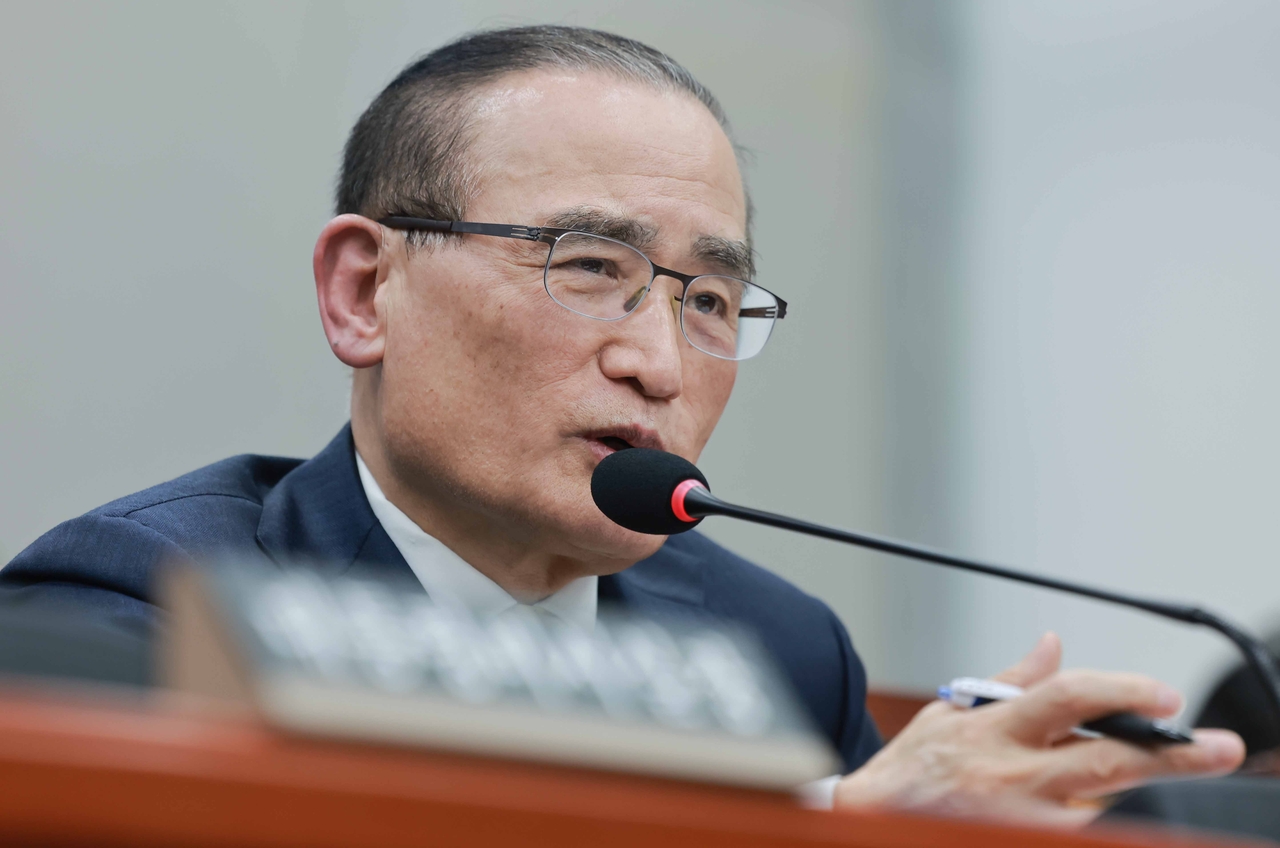
National security adviser Wi Sung-lac said the government was “continuing to explore ways to play a necessary role and make contributions to protect our citizens and safeguard our economic interests.”
“Specifically, we are carefully considering ways to expand and strengthen the Cheonghae Unit, but the review has not yet been finalized,” Wi said during a press briefing at Chuchugwan press center in Seoul on Friday.
The Cheonghae Unit, a South Korean naval contingent deployed to the Gulf of Aden off Somalia in 2009, has been tasked with escorting South Korean commercial vessels and protecting them from piracy.
Wi's remarks came amid reports in South Korean media that the government is considering expanding the Cheonghae Unit's operational area to the Gulf of Oman, near the entrance to the Strait of Hormuz, as part of a proposal to extend its deployment beyond Dec. 31, when its current mandate expires.
Under South Korea's Constitution, overseas military deployments require the National Assembly's approval. The Cheonghae Unit's deployment mandate must be renewed annually by the National Assembly, giving the government an opportunity to seek approval for an extension that could also include an expanded operational scope.
The reports have raised concerns that such an expansion could effectively amount to an indirect military deployment related to the conflict, despite Seoul's pledge not to become involved in the war.
Wi explained that a number of countries, including the UK, France and Japan, have deployed major military assets, such as destroyers and maritime patrol aircraft, to the Middle East and the Horn of Africa to escort vessels and support safe navigation even before the latest crisis in the Strait of Hormuz.
“Since the situation in the Strait of Hormuz arose, major countries have been moving to deploy additional naval vessels and aircraft,” Wi said. “The government is taking these developments into account as it explores the minimum necessary role it can play.”
Wi further said "we will explain them transparently and clearly to the public and the National Assembly once specific measures have been formulated.”
Wi, however, reiterated President Lee Jae Myung's principle of “never becoming involved in or intervening in the war under any circumstances.”
“I would like to reiterate that we will maintain our policy of undertaking the minimum necessary activities and making international contributions to protect our merchant vessels, secure crude oil shipping routes and safeguard the lives and safety of our citizens,” Wi said.
Wi underlined that Seoul has been “closely coordinating with the international community on efforts to restore freedom of navigation through the Strait of Hormuz.”
Staying on sidelines proving difficult
Speaking on condition of anonymity, a senior official at Cheong Wa Dae responded affirmatively when asked whether the government was considering expanding the Cheonghae Unit's operational area toward the Strait of Hormuz and including the expanded mission and additional maritime patrol aircraft in a proposal to the National Assembly to extend the unit's deployment.
“We are currently reviewing various options, and nothing has been decided or finalized,” the official said. “The measures you mentioned are indeed among the options under consideration.”
The official argued that South Korea's heavy dependence on Middle Eastern oil made it difficult to remain on the sidelines as other countries stepped up efforts to secure shipping routes through the Strait of Hormuz.
“Making no contribution whatsoever to the international community is a rather difficult option. The remaining question is how we do it.”
“Other countries are making contributions to the international community despite facing difficult circumstances of their own, while our dependence is exceptionally high,” the official added.
The official pointed to military deployments by the UK, France, Italy, Belgium, the Netherlands, Japan, Australia and Germany, including warships, maritime patrol aircraft and other military assets, with several countries reinforcing their presence in the broader region since the Hormuz crisis began.
The United States, meanwhile, was providing maritime and aerial escorts for ships passing through the strait, helping restore shipping traffic to roughly 60 to 70 percent of previous levels, according to the official.
But the official drew a contrast between South Korea's dependence on the waterway and that of countries already contributing military assets to the region.
“The United States does not have a high level of dependence on the Strait of Hormuz. European countries have deployed ships to the region, even though their typical dependence on the Strait of Hormuz is around 20 percent,” the official said. “Ours is 60 to 70 percent. That is the international context I want to emphasize.”
dagyumji@heraldcorp.com