

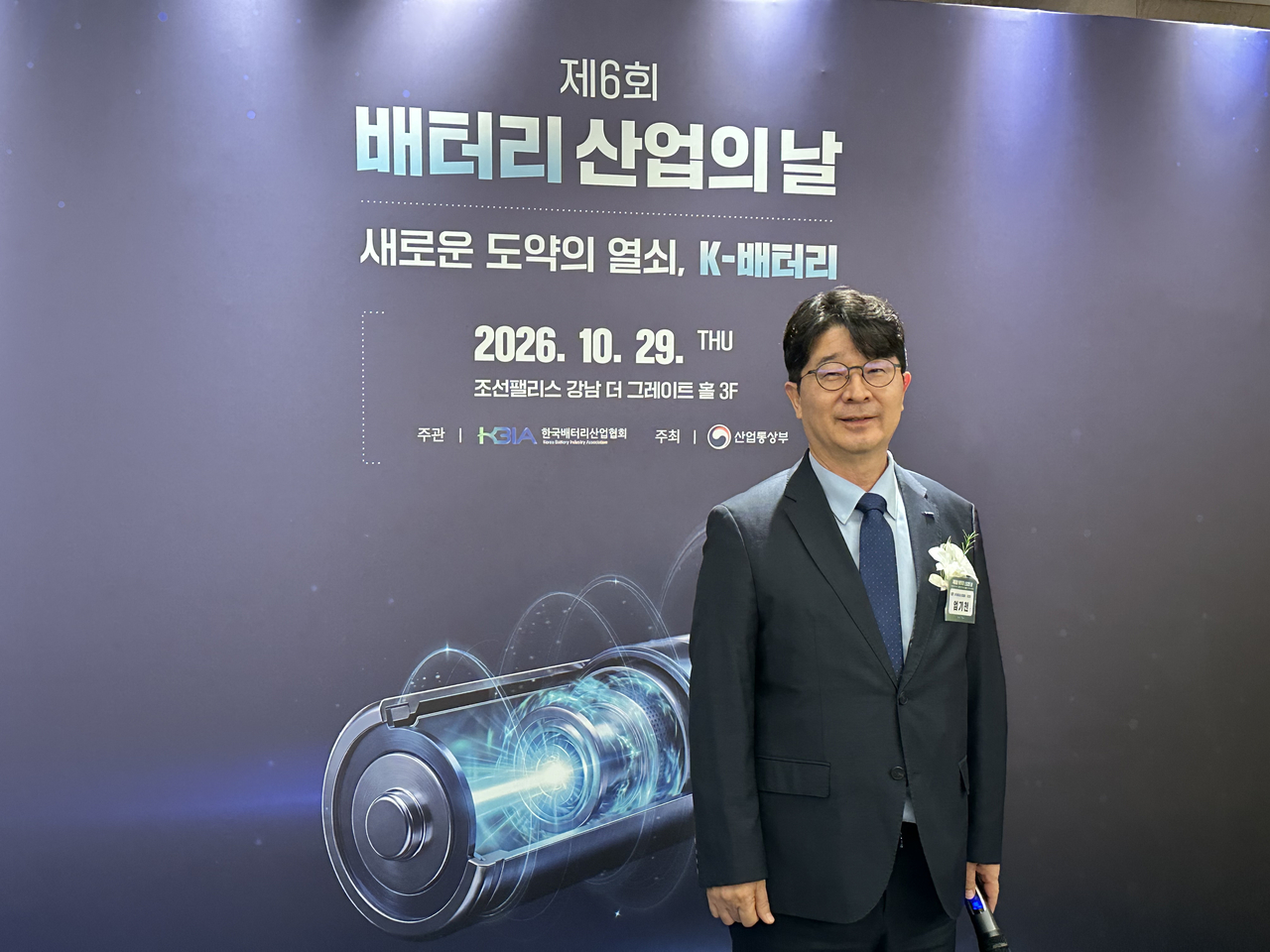
South Korea's battery industry is showing early signs of recovery as stalled electric vehicle projects resume and growing demand for energy storage systems helps offset a slowdown in the US EV market, a leading industry executive said Thursday.
Eom Ki-cheon, chairman of the Korea Battery Industry Association and CEO of Posco Future M, said global EV projects began restarting late last year, raising hopes of a gradual rebound across the battery supply chain.
Speaking to reporters ahead of Korea Battery Industry Day at a Seoul hotel, Eom said major Korean battery makers — LG Energy Solution, Samsung SDI and SK On — are seeing improving profitability, although the recovery has yet to fully reach battery materials suppliers.
He pointed to rising demand for energy storage systems, fueled by AI data centers and robust EV sales in Europe as key drivers of the turnaround.
"The US EV market has slowed, but growing demand for energy storage systems driven by AI data centers has helped Korean battery makers," Eom said. "Europe's EV market has also grown by more than 20 to 30 percent."
Eom identified factory utilization rates and shipment volumes as key indicators of a near-term recovery. Order backlogs, which typically translate into revenue over two to three years, would signal longer-term growth.
Posco Future M is already benefiting from the improving outlook, he said.
Since the second half of 2025, the battery materials maker has secured contracts covering approximately 1.5 million metric tons of cathode and anode materials. It expects to win another two or three deals totaling about 1.2 million tons by year-end, potentially lifting cumulative orders to between 2.5 million and 2.7 million tons.
The company expects shipments and factory utilization rates to begin rising in the second half of 2027, with sales volumes gaining further momentum from 2028.
On government support, Eom welcomed the proposed domestic production tax credit but warned that benefits could be limited for smaller battery suppliers struggling with losses.
Because the incentive offers corporate tax reductions, companies not generating taxable profits would receive little immediate relief, he said.
Eom said the association is working with the National Assembly and the Industry Ministry to introduce a direct cash refund mechanism to provide more effective support for domestic battery manufacturers.
hyejin2@heraldcorp.com


