
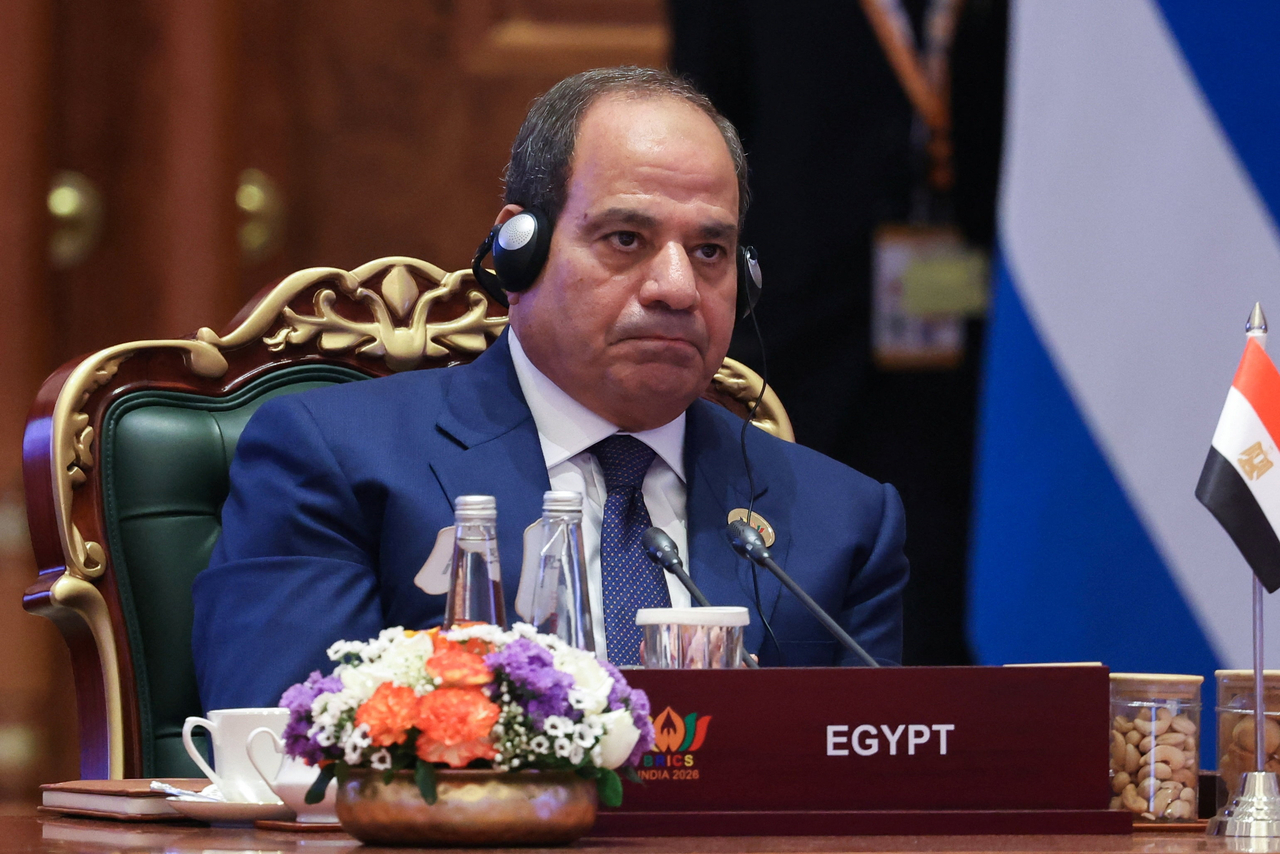
President Lee Jae Myung will hold a summit with Egyptian President Abdel Fattah el-Sissi on Thursday to advance Korea-Egypt ties toward a “strategic partnership,” Cheong Wa Dae said.
The summit will take place on the second day of Sissi’s three-day state visit to South Korea, made at Lee’s invitation, and will mark his first visit to the country in a decade, following his previous trip in 2016.
The two leaders are meeting again about 11 months since Lee visited Egypt in November last year.
“Through the summit, the two leaders are expected to hold in-depth discussions on expanding economic cooperation in areas such as trade and investment, infrastructure and supply chains, as well as people-to-people exchanges, regional developments and international issues,” senior presidential spokesperson Kang Yu-jung said in a statement.
“President el-Sissi’s state visit is expected to serve as an important opportunity to develop Korea-Egypt relations into a strategic partnership and further strengthen cooperation between Korea and the African and Middle Eastern regions.”
Egypt is a key hub for international logistics connecting Europe, Africa and the Middle East and has been one of South Korea’s key partners in the region, with the countries steadily expanding cooperation in areas including the economy, culture and education since establishing diplomatic relations in 1995, according to Cheong Wa Dae.
Energy supply chains could be key on the agenda at the summit, as instability in the Middle East heightens uncertainty over oil shipping routes.
The strategic importance of routes through Egypt has grown as both the Strait of Hormuz and Red Sea face severe disruptions and heightened military tensions.
After the Strait of Hormuz was closed, South Korean tankers began loading crude oil at Saudi Arabia’s Yanbu port on the Red Sea, effectively bypassing Hormuz.
But as risks also increased around the Bab el-Mandeb Strait at the southern end of the Red Sea, some vessels began heading north through the Suez Canal into the Mediterranean, then sailing around the west coast of Africa before continuing on to South Korea.
The Ministry of Oceans and Fisheries said Monday that a South Korean tanker that had passed through the northern Red Sea and the Suez Canal was carrying crude oil to South Korea.
The Korean government has also been considering the Suez-Mediterranean pipeline as one possible route for moving crude north from the Red Sea to the Mediterranean without passing through the Bab el-Mandeb Strait. The roughly 320-kilometer crude oil pipeline in Egypt runs from Ain Sukhna on the Red Sea's Gulf of Suez to Sidi Kerir on the Mediterranean.
The summit is expected to build on agreements reached when Lee and Sissi last met in Cairo in November 2025. At that meeting, the two leaders agreed to pursue a Korea-Egypt Comprehensive Economic Partnership Agreement as part of efforts to deepen economic ties. They also discussed expanding cooperation in defense and the defense industry.
According to the Egyptian president's office, Sissi will additionally take part in a roundtable with the heads and representatives of major South Korean companies during his visit to Korea.
His trip to South Korea is the first leg of a broader Asian tour that will also include a state visit to Malaysia and a visit to Indonesia, Egyptian presidential spokesperson Mohamed El-Shennawy said.
dagyumji@heraldcorp.com

![[Exclusive] Seoul readied forces to return fire after DMZ mine explosions: sources](https://wimg.heraldcorp.com/news/cms/2026/10/06/news-p.v1.20261006.354cca1fb8a94f0c891464c9cde1de6a_R.jpg?type=h&h=120)

