
LG will send five components made by three affiliates into orbit aboard South Korea’s homegrown Nuri rocket Wednesday, marking the conglomerate’s first groupwide test of its technologies in space.
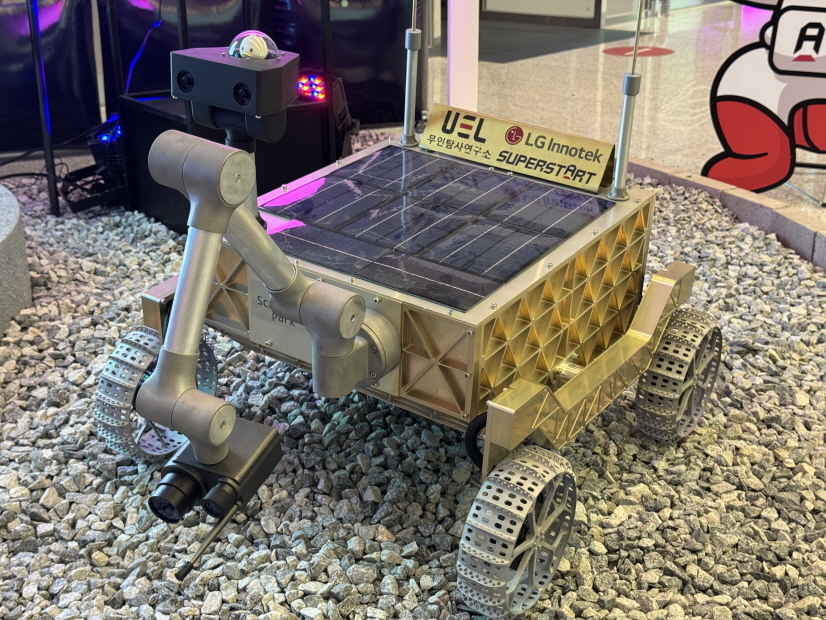
LG Sciencepark, LG Group’s research and innovation hub, said Tuesday that the components have been installed on a CubeSat prepared with Unmanned Exploration Laboratory, a Korean startup specializing in lunar exploration rovers. CubeSats are compact, standardized satellites commonly used for Earth observation, technology demonstrations and other missions.
The payload includes a camera module from LG Innotek, a battery pack from LG Energy Solution, and a power module, attitude-control actuator and satellite communications antenna from LG Electronics.
CubeSats are small satellites used for missions ranging from Earth observation to technology testing. If Nuri reaches orbit as planned, the CubeSat will spend about 60 days at an altitude of 570 kilometers testing the components in sequence.
The camera module will photograph the Korean Peninsula and transmit the data to the ground. The power module and attitude-control actuator will manage the satellite’s power and orientation, while the battery pack will supply electricity and collect data on its operating status.
The antenna will serve as the satellite’s primary communications link throughout the mission rather than undergo a separate test.
The demonstration will use the commercial off-the-shelf approach, in which commercially available components that have already proven reliable on the ground are adapted for use in space.
The approach can significantly cut development costs and lead times, offering lower barriers for private companies looking to enter the space industry.
LG Sciencepark said the mission would verify whether the components can operate reliably in an actual space environment. Data collected during the mission will be used to further improve the technologies and their reliability.
LG also plans to test its own satellite payload technologies — with a goal of launching its own CubeSat in 2028 — as it seeks new business opportunities in space.
The partnership with Unmanned Exploration Laboratory traces back to Superstart, LG’s open innovation platform. LG Sciencepark selected the company, Korea’s only developer of lunar exploration rovers, as one of the startups it would foster in 2023 and has supported it through the second cohort of its incubation program since 2024.
LG has also been discussing potential cooperation in the space industry with the Korea AeroSpace Administration since last year.
LG Energy Solution partnered with US startup South 8 Technologies in November 2025 to develop aerospace battery cells, as LG affiliates explore how their existing technologies could be applied in the space sector.
“This launch is the first step in seeing how LG’s technologies actually perform in the space environment,” said LG Sciencepark President Chung Sue-hyun. “We will continue to validate the technologies we have built up on the ground while looking for ways to contribute to Korea’s space industry ecosystem.”
yeeun@heraldcorp.com


