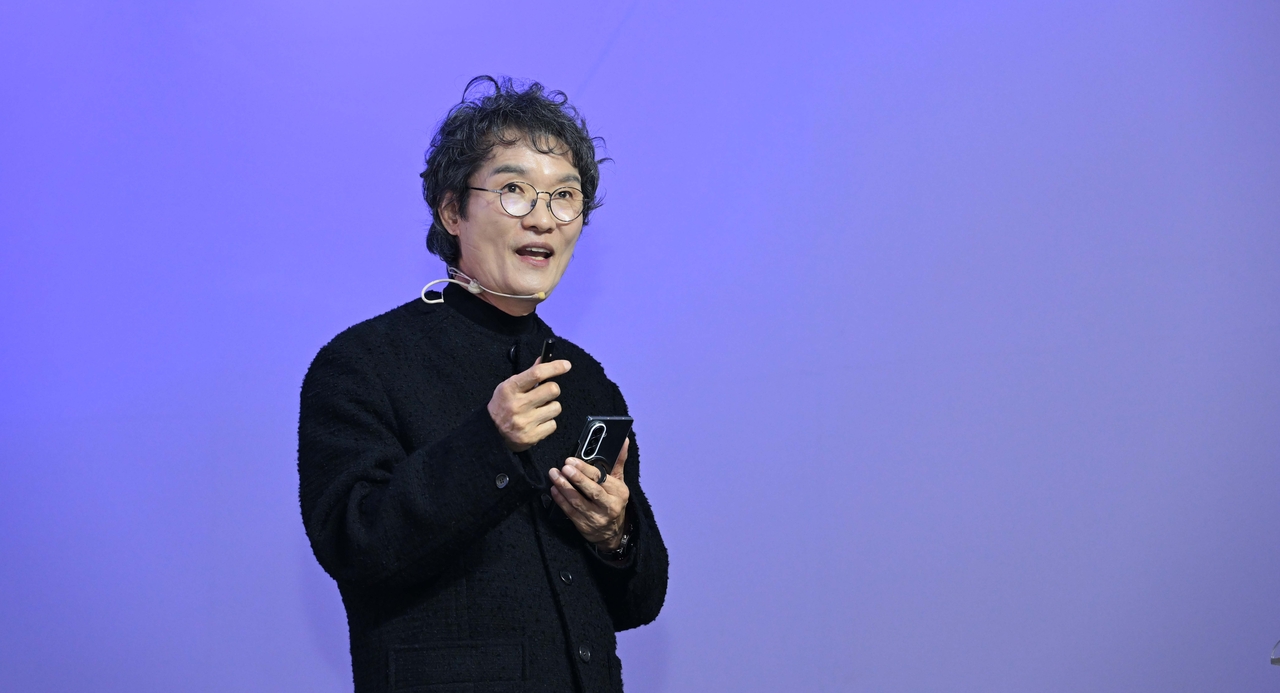
Architects and designers who rely too heavily on what others have already created risk limiting their own imagination, architect Yoon Kyeong-sik said.
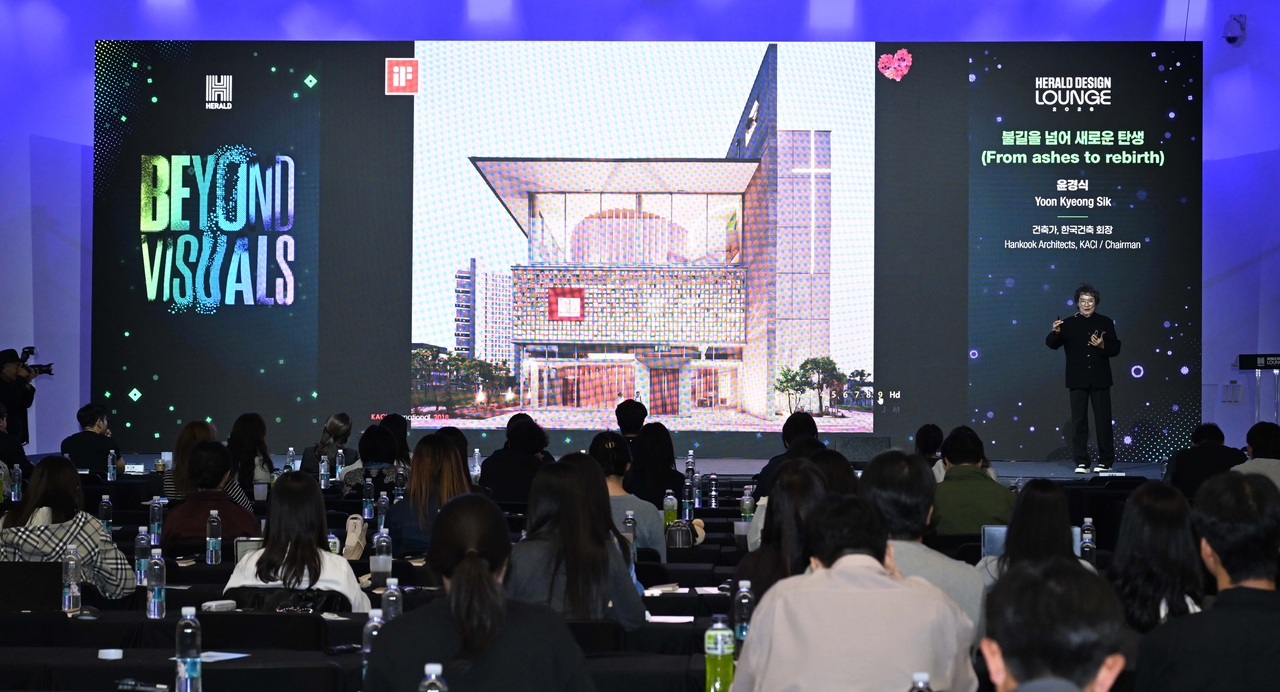
"If we are moved by and aspire to what someone else has already made visible, we can only come in second," Yoon said at Herald Design Lounge 2026 on Friday at Dongdaemun Design Plaza in Seoul.
Addressing the event’s theme, "Beyond Visual," Yoon said both art and architecture can be seen, touched and experienced, while the thoughts and choices behind their creation remain invisible.
He described the humanities as "patterns drawn by human beings." Imagination, he said, begins with envisioning the patterns humanity will create along paths no one has yet taken.
Yoon, chairman of KACI International, said he has rarely consulted architecture or design books over the past two decades. Knowledge is built from what already exists, he said, and relying too heavily on it can leave creators following paths established by others.
His architectural career began in 1984. He later worked at three US architecture firms — The Leonard Parker Associates in Minneapolis, Cesar Pelli & Associates in New Haven, Connecticut, and NBBJ in Los Angeles.
In his own work, Yoon described a process of repeatedly stripping away unnecessary elements.
"Empty it out, and then empty it out again," he said. "There is always a desire to add something, but I kept taking things away."
His approach is particularly evident in his religious architecture, which he describes as "less religious, but more like Buddha" and "less religious, but more like Jesus."
Yoon said he sought to strip away the exclusivity and insularity often associated with institutional religion and return directly to the teachings of Jesus and Buddha.
Rather than designing spaces that alienate the broader public, he wanted to create buildings that might initially resemble an art gallery or concert hall but reveal a religious philosophy through experience.
At Sarang Bitneun Church in Gunpo, Gyeonggi Province, Yoon sought to embody Christian love and gentleness instead of reproducing the soaring forms and grandeur inherited from medieval churches.
Members of the congregation participated in painting the building, making the construction process part of forming their religious community.
At the Inwolsa Dhamma Center in Gangneung, Gangwon Province, he translated the Buddhist concept of Indra's net — the idea that all beings and things are interconnected — into architecture.
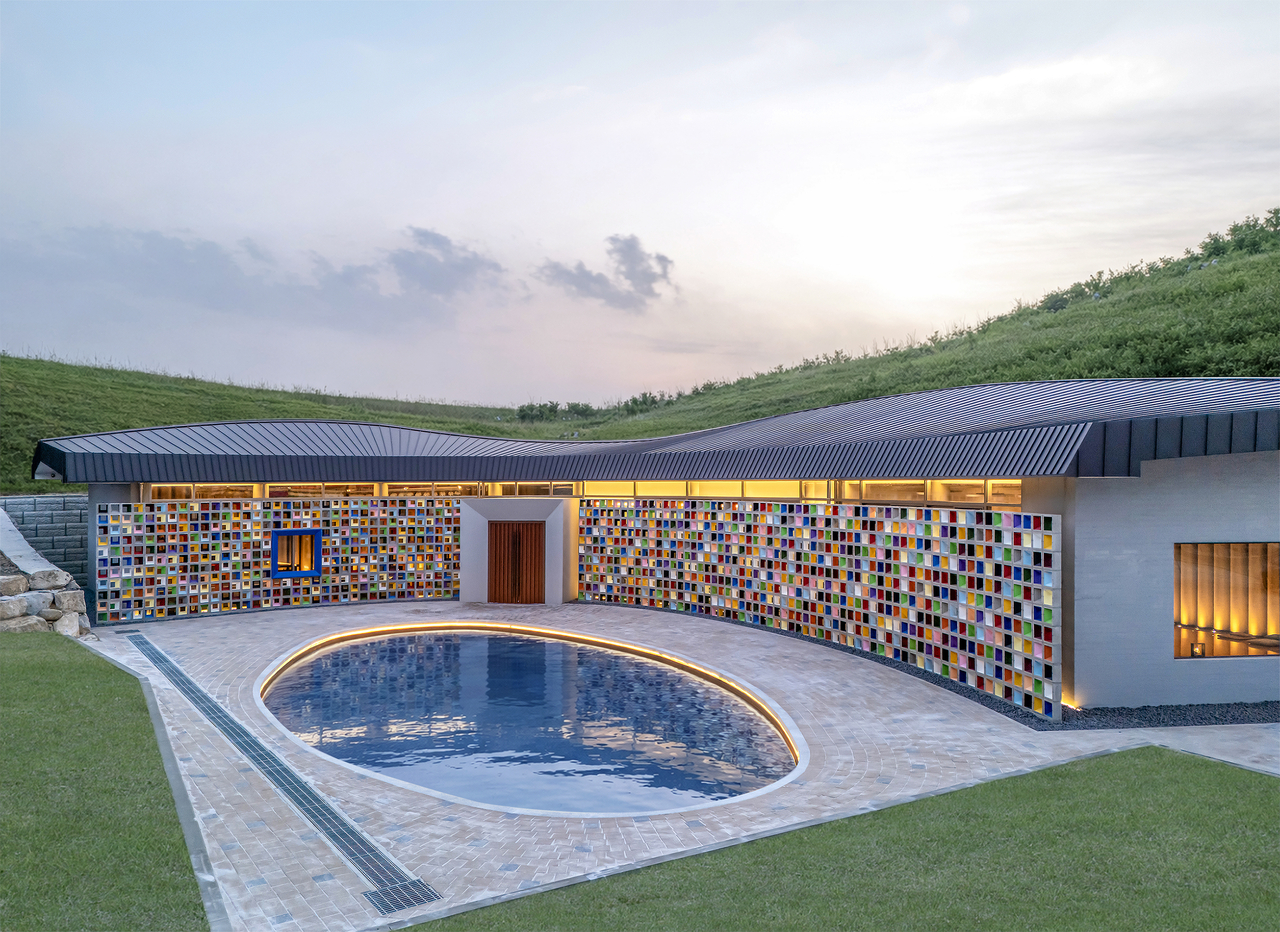
Blocks bearing the five traditional Buddhist colors form what he calls the Indra Wall, drawing daylight inside and allowing light from the prayer hall to shine outward at night.
Other projects began with similarly unexpected inspirations. The structure of the Haesley Nine Bridges clubhouse in Yeoju, Gyeonggi Province, was inspired by a jukbuin, a hollow bamboo bolster traditionally used in Korea during summer. The form facilitates natural light, ventilation and the circulation of air.
Yoon said inspiration does not necessarily emerge from prolonged research or the accumulation of data. Creators should instead trust the ideas that arise intuitively and have the courage to pursue them.
"Why not?" he said. "That is where creativity begins."
For Yoon, these projects reflect a broader understanding of what architecture is meant to do.
"Architects often mistakenly believe that they design buildings," he said. "What we design is life. Architecture is a space that holds that life."
yunapark@heraldcorp.com


