Polish premiere, 84-year-old Finnish cellist and a conductor’s Korean debut to headline the 18th edition
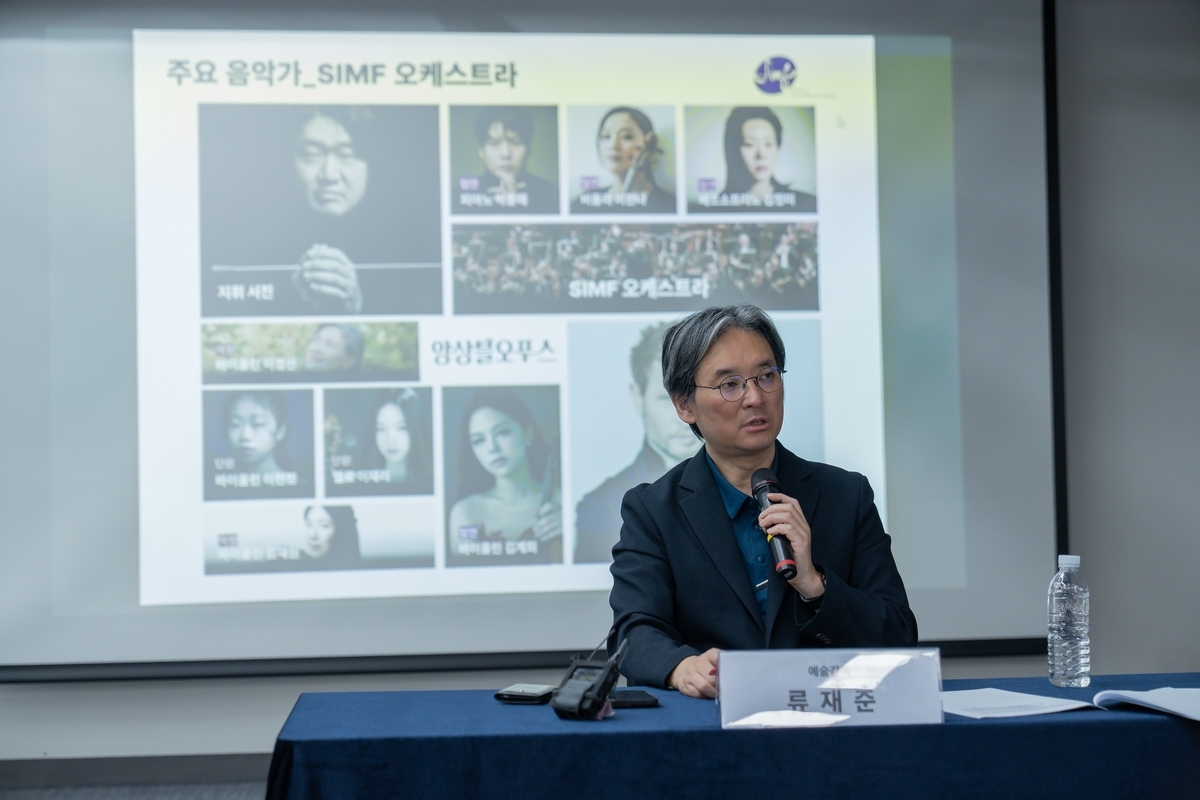
The Seoul International Music Festival returns this year with a program that seeks musical connections across generations while bringing together leading musicians and overlooked pieces.
Running Oct. 8-16 under the theme “Bravo My Life,” the festival will feature the Korean premiere of a work by Polish composer Mieczyslaw Karlowicz (1876-1909), the Korean debut of conductor Krzysztof Urbanski and a recital by 84-year-old Finnish cellist Arto Noras.
For artistic director and composer Ryu Jeajoon, the theme emerged from a difficult year marked by social and political tensions. Rather than present audiences with another serious subject to consider, he wanted the festival to offer comfort and an opportunity to celebrate their own lives.
“When people come to a concert after a difficult day, I hope they can gain strength and have a chance to praise their own lives,” Ryu said at a press conference Wednesday.
The festival opens Oct. 8 at Seoul Arts Center’s IBK Chamber Hall with “Breath, and 3,” a wind-focused program featuring Mozart’s Flute Quartet and Quintet for Piano and Winds, Weber’s Clarinet Quintet and Britten’s “Phantasy.”
On Oct. 9, Brahms’ Piano Quintet and Shostakovich’s Piano Quintet are paired with a work by Ryu, tracing a journey from youthful romance and darker struggles to overcoming hardship and finding happiness.
Oct. 10 brings two large-scale chamber works: Mozart’s “Gran Partita,” performed by 23 musicians, and a new chamber arrangement of Brahms’ Serenade — an ambitious program rarely possible outside a festival setting.
“As a festival supported by the Seoul Metropolitan Government, we have a responsibility to make good music available to Seoul citizens and the Korean public,” he said.
The Oct. 11 concert will feature seven soloists in a continuous narrative rather than a conventional gala. Beginning around sunset and unfolding through the night, the program includes Mozart’s “Sinfonia Concertante,” Britten’s “Serenade for Tenor, Horn and Strings” and Shostakovich’s Piano and Trumpet Concerto. Rather than separate showcases, each soloist will play a role in the larger musical story.
The program continues Ryu’s focus on wind and brass instruments, which he hopes to highlight for Korean audiences more accustomed to piano, cello, violin and vocal performances. It features hornist Radovan Vlatkovic and trumpeter Sergei Nakariakov, whom Ryu described as leading players on their instruments.
The Oct. 14 recital pairs 84-year-old cellist Arto Noras with pianist Kim Kyu-yeon, whose mother, Lee Kyung-sook, was Noras’ first Korean musical collaborator in the US — an intergenerational connection spanning decades.
Ryu said the Oct. 14 recital was the program he was most looking forward to and could be 84-year-old Noras’ final performance in Korea, though he hopes the cellist will return.
On Oct. 15, British tenor Ian Bostridge will perform Schumann’s “Dichterliebe,” one of the works that helped establish his international reputation.
The festival closes Oct. 16 at Lotte Concert Hall with the SIMF Orchestra conducted by Urbanski, marking the Polish conductor’s Korean debut. The program will also introduce Polish composer Karlowicz to Korean audiences with the premiere of his symphonic poem “Stanisław and Anna Oswiecimowie.” Karlowicz died at 32, leaving just 14 works, each of which Ryu considers a masterpiece.
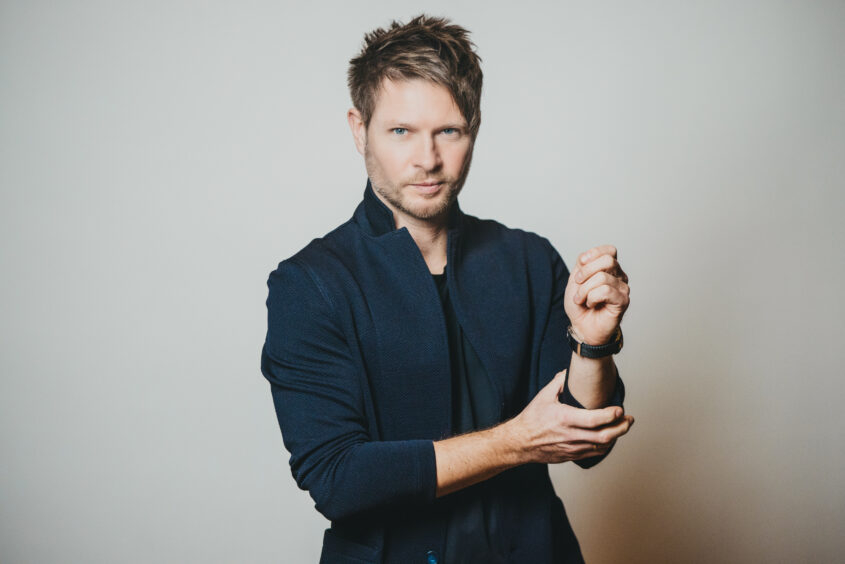
Although Karlowicz’s music is highly romantic and dramatic, Ryu said his work has remained unfamiliar to Korean audiences. He views the festival’s role as extending beyond presenting established repertoire to discovering composers whose work has been overlooked.
“Finding composers who are not yet known is an important responsibility of an event like the Seoul International Music Festival, which receives public support,” he said.
Poland will serve as the festival’s featured country this year, partly to mark the 150th anniversary of Karlowicz’s birth. The closing program will also include Ryu’s Violin Concerto, performed by violinist Kim Gye-hee, and Richard Strauss’ “Also sprach Zarathustra,” linking Karlowicz to the late-Romantic musical tradition.
Alongside its international lineup, the festival will continue to create opportunities for younger Korean musicians. The SIMF Orchestra, formed around members of Ensemble Opus, will place young players alongside experienced musicians rather than arranging seating strictly by age or section.
Ryu said many young Korean musicians are trained primarily as soloists and have limited opportunities to experience how an orchestra works as a collective.
“I want to create a place where they can learn what an orchestra is and how people behind them work together to make music,” he said.
But he emphasized that the goal was not simply to have younger musicians learn from established performers. It is also to build a community in which musicians can work, communicate and develop relationships with one another.
gypark@heraldcorp.com