Nearly 70% of investigator posts to be eliminated as prosecution loses investigative role
South Korea will launch a slimmed-down, indictment-focused replacement for the Prosecutors’ Office on Oct. 2, staffed by about 1,900 prosecutors.
Separately, nearly 70 percent of the current office’s investigator positions will be eliminated as investigative authority shifts to a new agency.
The Public Prosecution Service will focus on indictments and courtroom prosecutions, while the Serious Crimes Investigation Agency will take over major criminal investigations currently handled by prosecutors.
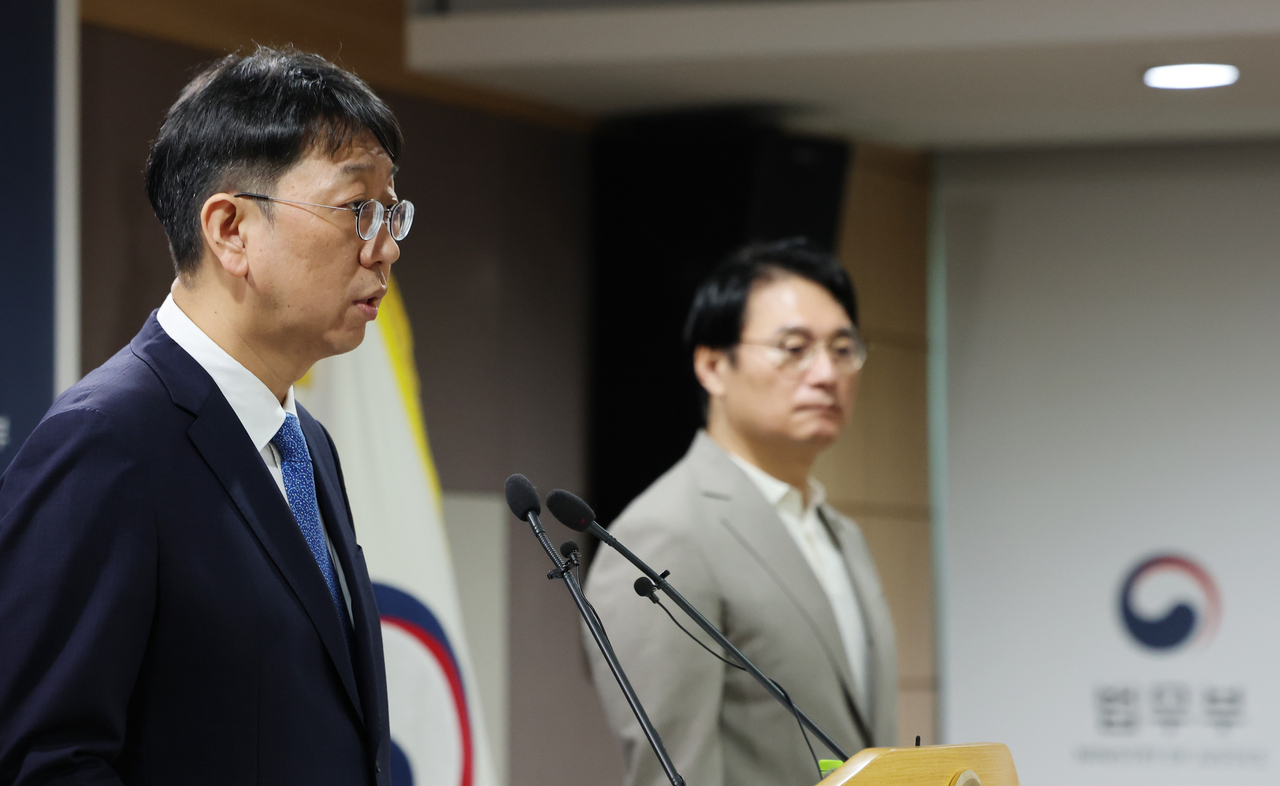
Revised regulations governing the organization and staffing of the new service were approved at a Cabinet meeting Tuesday, the Justice Ministry said. The plan further scales back the organization from an initial proposal unveiled Sept. 4.
The new service will launch with prosecutors filling 80 to 85 percent of the current statutory quota of 2,292. The legal quota itself will remain unchanged for now.
Because changing the quota requires legislative approval from the National Assembly, the government will initially reduce the number of serving prosecutors by leaving positions vacant. The current Prosecutors’ Office already operates with about 10 percent of prosecutor positions unfilled.
The ministry said it would not replace prosecutors who leave the organization or transfer to the Serious Crimes Investigation Agency.
It plans to seek legislation formally reducing the quota after an external institution analyzes the new service’s workload and staffing needs following its launch.
A separate and much steeper reduction will apply to investigators. Of the 2,986 investigator positions at the current Prosecutors’ Office, 2,048, or 68.6 percent, will be eliminated.
The remaining 938 personnel will be transferred to a newly created criminal justice job category. Instead of conducting investigations, they will examine decisions on whether to indict suspects and reviews of cases that police decline to refer for prosecution.
An additional 477 administrative and support positions will be eliminated. Combined with the investigator cuts, this will reduce the nonprosecutor workforce by 2,525 positions, or 30 percent of the current 8,415.
The revised plan also abolishes three deputy chief prosecutor-level positions and eight departments included in the earlier proposal.
The ministry renamed two planned divisions following criticism that their original titles suggested prosecutors would continue to exercise control over criminal investigations.
The proposed “Judicial Control Division” will instead be called the “Non-referral Review Division.” It will examine cases that police decline to refer for prosecution and assess whether those decisions were lawful and appropriate.
The “Serious Crimes Division” will become the “Serious Crimes Prosecution Division” and handle cases referred by the Serious Crimes Investigation Agency.
The two agencies form the core of the Lee Jae Myung administration’s plan to separate investigative and indictment powers long concentrated within the prosecution.
The Justice Ministry’s initial proposal retained the statutory quota of 2,292 prosecutors and created a Judicial Control Division responsible for reviewing police decisions not to refer cases for prosecution.
The proposal drew criticism from within the ruling Democratic Party of Korea, where lawmakers questioned why much of the prosecution organization would remain intact despite losing its investigative powers.
“The prosecution, which handled investigations and indictments, has lost its investigative function, but not a single position has been cut from the quota of 2,292 prosecutors,” Democratic Party lawmaker Lee Seong-yoon said at a party leadership meeting Sept. 9.
Lee also criticized the proposed retention of thousands of investigator positions. Other ruling party figures argued that the responsibilities assigned to the new prosecution service could allow prosecutors to exert de facto influence over investigations conducted by the Serious Crimes Investigation Agency.
President Lee subsequently called for officials to reconsider both the prosecutor staffing level and the disputed division names. On Sept. 10, he questioned whether the new service needed to remain bound by the existing quota and described the name “Judicial Control Division” as unnecessarily contentious.
seungku99@heraldcorp.com