It may take a village to raise a child, but it takes a supportive, selfless mother to raise an Asian Games gold medalist.
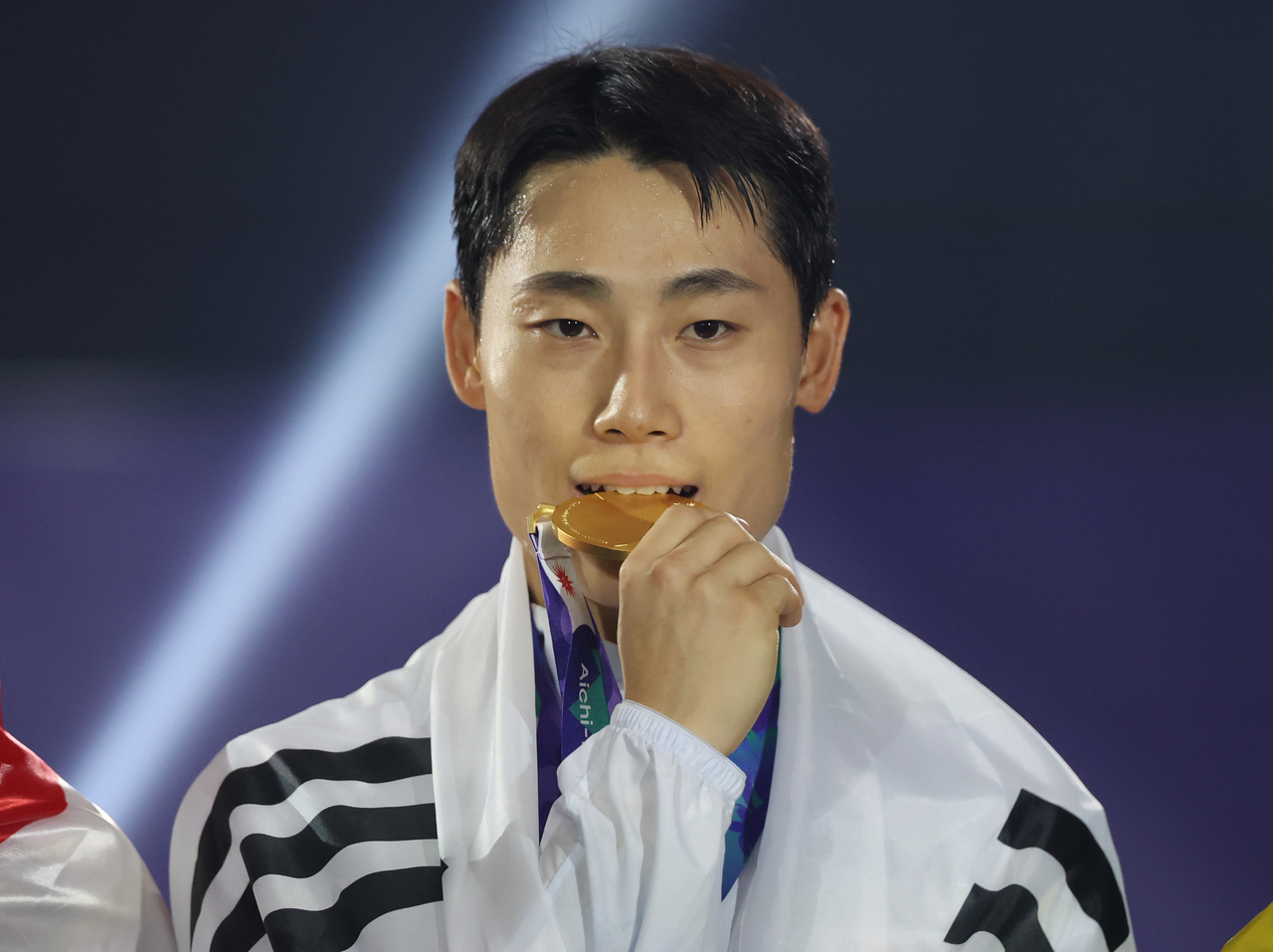
Just ask Lee Jun-suk, who captured the very first Asian Games gold medal in the men's singles teqball event in Nagoya on Sunday.
Lee defeated Ali Jalil Mezher Alelayawi of Iraq 2-0 (12-11, 12-5) in the final at Nagoya City Higashi Sports Center in Nagoya, Japan, where teqball -- a hybrid sport played on a curved table that combines elements of football, table tennis and sepaktakraw, among others -- made its debut.
Lee, 27, was once a football midfielder who played in the fourth division in South Korea in his early 20s. After his football career ended, he landed a job with LG Electronics.
After a few years as a contract worker, Lee had a chance to earn permanent status earlier this year. But when he found out in February that teqball was going to be an Asian Games sport, Lee quit his day job to concentrate on preparing for the event.
Lee said he would not have been able to do that without his mother, Yoon Soon-jeong, who watched her son win gold in person.
"She said, 'Do whatever you want to do but you have to do your best. I trust you,'" Lee said. "If she had not believed in my decision, I would never have been able to come this far."
Lee said his mother spent a fortune buying him a teqball table so he could train.
"Jun-suk is such a good kid and he has his set of convictions," Yoon said. "I wanted to support him to do whatever he liked to do.
"Honestly, I didn't think he would reach the final so I had booked a flight back home for tonight. I had to cancel it," the mother went on. "I am so proud of my son. I lost sleep for a few days and I am looking forward to a good night's sleep."
In the final, Lee came back from a 9-5 deficit to take the first set but had a much easier time in the next set.
"The stadium felt much different than the preliminary round and the semifinals, and I felt quite nervous," he said. "But I thought I could definitely rally if I could just get settled in. The rally in the first set was the turning point."
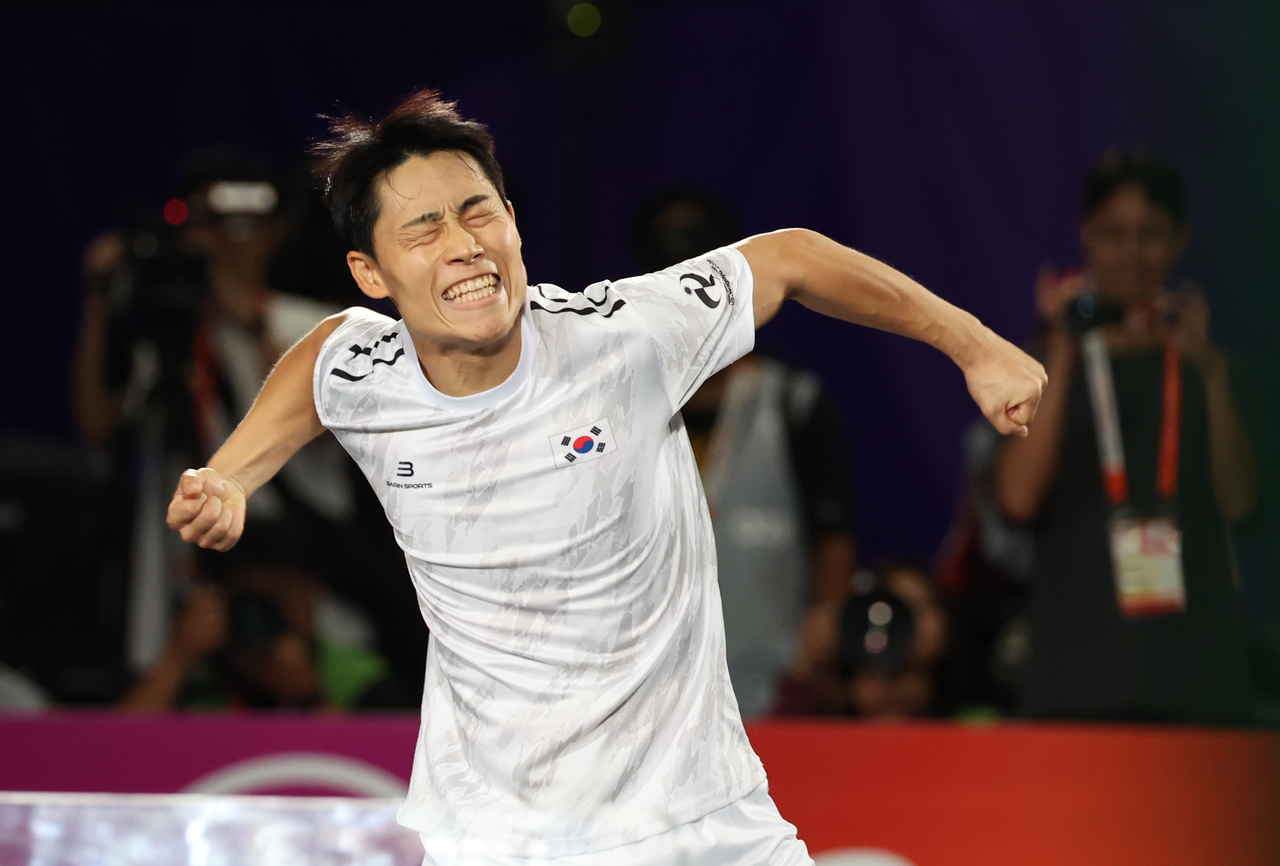
Over the course of the competition, Lee gained notoriety for his exuberant celebrations after key points. He said he raised his shouts by a few decibels in the final because he wanted to set the tone and be in control.
"When I got to 11 points, I felt pretty sure I would win," Lee added. "I feel so happy I got to realize my dream."