Ghanaian music and culture draw diplomats, residents and visitors to a rural corner of Gangwon
YEONGWOL, Gangwon Province — At the foot of a mountain range in Gangwon Province, beside a stream running past the Yeongwol Africa Art Museum near Gossi Cave, Ghanaian rhythms mixed with the strains of “Arirang” on Saturday.
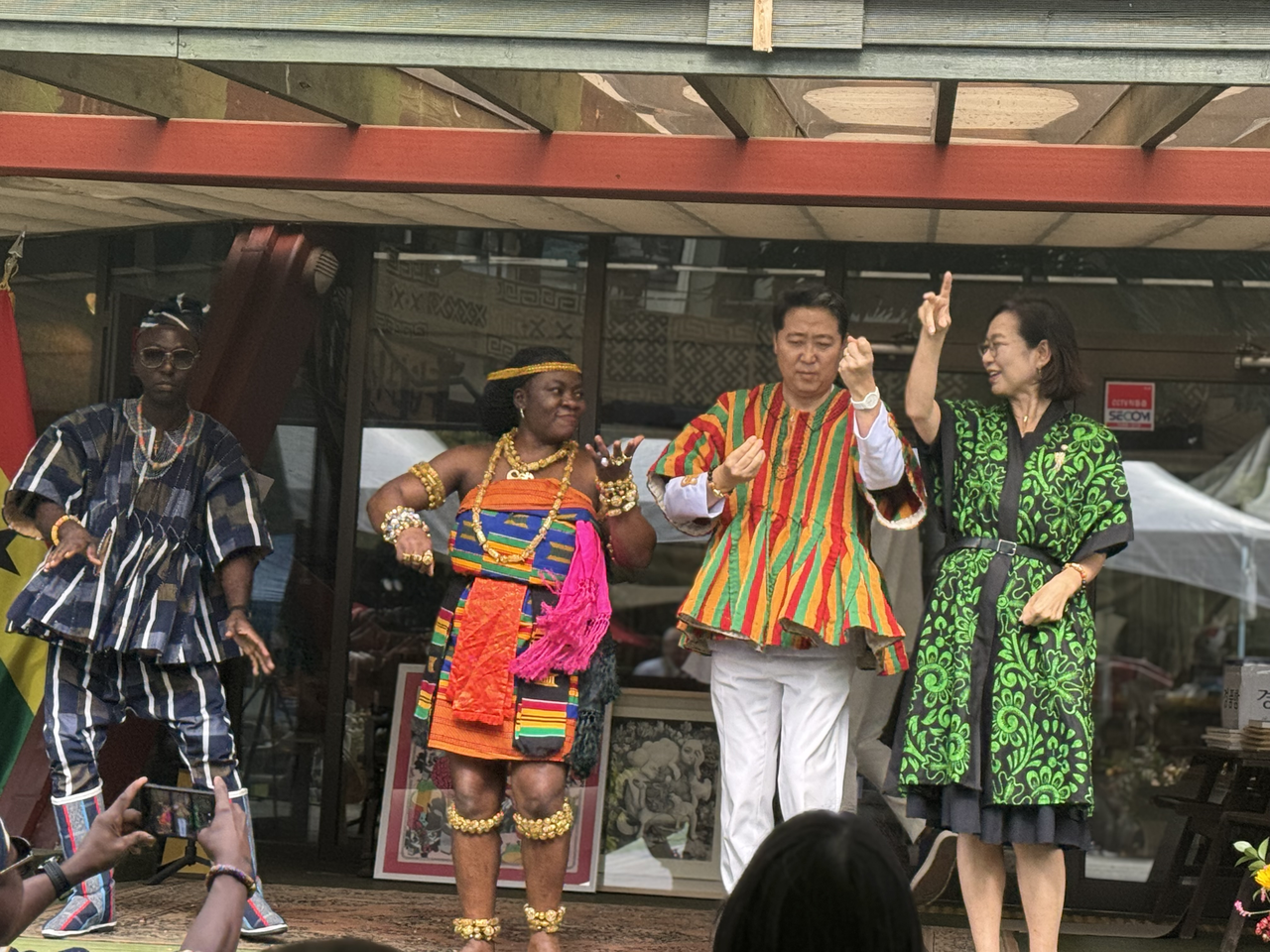
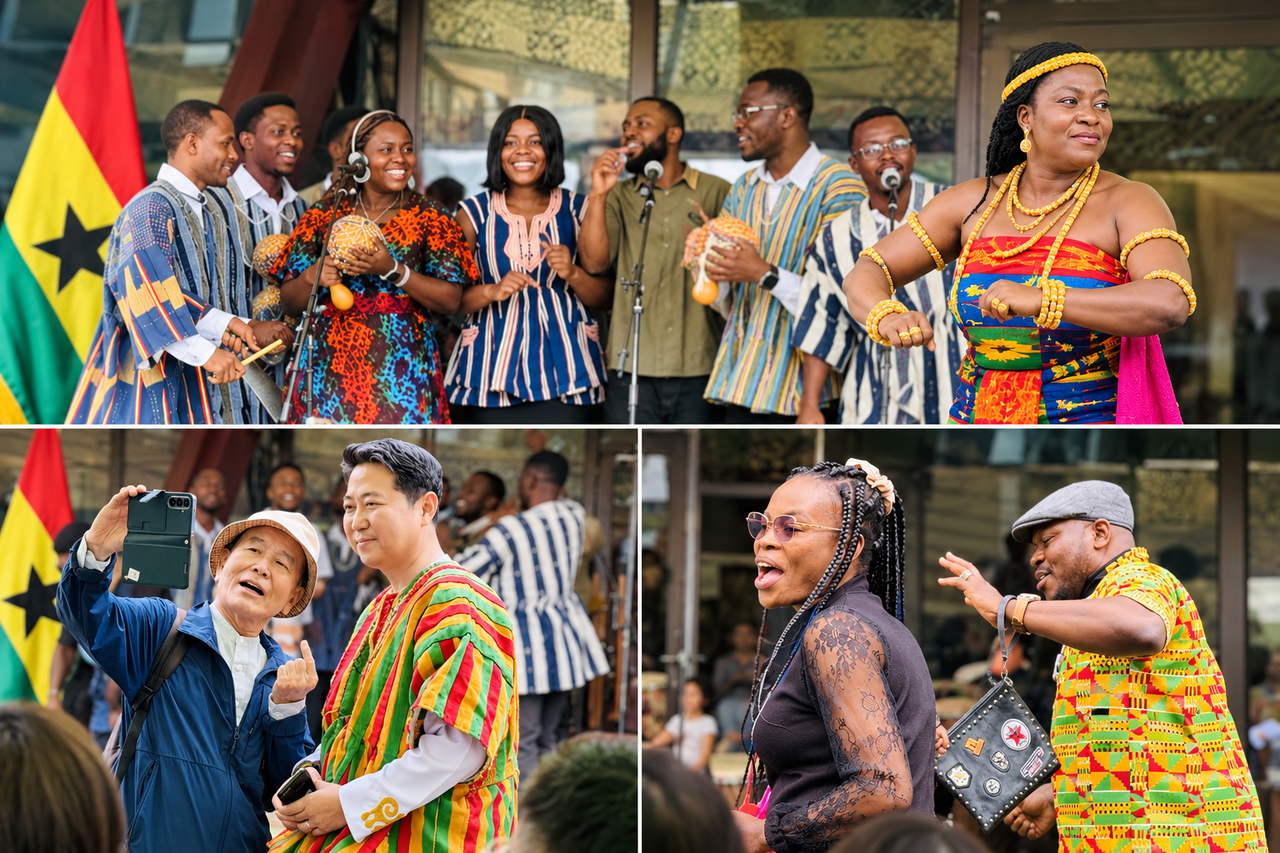
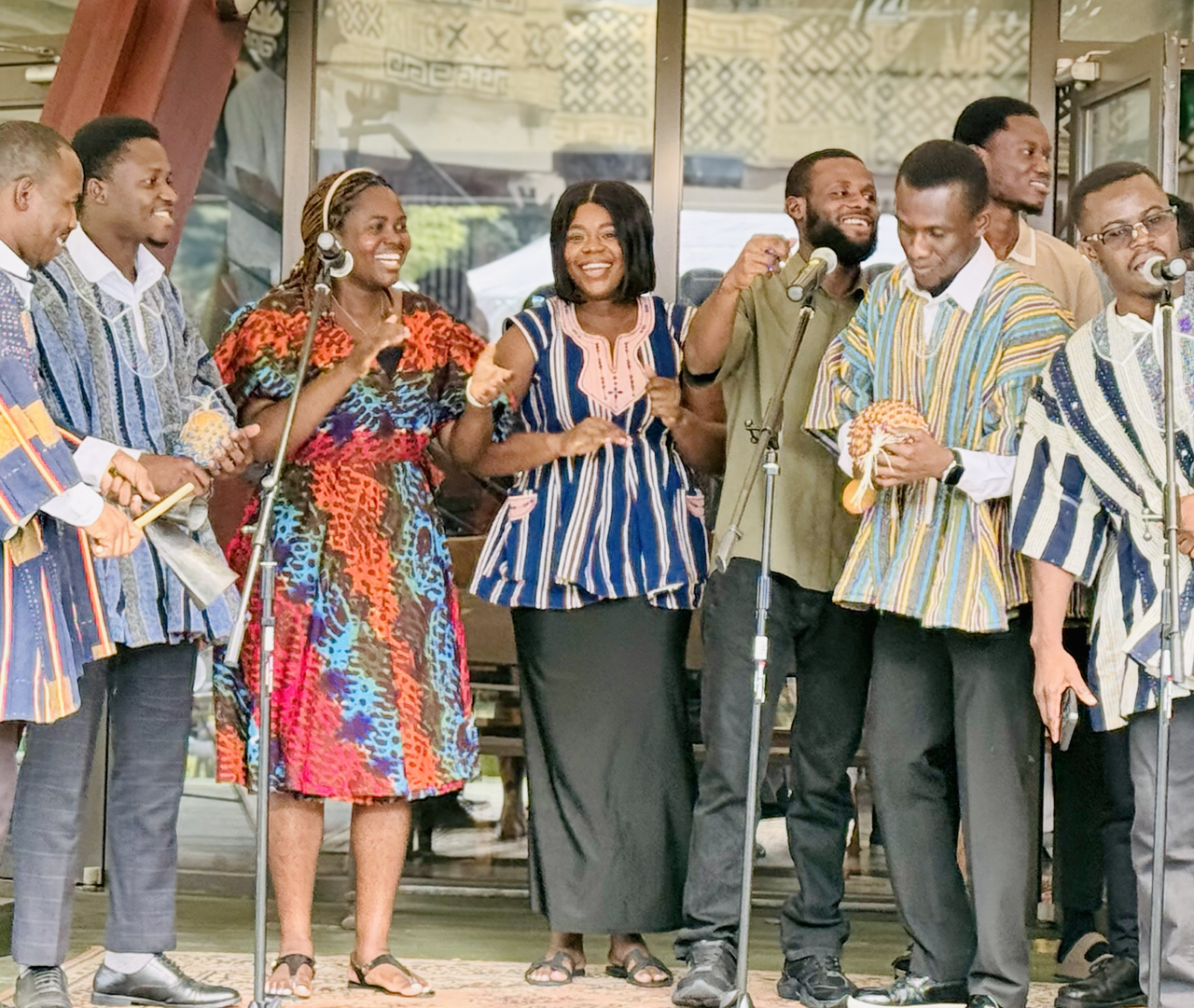
Koreans and Ghanaians dressed in colorful fugu, Ghana's traditional garment also known as batakari, and performed traditional Ghanaian music together. Local families watched alongside African residents, diplomats and visitors from Seoul as they wove Korean words and melodies into the songs.
It was an unusual setting for a gathering involving diplomats and officials from across Africa: a rural county better known for its dramatic mountain and cave landscapes and a history marked by tragedy than international affairs.
The 2026 Ghana Day, held Sept. 12, featured Ghanaian music, dance, fashion, food and art. The event was jointly hosted by the museum and the Embassy of Ghana in Korea, with support from Yeongwol County and the Korea-Africa Foundation.
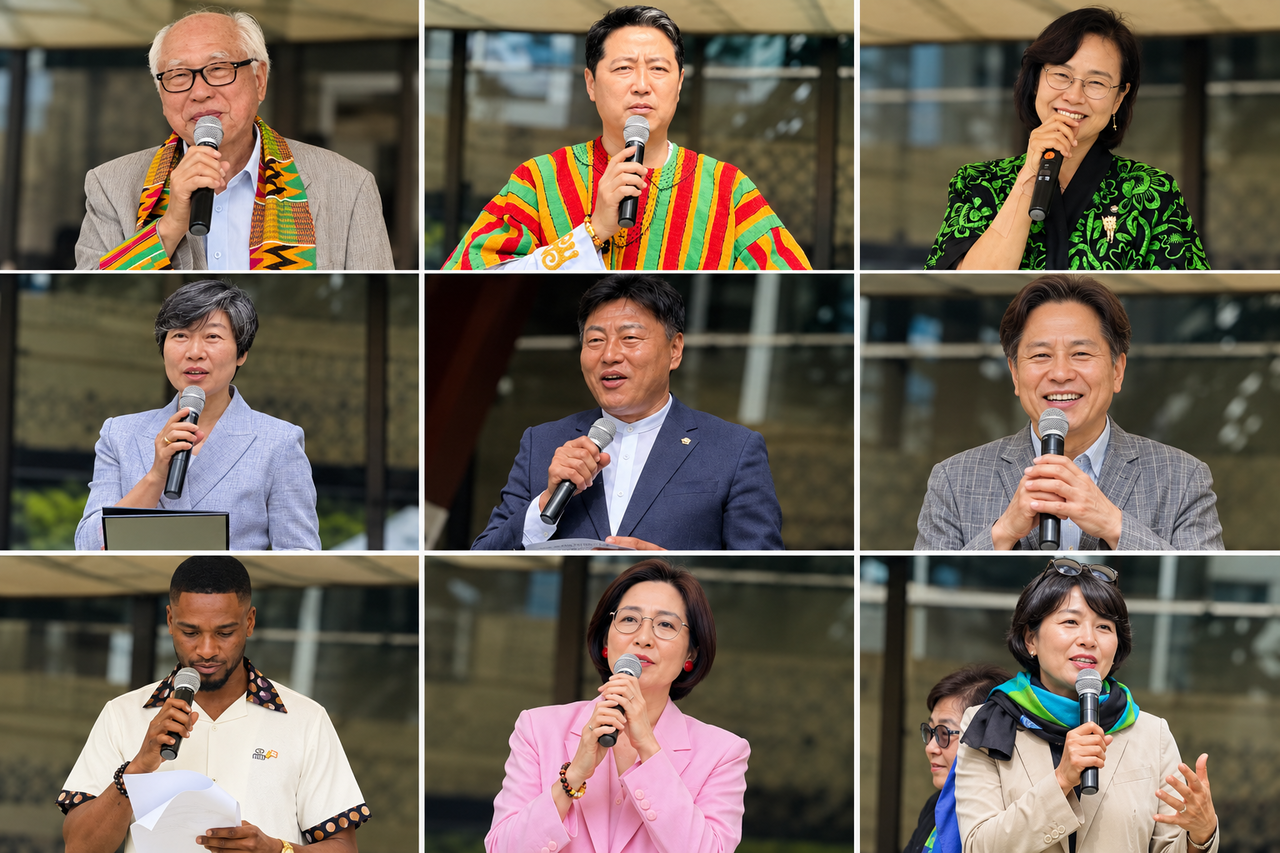
For Ghanaian Ambassador to Korea Choi Go-jo, the journey to Yeongwol was also a return home.
Choi grew up in Mitan-myeon in neighboring Pyeongchang, about 25 minutes from Yeongwol.
He recalled traveling to Yeongwol with his mother to visit the market and spending his childhood in the surrounding mountains and streams.
He later followed his parents to Ghana, where he spent 35 years before returning to Korea as the country's ambassador.
“There was once a boy living here. That boy followed his parents to Ghana, lived there for 35 years and eventually returned to Korea representing that country,” he said.
“And today, that boy is standing here before all of you.”
His return gave a personal dimension to one of the themes running through the festival: whether Korea's growing international exchanges can develop a greater presence outside Seoul.
Foreign embassies are concentrated in the capital, along with many of the country's diplomatic, international and multicultural events.
Choi said he hoped such exchanges would increasingly reach other parts of the country.
“Korea and Africa will grow closer not only in Seoul, but also here in Yeongwol, Gangwon Province — the place I call home,” he said.
The festival came as Korea and Ghana prepare to mark the 50th anniversary of diplomatic relations in 2027, the same year Choi turns 50.
Perpetual Sarpong-Bonsu, co-founder of digital media platform Africa-Korea Insight, said the level of Korean participation stood out.
“It is Ghana Day, so we expected it to be largely a Ghanaian event,” Sarpong-Bonsu told The Korea Herald.
“But seeing the love and commitment Koreans showed today was amazing and beautiful.”
During the program, Korean and Ghanaian performers shared the stage, while visitors moved among a Ghanaian art exhibition, handicrafts and food.
Introducing a traditional dance of Ghana's Ashanti people, Choi told spectators that its movements represented “reaching for the stars” and the hope that aspirations would be fulfilled.
Cho Myung-haeng, director of the Yeongwol Africa Art Museum, said he had spent 17 years developing the museum and described Choi's return to Korea representing Ghana as “historic.”
“Africa is changing,” Cho said.
According to Cho, the museum has organized nine events involving African countries and is seeking to expand Korea-Africa cultural activities in Yeongwol.
Whether such events can produce sustained exchanges outside Seoul, however, remains an open question.
Some participants also linked the effort to a broader challenge facing rural Korea: population decline and aging.
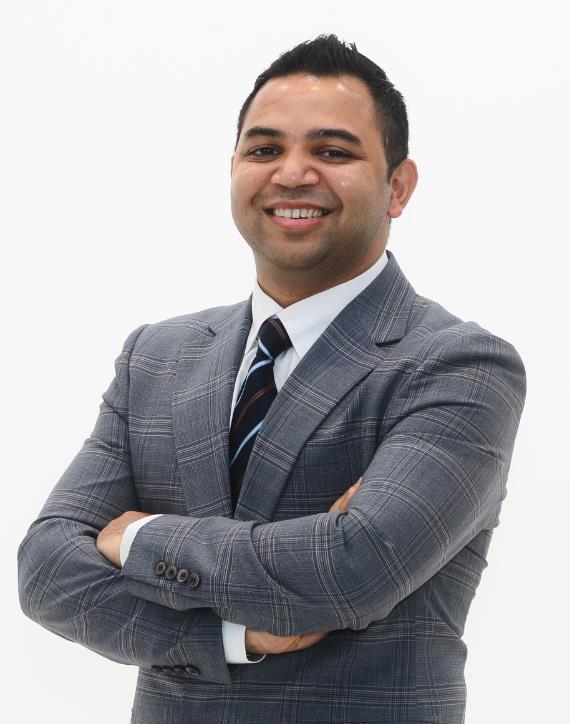
Andrew Cho, a Seoul-based technology executive who traveled to Yeongwol for the festival, said cultural and educational institutions could give people additional reasons to visit and engage with rural communities.
“People from Africa and Korea can interact and learn from each other,” Cho told The Korea Herald, arguing that such contacts could eventually extend into areas including business and technology.
He also pointed to educational programs at the museum as one way of attracting younger visitors.
“We are all worried about the declining population in the countryside,” he said.
“How do we attract dynamic population growth not only to Seoul, but also to rural areas?”
A cultural festival alone is unlikely to have a measurable impact on Korea's demographic problems, but the gathering showed one way local institutions are trying to bring international activity to communities outside the capital.
Gangwon and Yeongwol officials said they hoped cultural programs could lead to broader international exchanges in the region.
The more immediate measure, however, will be whether contacts made at events such as Ghana Day continue once the diplomats, performers and visitors leave.
Opoku Isaac, a Ghanaian who has lived in Korea for eight years, said he hoped greater interaction would make different cultures more familiar to Koreans.
“Bringing African culture here is a massive thing. It creates a connection,” Isaac told The Korea Herald.
But for Isaac, the significance of Saturday's gathering will ultimately depend on what follows.
“I hope this will continue and will not be a one-day wonder.”
sanjaykumar@heraldcorp.com