
Iran warns of 'serious consequences' should Korea support US military action
South Korea appears to be recalibrating plans for a potential military contribution to the Strait of Hormuz, even as Washington steps up pressure on Seoul to commit resources.
The government had been moving toward more concrete discussions over what personnel and military assets could be sent to the region following a US request for greater allied participation. But the renewed fighting around the strategic waterway has prompted Seoul to reassess its options, according to government sources.
The Defense Ministry here on Monday stressed that no decision had been reached.
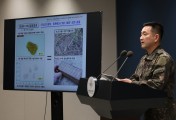
"We are closely consulting with the international community, including the US, on ways to make a substantive contribution toward the swift restoration of freedom of navigation in the Strait of Hormuz and peace and stability in the Middle East," Defense Ministry spokesperson Chung Bin-na told a regular briefing.
"No specific measures have been decided at this point," she added.
The cautious wording marks a shift from the ministry's tone last week, when it said details regarding a possible contribution would be disclosed "at an appropriate time," suggesting discussions had made progress.
Tehran, meanwhile, issued a direct warning to Seoul on Monday over any potential South Korean military involvement in the region.
Iranian Foreign Ministry spokesperson Esmaeil Baqaei said in a Monday Korean-language post on X that while Tehran highly values its longstanding friendly relations with South Korea, any foreign military presence or participation in operations in the Persian Gulf or the Strait of Hormuz under the current circumstances would be regarded as direct support for US military action.
Such involvement "would have serious consequences," Baqaei warned, urging countries not to yield to what he described as US pressure to participate in military action against Iran.
US forces resumed strikes against Iranian targets on Aug. 30 after a roughly monthlong pause. Tensions escalated sharply over the weekend, with Iran launching missiles toward US warships and Washington retaliating with strikes on three Iranian oil tankers, followed by further Iranian attacks on commercial vessels.
Seoul's preparations had been based in part on the expectation that conditions in and around the strait would stabilize. The latest escalation has complicated calculations over whether and how South Korean forces could operate in the region without becoming directly entangled in hostilities.
The government is also reportedly reviewing the types of military assets that could contribute.
A Navy logistics support ship, which could supply fuel, ammunition and other materiel, had initially been considered one of the leading options. But it has reportedly fallen down the list because it would require more than 100 crew members to operate and because of concerns over the vessel's age.
Other options under consideration include maritime patrol aircraft capable of conducting wide-area surveillance and detecting submarines and surface vessels, explosive ordnance disposal teams, and uncrewed systems for detecting and clearing naval mines.
The renewed caution comes as Washington continues to press South Korea and other allies to take on a greater role in securing the Strait of Hormuz, a critical route for global energy supplies.
A White House official told Voice of America on Sunday that the US was still awaiting a commitment of resources from Seoul, pointing to South Korea's heavy reliance on Middle Eastern oil as a reason for it to contribute.
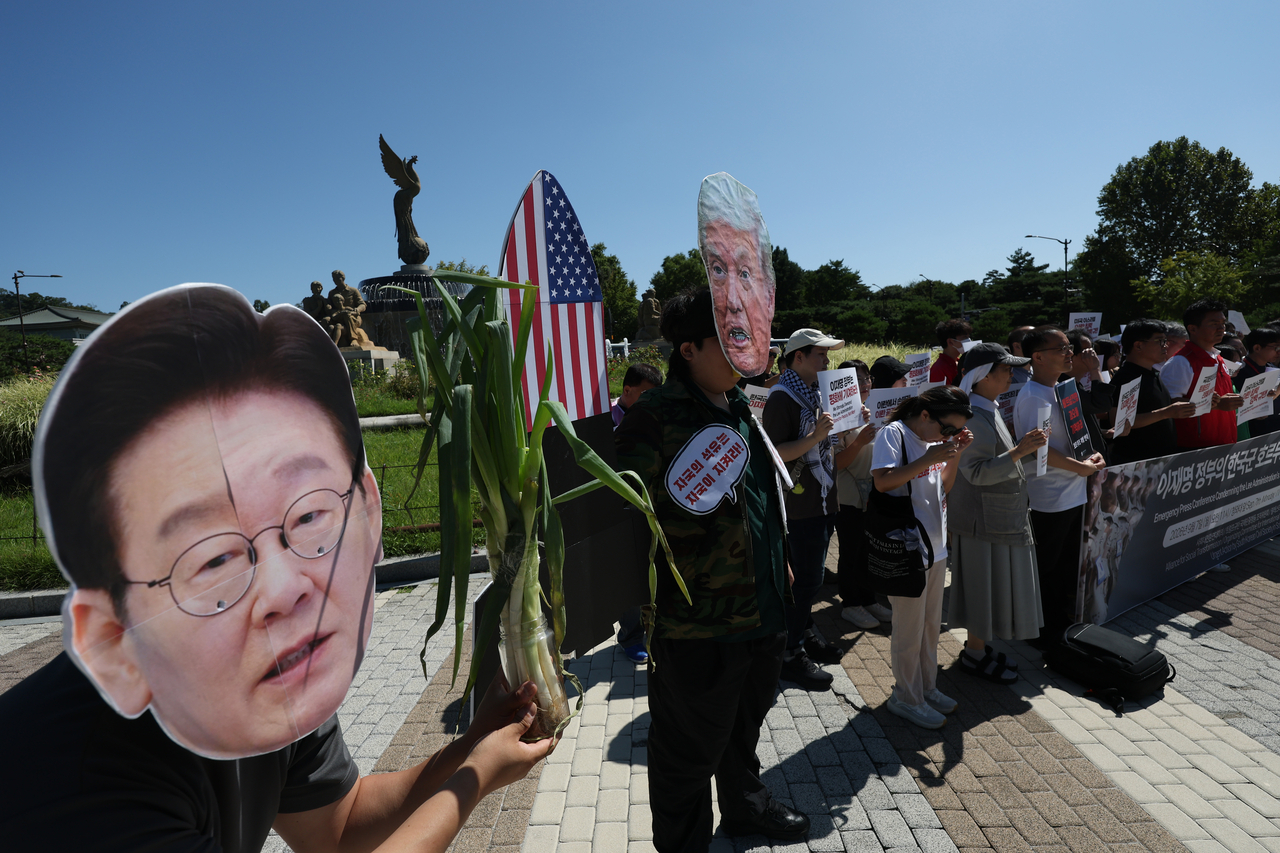
Trump has increasingly criticized allies over what he sees as insufficient support for US efforts involving Iran. In an Aug. 30 interview, he singled out South Korea for declining a US request for assistance, saying he would "remember" Seoul's response and arguing that Washington could not continue supporting allies that were unwilling to help the US.
The pressure has left Seoul balancing its need to manage relations with Washington against concerns at home over the risks of becoming involved in the conflict.
A Cheong Wa Dae official said Friday that Seoul was considering options for making a "substantive contribution" in the Strait of Hormuz, including military support, while stressing that no specific measures had been decided.
Asked whether overseas deployment could be among those options, the official said Seoul could have room to act "within a range that would not significantly undermine readiness on the Korean Peninsula."
The issue has broader implications for South Korea-US relations; Seoul is pursuing negotiations with Washington on major security issues, including uranium enrichment capabilities, nuclear fuel for its planned nuclear-powered submarines, and the transfer of wartime operational control.
Trump's pressure on Seoul has also extended to the allies' military exercises. On Aug. 17, he ordered a substantial reduction in Ulchi Freedom Shield, one of the allies' two annual theater-level exercises. The drills were subsequently shortened from 11 days to five, with some field training also scaled back.
That same day, Cheong Wa Dae said for the first time that Seoul was discussing possible "military contributions" in the Strait of Hormuz with Washington, with the government later moving toward more concrete preparations and reviewing potential assets for deployment.
President Lee Jae Myung, currently on a state visit to France, is scheduled to meet French President Emmanuel Macron on Tuesday, with cooperation related to the Strait of Hormuz potentially on the agenda.
Domestic politics, however, present another obstacle.
Some ruling Democratic Party of Korea lawmakers have begun openly questioning a potential deployment, while progressive parties aligned with the broader ruling bloc have voiced stronger opposition.
Yang Moo-jin, a distinguished professor at the University of North Korean Studies, argued that dispatching a warship should itself be considered an overseas troop deployment and warned against allowing Seoul's alliance considerations to drive the decision.
"Such a deployment would be a reckless venture that serves neither South Korea's national interests nor any justifiable cause," Yang said.
He argued that Seoul should treat the question separately from the South Korea-US alliance and cautioned that expanding the scope of South Korean military activities amid heightened tensions could expose Korean personnel to direct military confrontation.
Yang also questioned whether a mission could remain narrowly focused on maritime security once South Korean military assets were operating in an active conflict zone.
The government, he said, would need to clarify whether any operation would be limited to protecting freedom of navigation, involve expanding the mission of the Cheonghae Unit — South Korea's naval anti-piracy contingent operating in waters off the Middle East — or constitute participation in a separate military operation.
"Securing public consent should be a basic prerequisite," Yang said, adding that he hoped the proposal would "end at the review stage" rather than result in an actual deployment.
mkjung@heraldcorp.com