Boy groups turn to demanding choreography to showcase performance skills; girl groups leave more room for individuality

The gender divide in K-pop choreography is taking a new shape, with boy groups pushing toward more physically demanding performances and girl groups moving in the opposite direction, embracing freer movement that puts individual character and expression at the forefront.
NCT 127 and rookie girl group Tuide offered contrasting examples of the trend when both released new music on Aug. 24.
At a press conference for NCT 127’s seventh LP “Blingy” in southern Seoul, the members repeatedly singled out the title track’s choreography as one of the most physically demanding of their career.
“We worked incredibly hard on the performance. The choreography was probably one of the most difficult we’ve ever done,” Johnny said. “It’s the kind of performance you don’t see very often these days.”
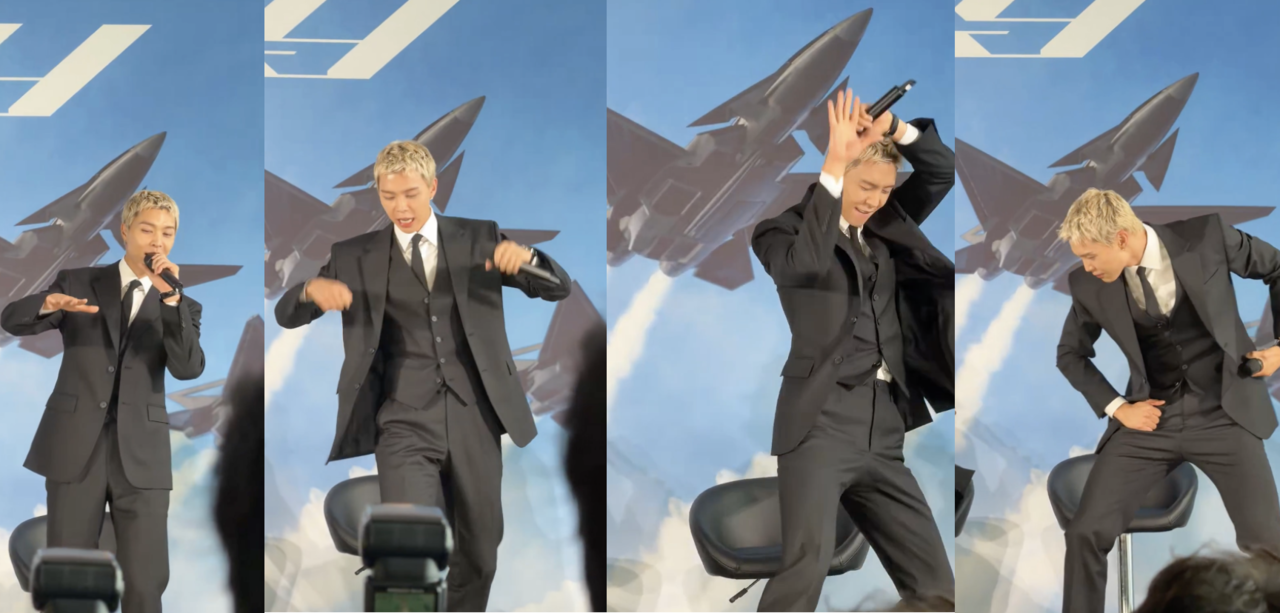
The performance for “Blingy” reflects that intensity, combining powerful movements with rapidly shifting formations and tightly synchronized sequences that demand high levels of stamina and energy.
On the same day, Hybe’s newest girl group, Tuide, made its debut with an emphasis on the opposite: freedom of movement.
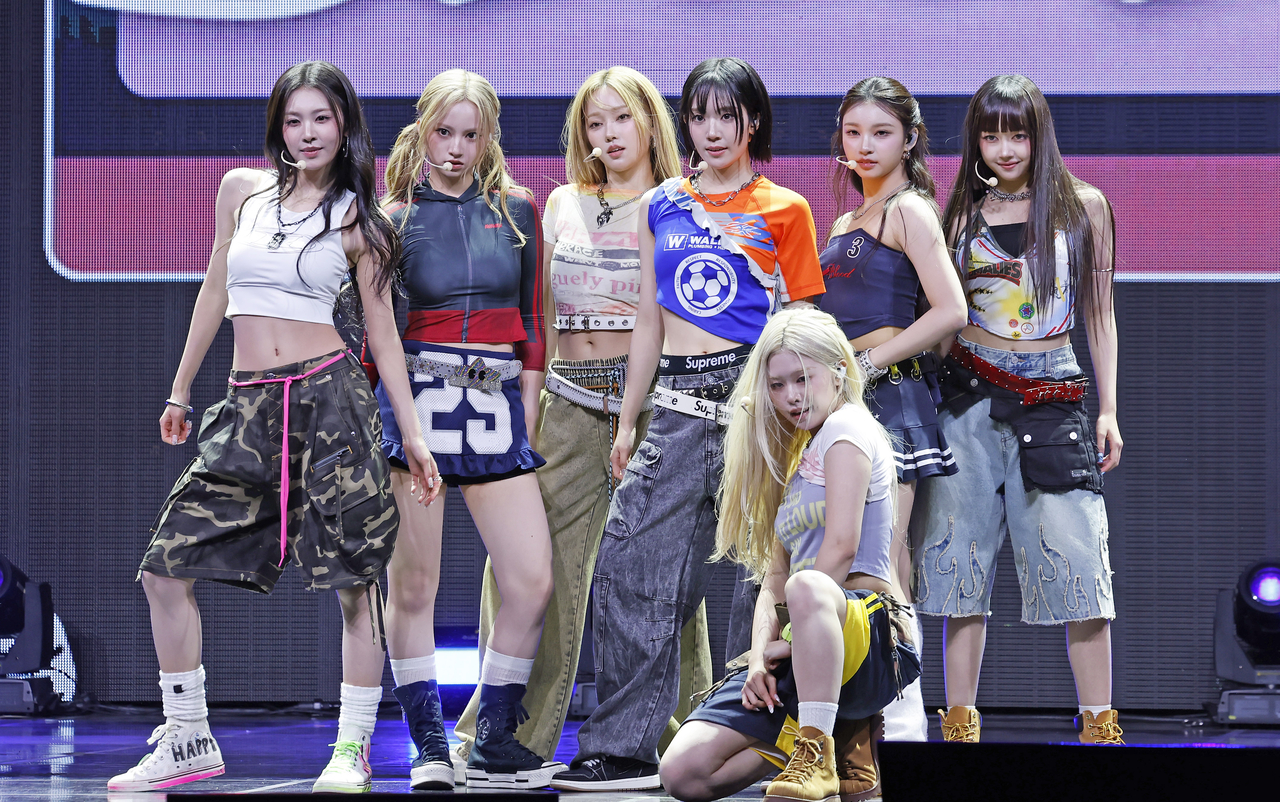
At a media showcase for debut album “Tune & Play,” the seven-member group described “freedom” as one of the defining characteristics of the choreography for its debut track, “Sun Kiss.”
“We wanted people to feel like the seven of us were naturally having fun onstage,” member Seoyeon said. “The choreography as a whole flows around groovy movements.”
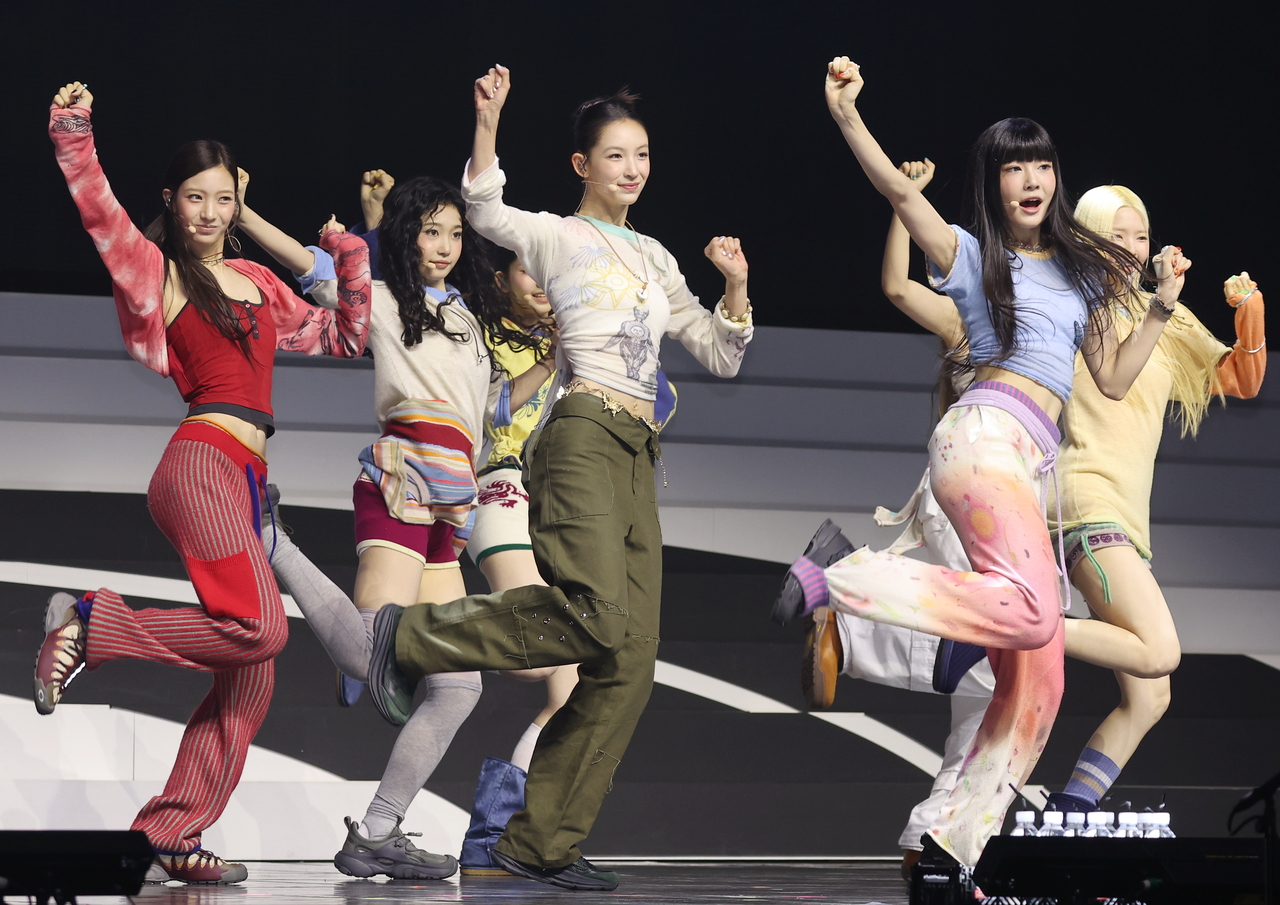
Aside from changes in formation and several key moves, much of the “Sun Kiss” performance gives the members room to interpret the choreography in their own way, allowing their individual styles and personalities to come through. The group’s prerelease track “Grls” has similarly drawn attention for its free-spirited choreography.
The contrast between the two groups reflects a broader divergence visible across recent K-pop releases.
Boy groups including Ateez with “Bad,” Riize with “Do Your Dance” and TWS with “Head Shoulders Knees Toes” have placed physically demanding choreography at the center of their performances, using difficult moves and tight synchronization to showcase their performance skills.
Among girl groups, meanwhile, OurBirthday’s “Squeezy” and KiiiKiii’s “404 (New Era)” and “Pop Off Pop Off” have leaned toward looser performances that leave greater room for individualism.

Behind the divergence is a shift in how K-pop performances are consumed.
“As short-form videos and individual fancams become increasingly important in how performances circulate online, choreography is being designed not only around the impact of an entire stage, but also around individual moments that can grab viewers’ attention within seconds,” an industry official who requested anonymity told The Korea Herald. “Performances are therefore being designed to highlight each member’s character and star quality.”
For boy groups, that shift has contributed to a push toward greater difficulty, as performance itself often serves as a key competitive strength.
“Boy groups are developing their performances in a direction that intuitively shows how skilled they are,” the official said. “Many pursue increasingly difficult choreography to differentiate themselves, while high-difficulty moves can also make an immediate impact in short-form content.”
Girl groups, meanwhile, have taken a different approach.
“Rather than perfectly matching every movement, we’re seeing more girl groups allow members to move in their own way or have greater freedom with facial expressions and gestures,” the official said. “The aim is to show more of each member’s distinctive character.”
The distinction, the official stressed, is therefore less about whether choreography is easy or difficult than about what it is designed to achieve.
“K-pop today is increasingly focused on what scenes people will remember and which members they will want to look up afterward,” the official said. “There will, of course, be exceptions depending on a group’s direction or musical concept, but the trend of boy groups opting for more difficult and powerful choreography and girl groups for something more relaxed and free is likely to continue as short-form content remains central to how K-pop is consumed.”
lee.jungjoo@heraldcorp.com