Hyundai's Louisiana mill to bring steel production closer to US auto plants while serving as base for lower-carbon steelmaking
DONALDSONVILLE, Louisiana -- Hyundai Motor Group, which has spent two decades building cars in the US, is moving further upstream to make the steel that goes into them.
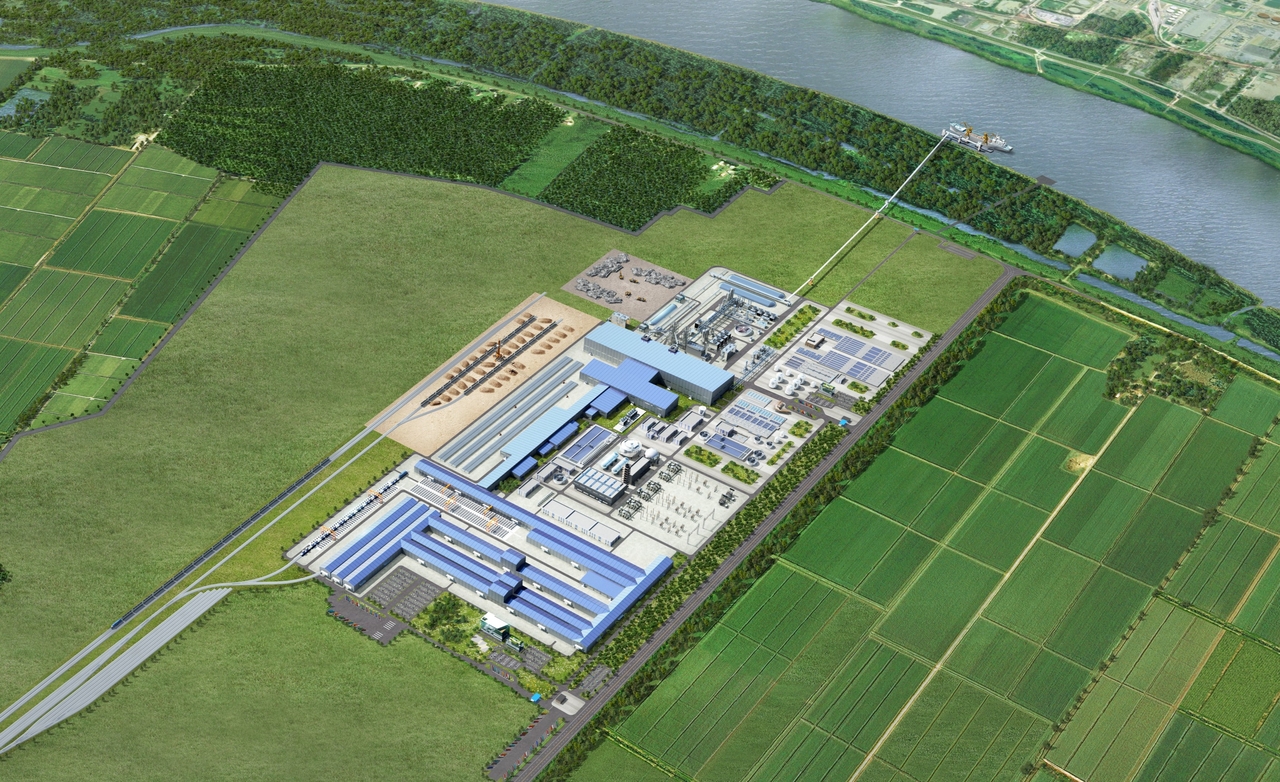
Hyundai-Posco Louisiana Steel, the $5.8 billion electric-arc furnace steel mill planned in Louisiana, marks a new phase in the auto giant's US expansion. Set to begin commercial production in 2029, the project will supply Hyundai and Kia's manufacturing operations in Alabama and Georgia, helping the group build a more integrated US supply chain from steel to finished vehicles.
The project is not just about localization. Built around direct reduced iron and electric arc furnace technology, the mill is designed to produce high-grade automotive steel with substantially lower carbon emissions than conventional blast-furnace steelmaking.
From steel to automobiles
Hyundai Motor Group has steadily expanded its US manufacturing footprint since opening an Alabama plant in 2005, followed by a Kia plant in Georgia in 2009 and recently Hyundai Motor Group Metaplant America, the group's electric vehicle facility that began production in 2024. Battery and parts suppliers have expanded alongside them.
Steel, however, has largely remained dependent on imports from South Korea or purchases from US steelmakers. With US tariffs on imported steel reaching as high as 50 percent, local production has become increasingly important to Hyundai's efforts to build a more resilient US supply chain.
The US itself presents a sizable market. Despite being the world's third-largest crude steel producer, it imported more than 20 million tons of steel in 2025. The US is also the world's second-largest auto producer, manufacturing 10.24 million vehicles last year.
Hyundai Motor Group currently has annual US production capacity of about 1 million vehicles and plans to expand it to 1.2 million, providing a substantial market for locally produced automotive steel.
Once the Louisiana mill begins production, the group will have a US supply chain stretching from automotive steel production to vehicle assembly, mirroring the integrated model Hyundai established in South Korea with Hyundai Steel's Dangjin plant in South Chungcheong Province.
Of Hyundai-Posco Louisiana Steel's planned 2.7 million tons of annual production, about 1.8 million tons will be automotive steel, with the remaining 900,000 tons for other industries.
Hyundai Motor CEO Jose Munoz made clear that the carmaker intends to use the Louisiana-made steel for as many US-made vehicles as possible.
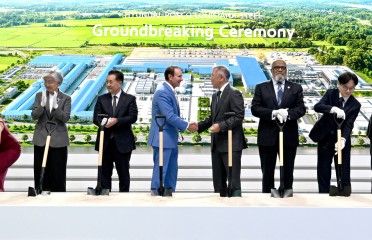
"We want to utilize this steel for our cars produced in the US," Munoz told reporters after Friday's groundbreaking ceremony. "We want to localize the utilization of steel in our US factories, both in Alabama and Georgia."
Hyundai Steel plans to supply automakers outside the group as well, targeting potential customers including General Motors in Texas, Volkswagen in Tennessee and Honda in Alabama, as it seeks to expand its presence in the US automotive steel market.
"This plant will be both our company's first integrated steel mill dedicated to automotive steel sheets and the first of its kind in America," Hyundai Motor Group Executive Chair Chung Euisun said at the ceremony. "The steel produced here will support Hyundai Motor Group and other automakers as they build the next generation of mobility."
Low-carbon steelmaking
The Louisiana facility will also serve as a test bed for Hyundai Steel's lower-carbon steelmaking strategy.
Unlike conventional blast furnaces, which rely heavily on coal, electric arc furnaces use electricity and recycled scrap. Hyundai Steel expects the process to cut carbon emissions by about 70 percent compared with traditional blast-furnace steelmaking.
Producing high-grade automotive steel from scrap alone through electric arc furnaces, however, can be difficult because residual impurities can affect surface quality and formability.
Hyundai Steel's solution is to address this by combining scrap with direct reduced iron, a cleaner and purer iron feedstock. The approach is intended to enable production of high-grade automotive steel while preserving much of the emissions advantage of electric-arc furnaces.
Rather than sourcing direct reduced iron from outside suppliers, the Louisiana mill will produce it on site and feed it directly into its electric arc furnaces, creating an integrated production process from raw material to finished steel. Hyundai Steel said the setup will make the plant a key base for its transition toward low-carbon steel production.
Initially, the direct reduced iron process will use natural gas. Over the longer term, Hyundai Steel plans to use hydrogen and reduce emissions.
"We plan to progressively increase the use of hydrogen over time, with the goal of achieving substantial reductions in carbon emissions and advancing towards sustainable steelmaking," said Lee Bo-ryong, president and CEO of Hyundai Steel at the groundbreaking ceremony Friday.
sahn@heraldcorp.com