Ski resort Mona Yongpyong in Gangwon Province fills summer with wellness offerings
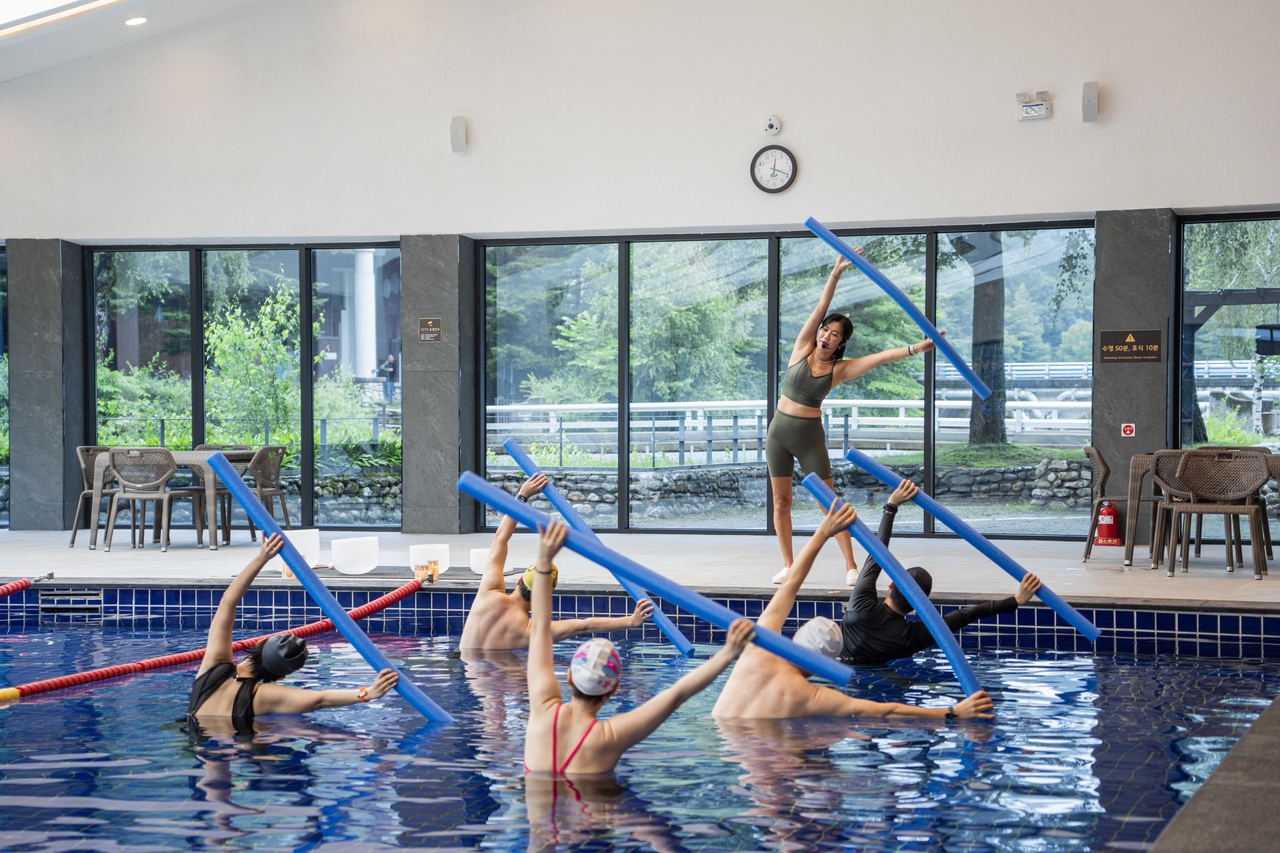
PYEONGCHANG, Gangwon Province — The water sits at 1.3 meters, shallow enough to stand in and deep enough to make standing difficult. That is the point.
Participants are lined up in the indoor pool at Mona Yongpyong, each with a pool noodle in hand, while instructor Kim Na-hyun coaches from the deck above. Every time the body leans, the water pushes back. The class is called aqua barre, and it is less strenuous than it looks but still more difficult than it feels.
"Aqua barre combines aqua fitness with barre, using the buoyancy and resistance of water to build full-body strength through the core, lower body and glutes. It reduces the load on the joints while improving balance, posture and muscular endurance, so anyone from a first-timer to an experienced athlete can participate," Kim said after the session.
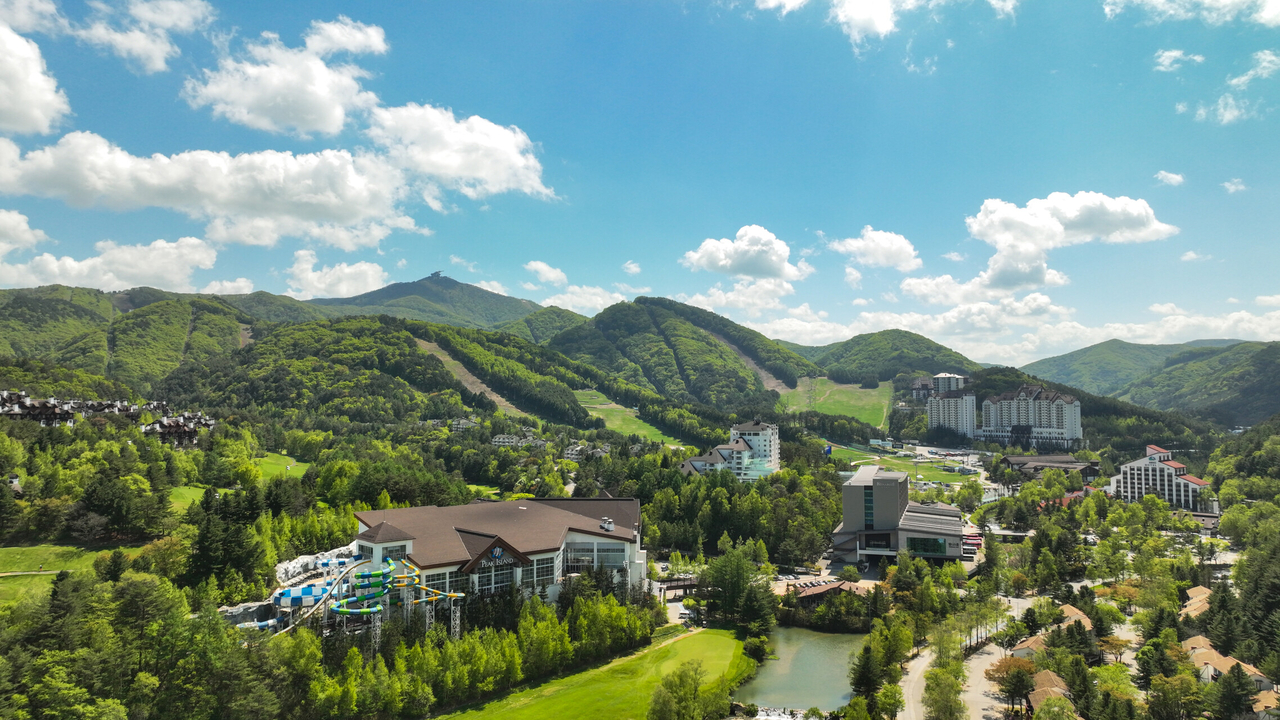
The class is one of the newer additions to a wellness lineup that the resort relaunched this month, when its wellness center reopened after a renovation. Mona Yongpyong, which opened Korea's first ski slopes in 1975 and remains the country's largest ski and snowboard resort, has spent recent years trying to give visitors a reason to come when there is no snow. Wellness is the current answer.
Water, meditation, singing bowl
The pool is free for overnight guests and is built like a glass house, with tall windows on three sides. Three lanes run its length. Two are for swimming and the third, wider one is given over to play.
Kim, a Pilates instructor who teaches at the resort on a freelance basis, kept the aqua barre hour focused on the core of the body, using a pool noodle for stretching and the buoyancy to hold awkward angles a beat longer than felt comfortable. It ended with a singing bowl meditation giving several minutes of slowed breathing, everyone still chest-deep in the water.
The exercise quietly gained a following in Korea after actor Kim Hye-soo took it up.
"Whatever the workout, the most important thing is simply moving your own body. I hope the experience of focusing on breath and movement doesn't end when the class does but carries into daily life. Listening to small changes in the body and building a habit of caring for yourself can be a starting point for health in both body and mind,” Kim said.
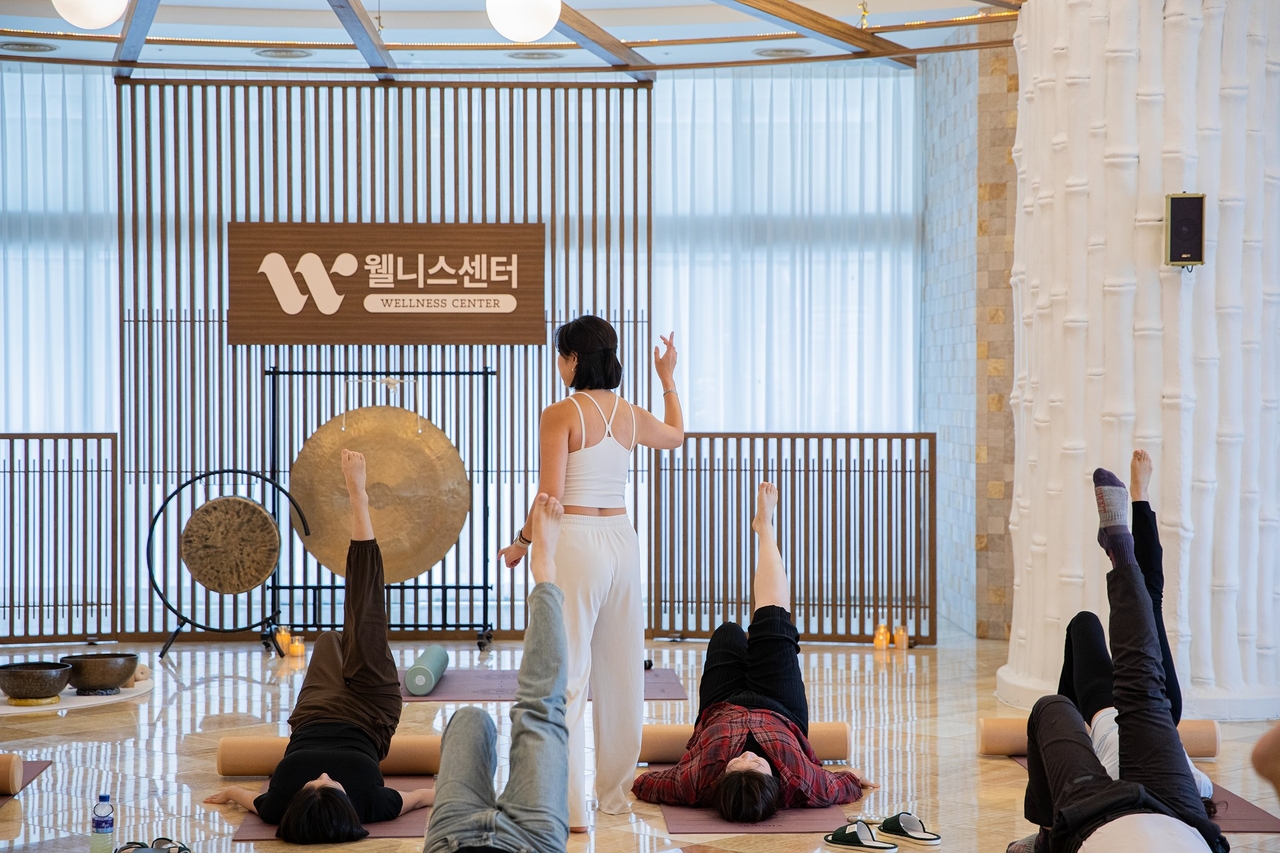
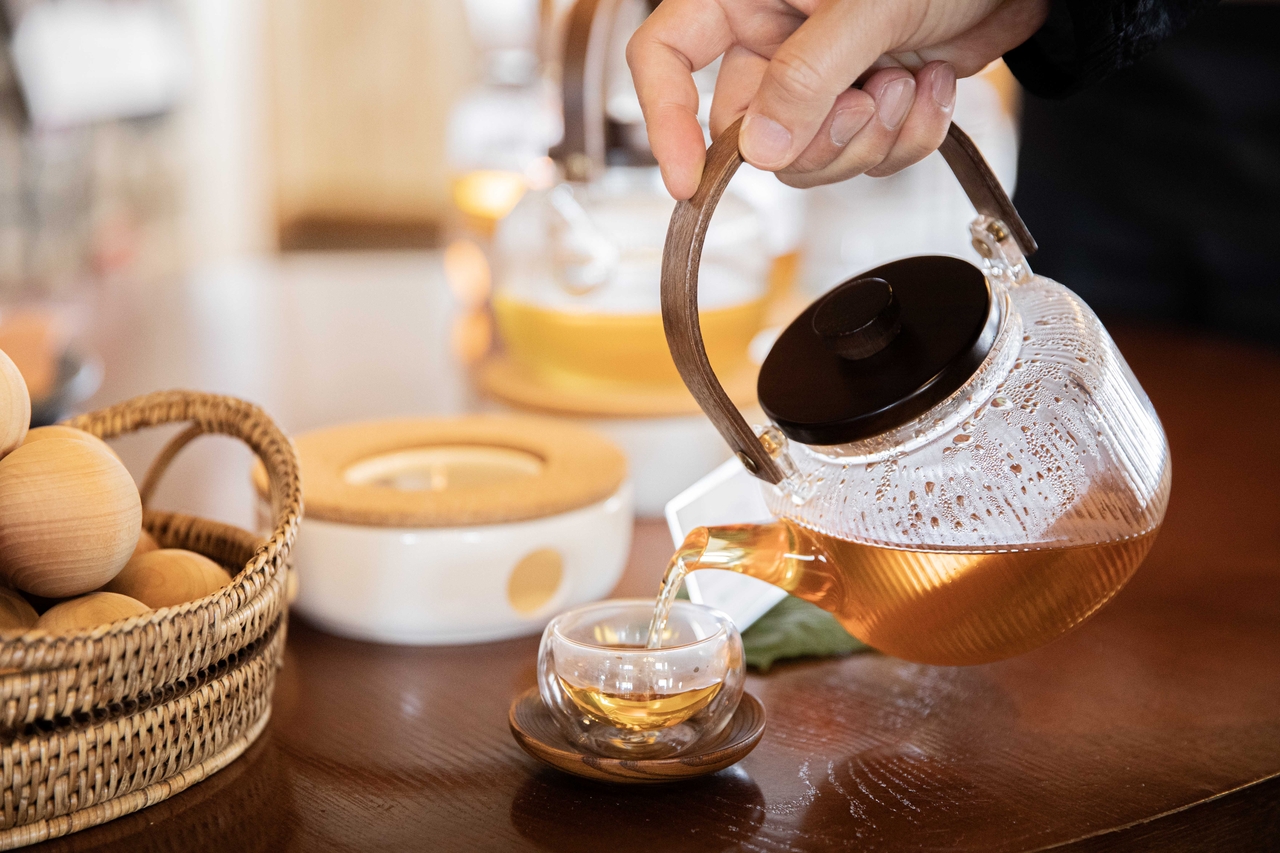
Her yoga session following aqua barre opened with chrysanthemum tea and a few drops of aroma oil dabbed on the wrists and behind the ears to help participants relax. The session mostly consisted of stretching with the help of a foam roller.
Forest therapy
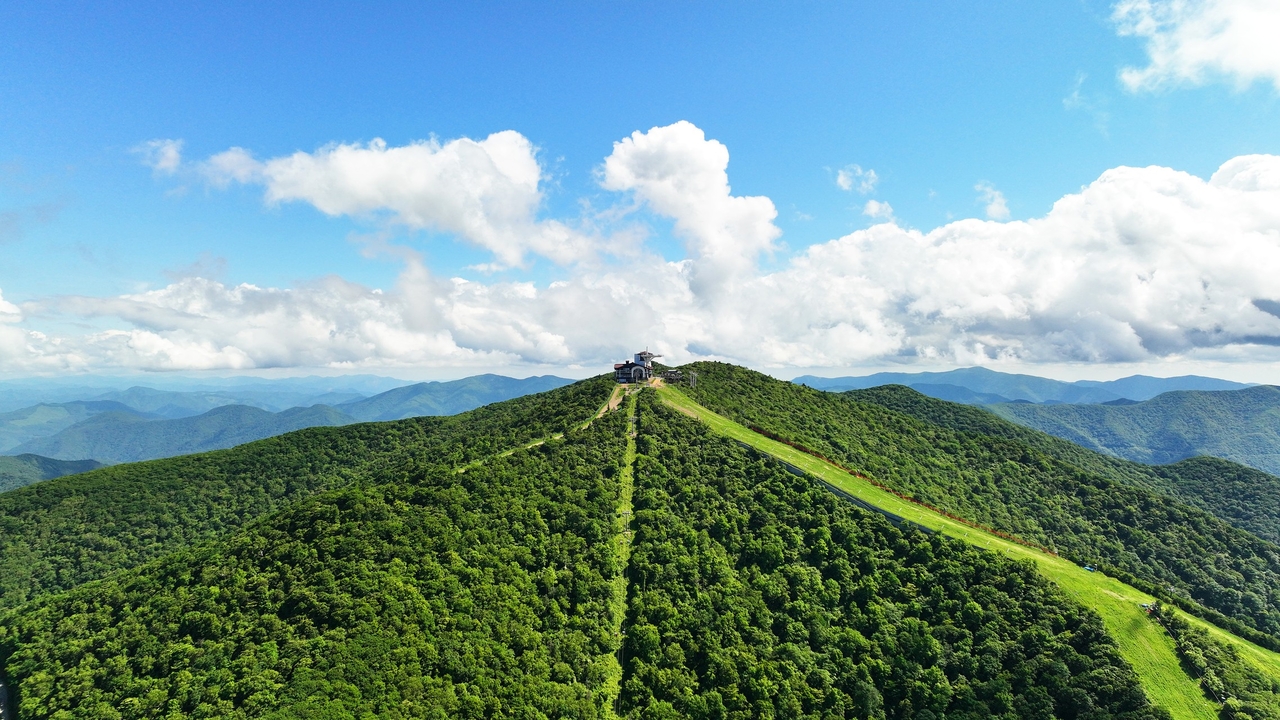
The resort's most distinctive wellness program is at the top of Balwangsan.
A cable car ride to the summit takes about 22 minutes, climbing to 1,458 meters. Pets are allowed on board. At the top, waiting near the barrier-free deck path, is Oh Young-sook, a natural healing therapist who leads the forest therapy program.
"Balwangsan is a place where you feel like you're walking half in the air for a third of the year," Oh said. Cloud and fog settle over the summit often enough that the mountain seems to float. She calls it a healing forest, and points out that its yew trees, with their distinctive reddish bark, have made the area a designated genetic resource protection zone. Eurasian eagle-owls are common here. On clear days the East Sea is visible.
A windbreaker is essential even in July as temperatures here run about 8 degrees Celsius below the temperature in Seoul.
The summit also has a spring, Balwangsu, fed by snowmelt filtered through sedimentary rock. Four separate streams run beneath four carved words for wealth, longevity, wisdom and love, and visitors drink from whichever they value most. Bottles are sold for 3,000 won ($2) from a vending machine nearby for those who want to take the water home or give it to their loved ones.
Five elements, five teas
The forest therapy program moves indoors for its second half, into the Castle Chalet at the summit, where a fireplace is going.
Everyone is handed a questionnaire that asks about symptoms they notice in daily life, and the answers determine which of five medicinal teas they are served. The teas correspond to the five elements of Korean traditional medicine. Oh explains each one before the pot arrives.
Participants are given a massage ball scented with aroma oil to work on their shoulders while the tea steeps, and leave with tea bags for brewing at home and a pine cone infused with essential oil as a sachet.
Down the mountain
Back at the base, other outdoor programs are located at the lower and middle reaches of Balwangsan. Morning Energy Yoga is held outside at the start of the day. Forest Rhythm Jogging is a slow-jogging program with attention on breathing rather than distance or speed. Forest Rhythm Walking follows the phytoncide-heavy trails of Ani-Fore forest. Indoors, Recovery Flow Yoga and Balance Chair Yoga are held at the wellness center.
The resort was named again this year on the Korea Tourism Organization's list of 88 recommended wellness destinations. Its thousand-year yew forest trail has been selected as a Korean Tourism Star and the wider Balwangsan area is on the national list of 100 outstanding forests.
Rooms and F&B
Accommodation is split among various buildings. In Verde Hill, the smallest bookable unit is the 38-pyeong (3.3 square meters) type, with a kitchen, living room, two bedrooms, two bathrooms and terraces front and back. The 46-pyeong type adds an ondol room, and the 49-pyeong type, the largest, runs about 800,000 won a night in peak season and looks out from the living room terrace onto the slopes. It suits large family groups and skiers, and in summer it draws people seeking to escape the heat.
The premium building, Apolis, has a more polished lobby, an infinity pool and marble interiors. Every unit has a balcony facing the slopes. The 60-pyeong type costs around 1 million won a night and comes with a massage chair, a fireplace, an outdoor sofa on the terrace and a laundry room. The 89-pyeong type adds an entryway pantry, a living room with a full forest view, two bedrooms with powder rooms and an ondol room (Korea's traditional heating system).
Dining has been reshuffled for the summer. Pit 700, a Texas barbecue restaurant, opened this month at Dragon Plaza with platters and draft beer. No Brand Burger opened in June and Sambuja 1983, a hanwoo-based Korean restaurant, is scheduled to open later this month.
The resort is reachable by KTX to Jinbu Station, and shuttle buses run to the property.
yoohong@heraldcorp.com