
More South Koreans identified as progressive than a year earlier, even as most adults identified as centrist, and ideological division was rated as the country’s most serious social conflict, a government survey showed Tuesday.
According to the Korea Institute of Public Administration’s annual survey, 27.1 percent of respondents described themselves as progressive, up 2.7 percentage points from the previous year.
Conservatives accounted for 29.6 percent, down 0.6 percentage point, while those identifying as neither progressive nor conservative made up 43.4 percent, down 1.8 percentage points.
Respondents were also asked to rate the severity of various social conflicts on a four-point scale. Ideological conflict received the highest average score, at 3.2 out of 4.
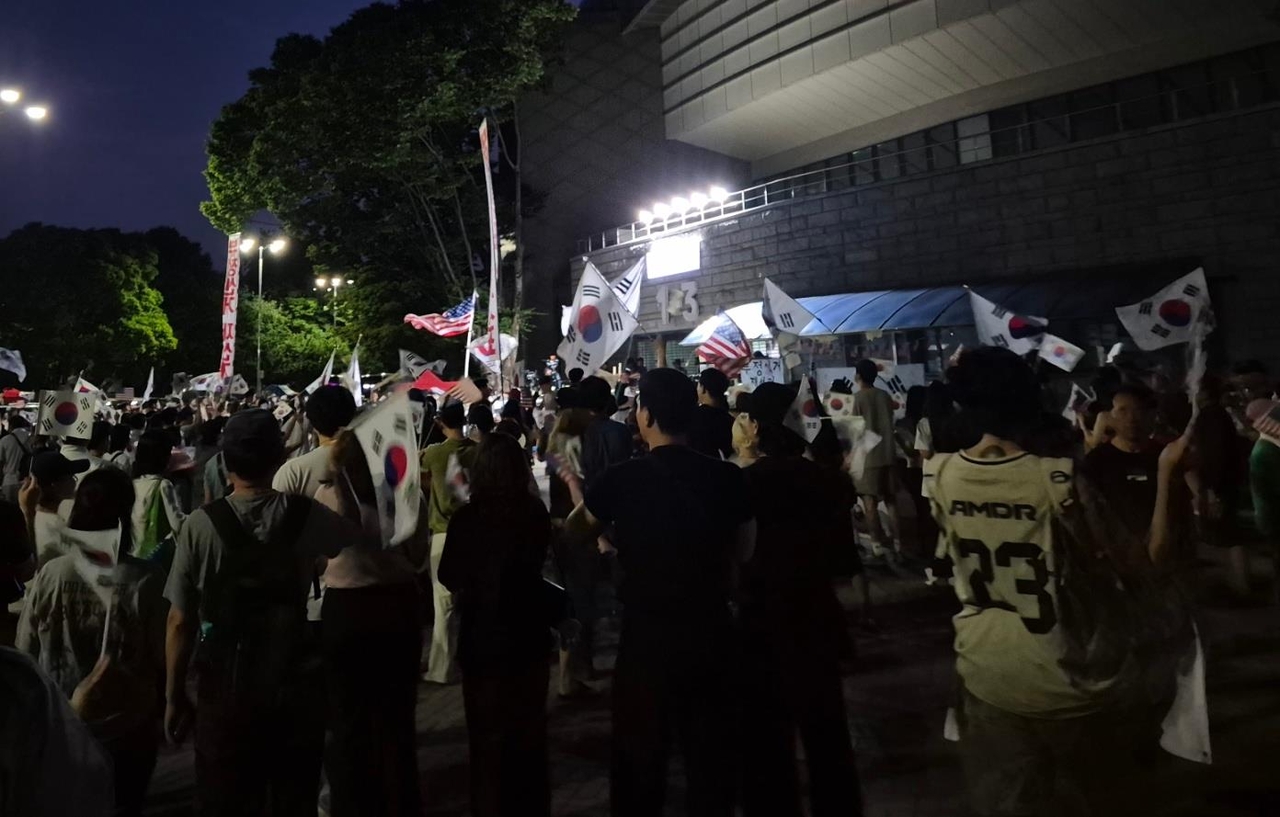
Recent political disputes have shown how quickly administrative failures or public controversies can be pulled into ideological battles. The ballot shortage during the June 3 local elections, for instance, sparked public protests but were later used by right-wingers to fuel claims of election-rigging.
After ideological conflict, the next-highest score went to tensions between the middle class and low-income groups, at 2.9, followed by conflicts between employers and employees, at 2.8.
Conflicts between the greater Seoul area and the rest of the country, between development and environmental preservation, and between generations each scored 2.7. Religious conflict, gender conflict, and tensions between locals and foreigners each scored 2.6.
The survey of 8,305 adults was conducted between August and September 2025 by the state-run institute.
When asked what they saw as the main cause of serious social conflict, 26.3 percent of respondents cited clashes of interest between different parties, while 21.8 percent pointed to a lack of understanding between individuals or groups.
The wealth gap was cited by 19 percent, followed by clashes in values between individuals and groups, at 18.5 percent.
30-somethings most content with life
Koreans gave an average score of 6.9 out of 10 when asked to assess their overall happiness.
By age group, respondents in their 30s gave the highest score, at 7.2, while those in their 60s gave the lowest, at 6.7.
Satisfaction with politics remained relatively low, at 5.5 out of 10, though the figure rose 0.4 points from a year earlier. Satisfaction with the economy stood at 5.3, unchanged from the previous year.
Respondents were slightly more optimistic about the country’s political and economic conditions five years from now, giving both categories an average score of 5.8.
On policy priorities, 31.2 percent said distribution was more important than growth, down 5.4 percentage points from the previous year. Another 30.3 percent said growth was more important, up 2.8 percentage points, while the remainder said both were important.
minsikyoon@heraldcorp.com