Experts say long-standing regional prejudice is being repackaged as entertainment among some younger Koreans
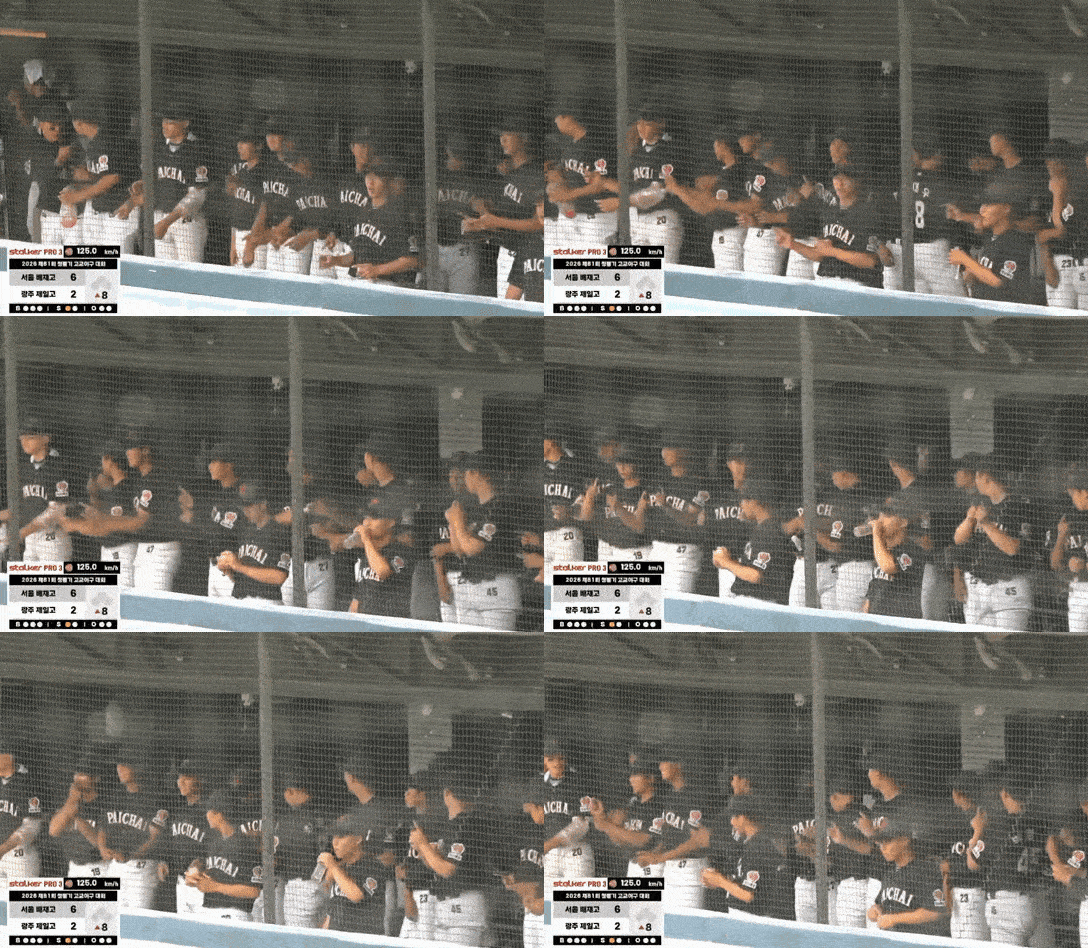
A mocking chant by a Seoul-based team during a livestreamed high school baseball game has triggered renewed criticism over far-right memes mocking the victims of South Korea’s 1980 Gwangju Democratic Uprising.
It has also raised a broader question about how online memes mocking one of South Korea’s deepest historical wounds are moving beyond internet spaces and turning into collective performances by younger generations in public.
From online meme to shared entertainment
During a nationwide high school baseball championship on Monday, Paichai High School players repeatedly chanted “I’ll go, I’ll go to Starbucks” at their opponents from Gwangju Jeil High School while moving in unison in the top of the eighth inning.
The game was briefly halted after coaches from Gwangju Jeil High School protested. Broadcast footage also captured someone shouting “Tank Day."
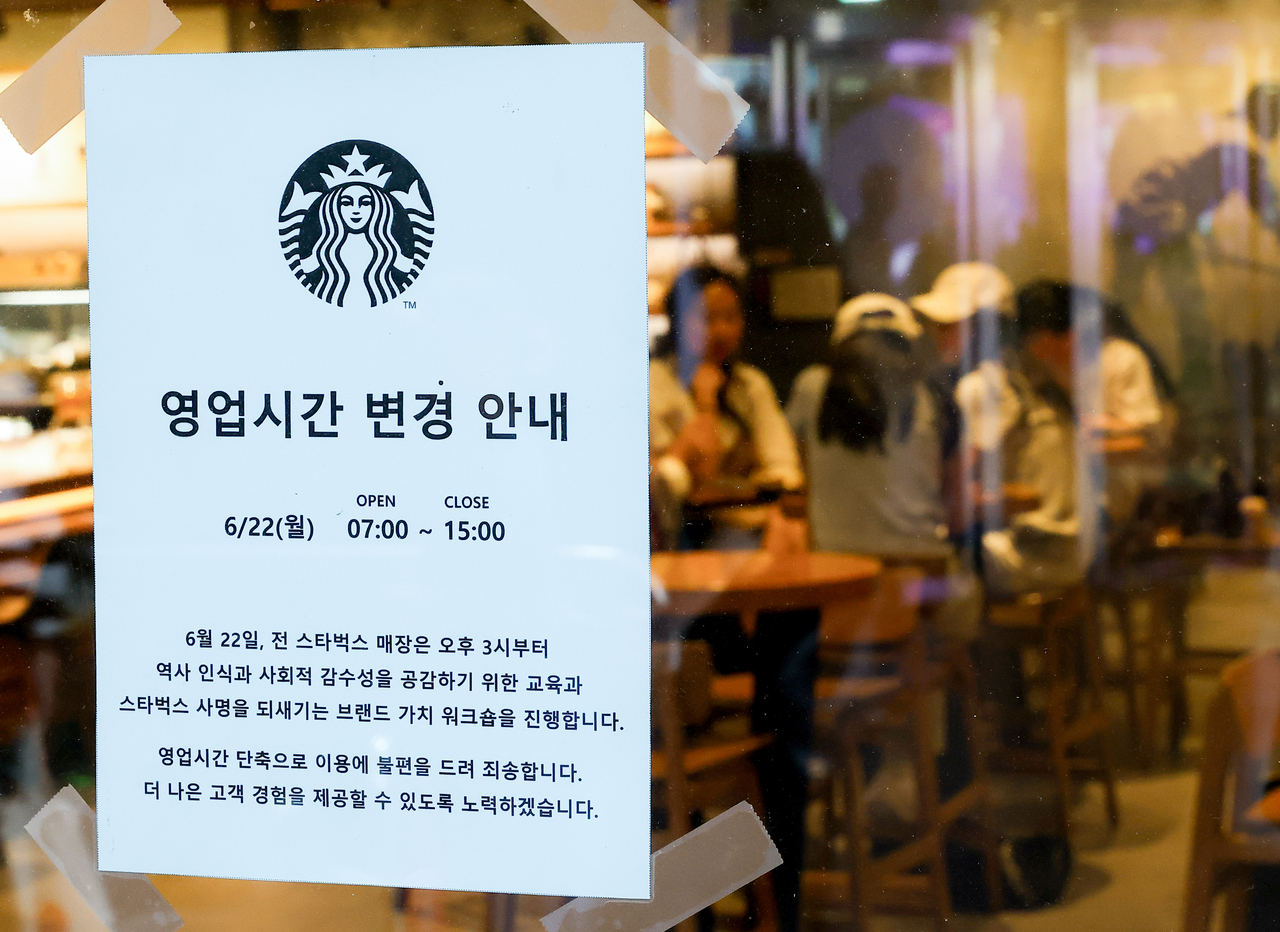
The chant appeared to refer to a Starbucks Korea promotion that sparked nationwide outrage earlier this year.
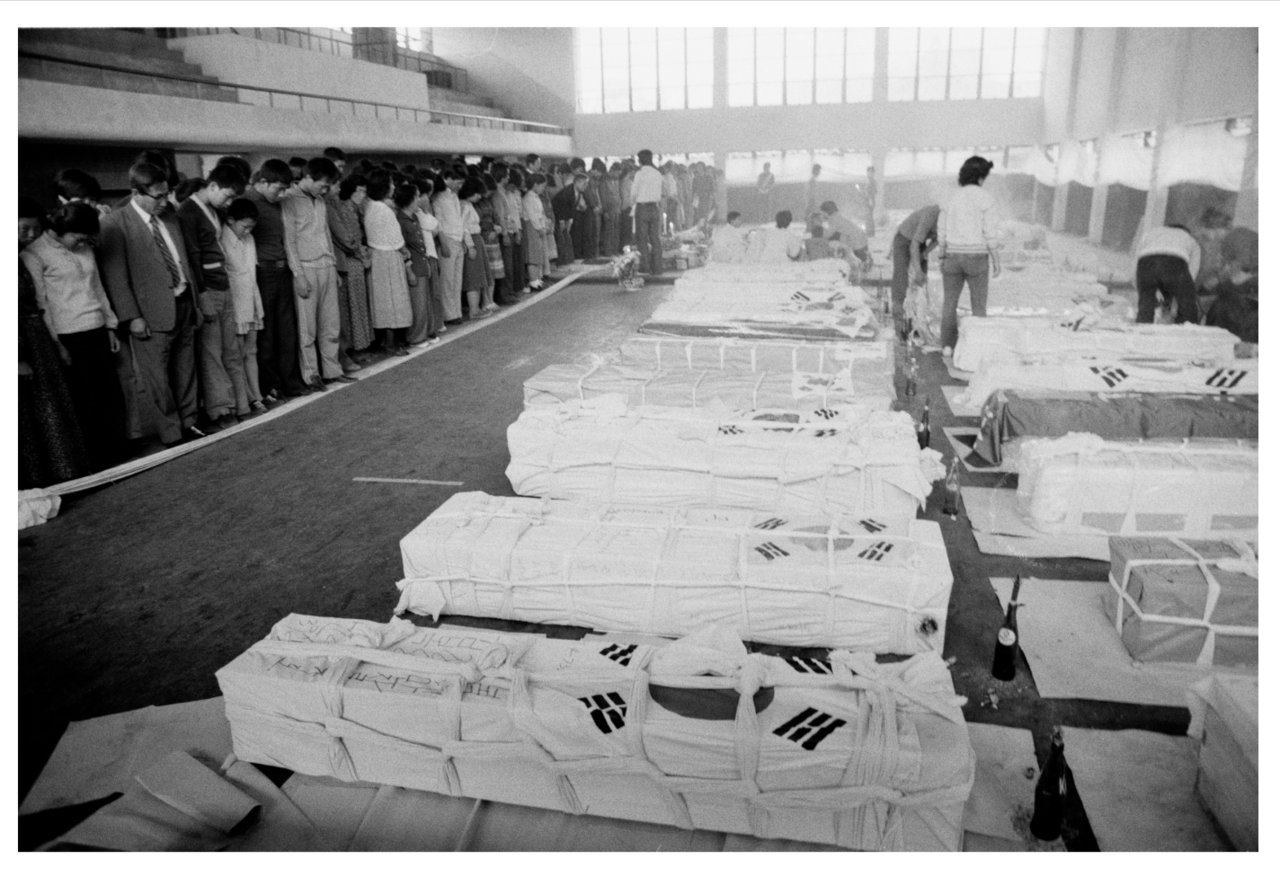
On May 18, Starbucks Korea launched its "Tank Day" tumbler promotion. The launch coincided with the anniversary of the 1980 Gwangju Democratic Uprising and reminded many Koreans of the military special forces, backed by tanks, that violently suppressed demonstrators. The government recognizes at least 162 civilian deaths, although some estimates are higher.
The Korea Baseball Softball Association on Wednesday suspended the Paichai team from nationwide competitions for six months, forcing it to withdraw from the remainder of the Blue Dragon Championship.
But the case has raised concerns beyond disciplinary action against the team.
Park Gu-yong, a philosophy professor at Chonnam National University, said Monday's incident reflects a broader pattern in which long-standing regional prejudice has been absorbed and repackaged as entertainment by some younger generations.
“Gwangju and the Jeolla region have long been easy targets of discrimination,” Park said. “For some young people, that prejudice has become something to consume as entertainment, without any sense of guilt.”
Following Monday's baseball game, Gwangju Jeil High School submitted an official letter of protest Tuesday to the Korea Baseball Softball Association, calling for a thorough investigation and disciplinary action.
“It cannot be overlooked that players insulted an entire region and inflicted emotional harm on their opponents, especially considering the educational purpose of high school sports,” principal Lee Kyu-yeon told local media.
“We urge the association to conduct a thorough investigation, take strict action against those responsible, and establish effective measures to prevent discriminatory and hateful conduct.”
How regional hatred reaches younger generations
The incident has raised concerns beyond students' unawareness of the 1980 tragedy, after Gwangju Jeil High School said similar slurs had also been used during previous games against schools from the region.
Education workers say the case reflects regional hatred spreading from fringe online communities into the everyday lives of younger generations.
“It symbolizes that far-right mockery and hatred have entered adolescents' public spaces, including school sports,” an official at the Korean Teachers and Education Workers Union said. “This is no longer an issue that can be dismissed as the misconduct of a few students.”
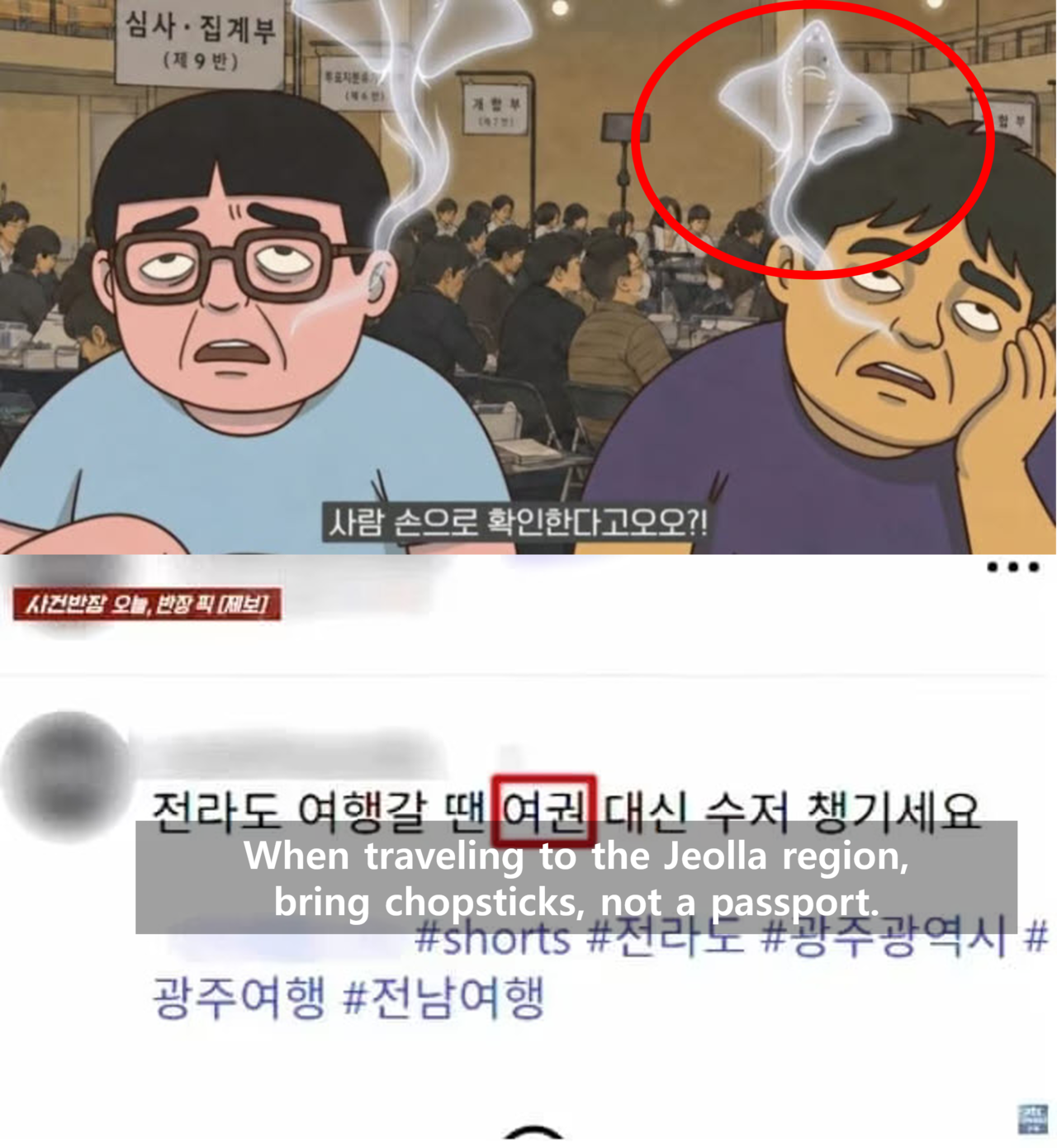
For years, internet users have circulated memes portraying Gwangju and the wider Jeolla region as a separate country requiring a passport to visit. Others have used hongeo, a fermented skate dish closely associated with the region, as a derogatory label for its people.
Park said decades of regional prejudice have made Gwangju and the wider Jeolla region easy targets for ridicule, while online communities have increasingly passed those attitudes on to younger generations through memes and slurs.
He argued that such inherited prejudice resonates more easily with younger people navigating growing uncertainty and isolation.
“Living in an era of growing uncertainty, many younger people seek hatred as a way to cope with insecurity and anxiety,” Park said, adding that the phenomenon is not unique to South Korea. “But Korean society offers few opportunities for young people to overcome those feelings through healthy collective experiences.”
Should students alone be blamed?
The incident has also raised broader questions over whether responsibility lies solely with the students or extends to coaches, schools and the adults who failed to stop such behavior.
On Wednesday, officials from Seoul’s Paichai High School attempted to visit Gwangju Jeil High School to apologize in person. The visit was declined amid growing criticism over the school’s response and the coaches’ failure to stop the chanting immediately.
Both the Seoul Metropolitan Office of Education and Paichai High School responded by launching investigations and pledging to strengthen human rights and sportsmanship education for student athletes.
The education office also urged the public not to direct excessive criticism toward individual students after personal information about some players began circulating online.
The incident also points to broader social problems that cannot be solved through disciplinary action or classroom education alone.
Park expressed skepticism that strengthening classroom education alone would prevent similar incidents.
“Unless we address the anxiety and isolation that drive young people into online communities where such hate speech circulates, this kind of behavior will not disappear simply by revising the curriculum,” he said. “What students need is a place where they can openly share their concerns and work through them together.”
forestjs@heraldcorp.com


