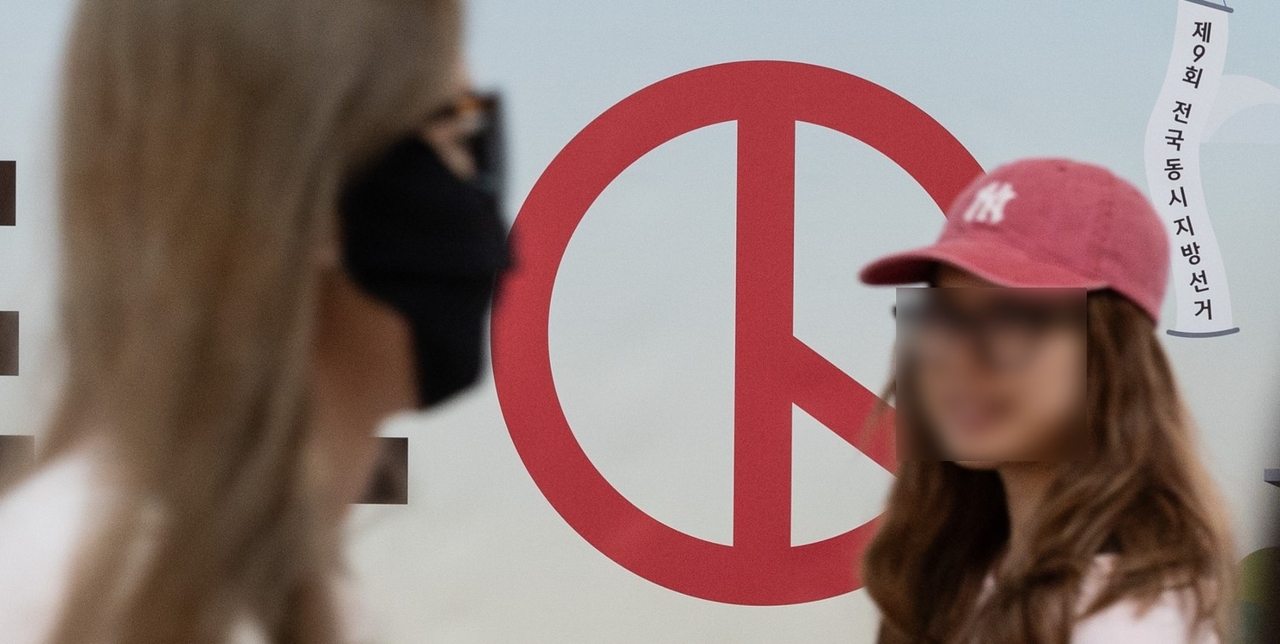
Opinion polls are suggesting that several races may be closer than originally expected in in the June 3 local elections, as Korea heads into a polling blackout.
The latest polls indicate that about half of the races for 16 major mayoral and gubernatorial posts are tightening. Earlier expectations were for a landslide victory for the ruling Democratic Party of Korea, following strong wins in the 2024 National Assembly election and the 2025 presidential election.
Opinion polls suggested that many ruling party candidates' leads have narrowed or been overtaken. This includes key areas such as the mayoral races for South Korea's two most populous cities: Seoul and Busan.
A weeklong election blackout period begins Thursday and runs through June 3. Media are banned for covering or citating opinion polls conducted during the period.
A telephoned opinion poll released Tuesday by Hankook Research suggested the ruling party's candidate for Seoul mayor, Chong Won-o, would get 42 percent of the vote, 6 percentage points ahead of the incumbent conservative mayor Oh Se-hoon.
The poll, conducted on 800 people Thursday through Monday, was the first to show Chong's lead falling below the margin of error. The previous three opinion polls estimated a lead of more than 10 percentage points.
Another pollster, Gongjung, placed Oh ahead of Chong by 0.4 percentage point, with Oh on 44 percent support.
In Busan, an opinion poll by Hankook Research indicated that 46 percent of respondents favored Democratic Party candidate Chun Jae-soo, whereas 34 percent favored incumbent Busan mayor Park Heong-joon. However, a Realmeter poll over the past weekend suggested that Chun was leading Park by just 2 percentage points.
The Democratic Party candidate was behind in opinion polls for the gubernatorial election in North Jeolla Province, a liberal stronghold, amid lingering controversies over the party's decision to expel the incumbent governor, Kim Kwan-young.
Kim was forced out of the party after leaked footage showed him distributing cash envelopes to young party members and councilors in a restaurant. He is now running as an independent candidate. Kim had also been ahead of Democratic Party candidate Lee Won-taeg in opinion polls. Lee was embroiled in a similar scandal, but the party went on to nominate Lee as the gubernatorial candidate.
Rep. Jo Seoung-lae of the Democratic Party, who leads the party's campaign committee, told reporters Wednesday that a wave of opinion polls typically comes in before an election blackout, with results differing sharply depending on which pollster organized it.
He added that Kim's lead in opinion polls come from the public's misunderstanding due to his "lies that President Lee had apporoved his candidacy" for the local election.
Jo said mayoral races in Seoul, Busan, Daegu and Ulsan were highly contested, as were the gubernatorial races in South Gyeongsang Province and North Jeolla Province.
Of 16 posts for key municipalities, 11 are currently held by the People Power Party, and three are occupied by the Democratic Party. Daegu currently has no mayor, while the governor of North Jeolla Province is the now independent Kim.
Meanwhile, parliamentary by-elections for 14 electoral districts will be held alongside the local elections.
At least four districts are closely fought: Busan's Buk-A, Gyeonggi Province's Pyeongtaek-B, Ulsan's Nam-A constituency and South Chungcheong Province's constituency comprising Gongju, Buyeo and Cheongyang.
The Democratic Party would see the loss of more than one seat as a step backward, as it originally won 13 of them.
Neither rival party chair, Rep. Jung Chung-rae of the Democratic Party or Rep. Jang Dong-hyeok of the People Power Party, has defined their goals regarding the number of seats they hope to win.
consnow@heraldcorp.com