

South Korea’s plan to curb plastic waste would still allow total plastic use to rise through 2030, environmental groups said, criticizing the government for leaning on recycling and voluntary reuse rather than binding cuts in consumption.
The Environment Ministry on Tuesday released an updated strategy that aims to cap newly produced plastic waste at 70 percent of projected 2030 levels. But critics say that the target is based on continued growth in plastic consumption, meaning the actual reduction from 2024 levels would be less than 1 million metric tons.
The dispute challenges the future of Korea’s plastic policy: Can the country reduce dependence on imported crude oil and petrochemical feedstocks through recycling and reuse, or does it need direct limits on production and consumption?
Under the Environment Ministry's updated plan, the government aims to keep newly produced plastic waste to 70 percent of the 10 million tons projected for 2030 if current trends continue. It plans to replace 2 million tons with recycled materials and cut new plastic production by 1 million tons.
The ministry also plans to raise the mandatory recycled content in beverage bottles to 30 percent by 2030, up from the current 10 percent. Similar requirements will be extended to other packaging materials in line with standards used in advanced economies, including the European Union.
The government added that it would encourage companies to use more reusable products and reduce nonrecyclables.
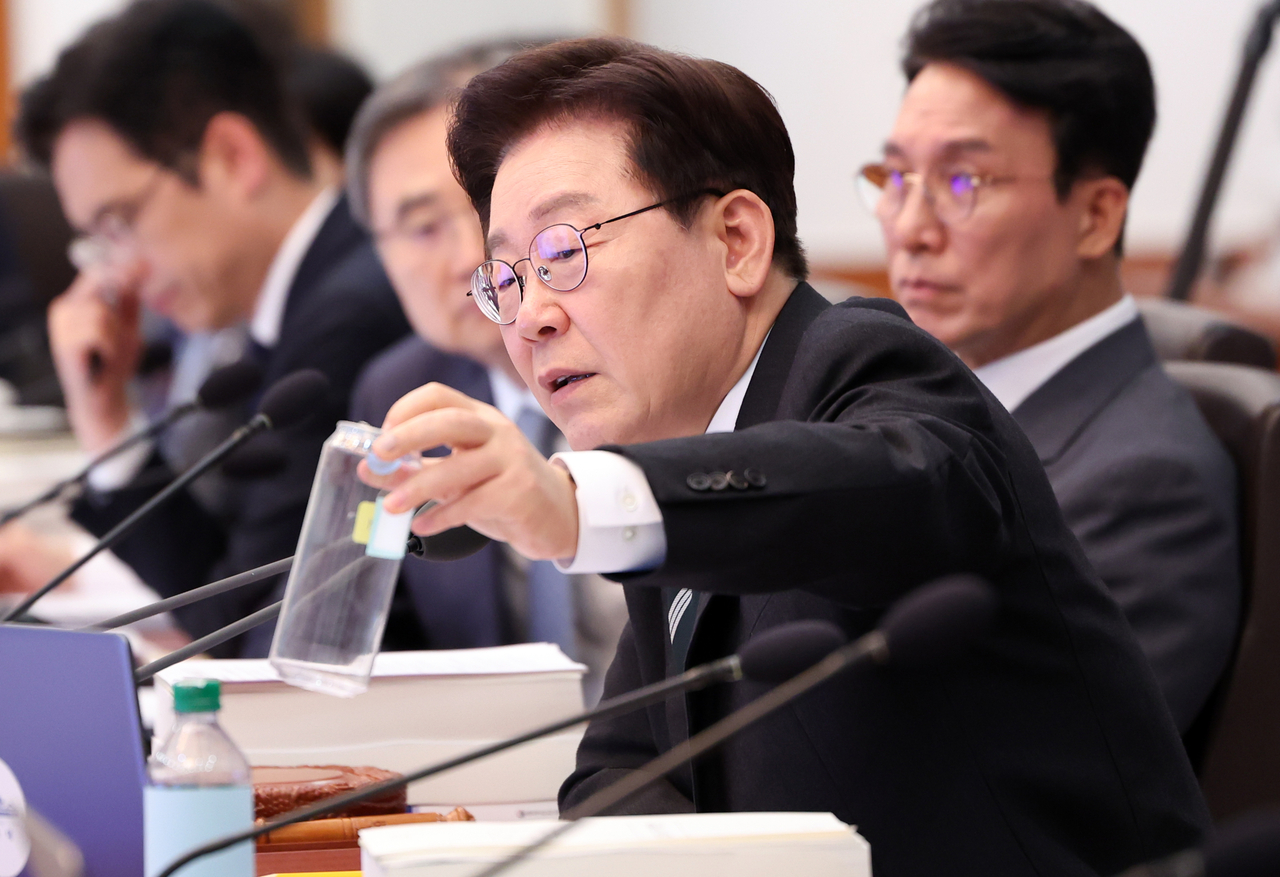
However, even President Lee Jae Myung appeared to question whether voluntary measures would be enough after being briefed on the plan by the ministry.
“The problem of disposable products can only be addressed by increasing charges on their use,” he added.
Environment Minister Kim Sung-hwan said the policy seeks to both reduce waste and address structural risks in Korea’s economy, which relies heavily on imported crude oil and petrochemical feedstocks to produce plastics.
Kim highlighted recent supply disruptions linked to the conflict in the Middle East as evidence of the country’s vulnerability.
Environmental groups said the plan falls short because it does not set a clear target for reducing overall plastic use.
“The 2030 target effectively allows total plastic use to continue increasing,” Greenpeace Korea said. “The government should align with international standards by setting clear reduction targets for overall plastic use and establishing a strong regulatory framework to ensure corporate compliance.”
The group said the government’s projections assume continued rapid growth in plastic consumption, leaving the actual reduction in newly made plastic waste at less than 1 million tons compared with 2024 levels.
Activists also criticized the plan’s reliance on incentives and voluntary measures, saying such policies can be weakened or reversed. They noted that previous efforts to curb disposable products through bans or charges have been rolled back twice in Korea.
The ministry said it was still collecting opinions from stakeholders and working on detailed measures for individual projects.
“We are continuing to communicate with industry,” a ministry official said. “We are discussing how to design measures that can deliver actual reductions in plastic use while taking into account on-site feasibility.”
forestjs@heraldcorp.com