Migrant rights groups in South Korea have filed a complaint with the National Human Rights Commission of Korea, arguing that most foreign residents have been excluded from government relief payments intended to offset high fuel costs.
The groups, including the Gyeonggi Migrants’ Equality Coalition, said that of roughly 2.167 million foreign residents who have stayed in South Korea for more than three months as of March, about 1.785 million — excluding marriage migrants, permanent residents and recognized refugees — have been left out of the latest round of payments.
South Korea is currently accepting applications for the relief program, which began Monday with basic livelihood security benefits recipients, lower-income households and single-parent families. The initiative aims to provide payments to 70 percent of the population, ranging from 100,000 won to 600,000 won per person, to ease the burden of high fuel prices and rising living costs.
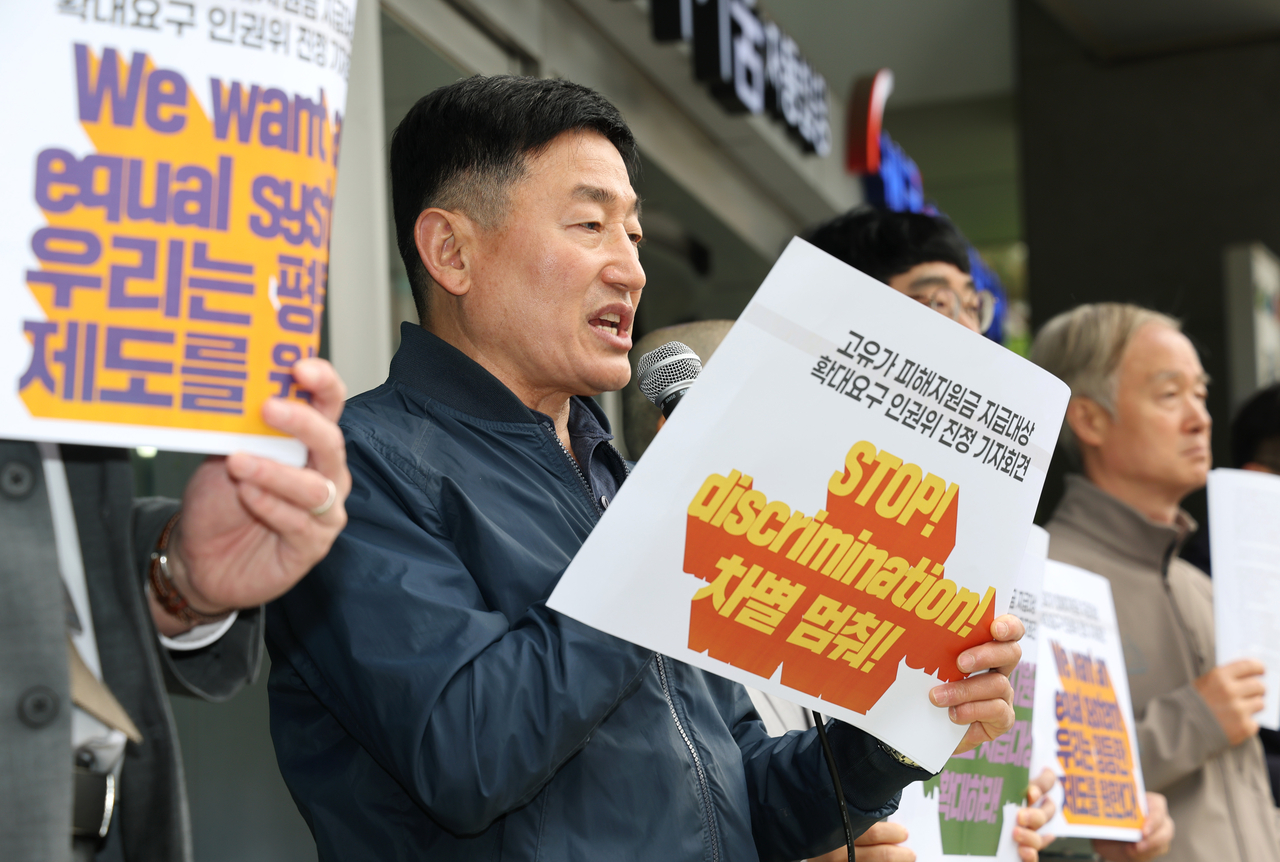
At a press conference in Jongno, Seoul, before submitting the petition, Udaya Rai, head of the Migrants’ Trade Union, said, “The impact of high fuel prices does not depend on nationality. Migrant workers live and work alongside Korean citizens and should be treated equally.”
Lee Jin-hye, a lawyer at Migrant Center Friends representing the petitioners, also argued that the exclusion amounts to arbitrary discrimination. “Excluding foreigners on the grounds that they are not listed in the resident registration system or do not hold permanent residency or marriage migrant status constitutes arbitrary discrimination,” she said.
The human rights commission has previously taken a similar position, although its decisions are nonbinding and serve only as recommendations. In March, it said eligibility for foreign nationals should be expanded in government support programs addressing economic hardship. In 2020, it also recommended including foreign residents in emergency disaster relief payments during the COVID-19 pandemic.
milaya@heraldcorp.com