South Korea is set to complete the deployment of its five-satellite military reconnaissance constellation this month, marking a major step toward strengthening its independent capabilities in the surveillance of North Korea.
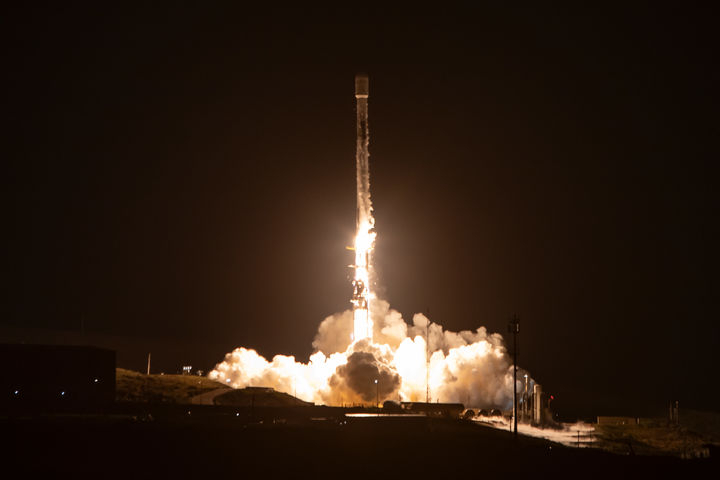
According to a military official on Tuesday, the country’s fifth reconnaissance satellite — launched in November last year from Cape Canaveral Space Force Station in Florida — has met all required criteria in its operational testing and evaluation phase. The satellite is expected to enter full service by the end of April, about two months ahead of the original schedule.
A government official said, “The fifth satellite will, upon deployment, be operated in conjunction with satellites No. 1 through 4 to carry out surveillance and reconnaissance missions on signs of North Korea’s nuclear and missile provocations, as well as strategic targets.”
The milestone completes South Korea’s long-running “425 Project,” launched to build a domestic space-based intelligence, surveillance and reconnaissance system. Seoul first decided to pursue the program in 2013 and approved its basic implementation strategy in 2017.
The project’s name refers to its satellite composition: four synthetic aperture radar (SAR) satellites and one electro-optical/infrared (EO/IR) satellite. The EO/IR satellite — the first of the five — was launched in December 2023, followed by the four SAR satellites deployed between April last year and November.
With all five satellites now effectively operational, South Korea is expected to significantly enhance its ability to monitor North Korean nuclear facilities, missile deployments and troop movements without relying heavily on US intelligence assets.
The satellite constellation forms a key component of the country’s so-called Kill Chain system — a preemptive strike framework designed to detect and neutralize signs of imminent North Korean use of weapons of mass destruction. Improved satellite coverage is expected to shorten the time required from detection to response.
The development comes as Seoul seeks to reduce its dependence on Washington for high-resolution reconnaissance data. The issue has gained renewed attention after reports that the United States partially restricted intelligence sharing following remarks by Unification Minister Chung Dong-young regarding the disclosure of North Korean nuclear facilities.
Separately, the South Korean military is pursuing follow-up plans to expand its surveillance capabilities. By 2030, it aims to deploy around 20 small satellites and 40 microsatellites for more frequent monitoring.
Future launches are expected to use domestically developed solid-fuel space launch vehicles, a move intended to increase the share of Korean technology used across the entire launch process.
A Defense Ministry official said, “The military will continue to secure follow-up surveillance and reconnaissance assets, including microsatellite systems, to further enhance its independent ISR capabilities and strengthen the Kill Chain, a key pillar of South Korea’s three-axis defense system.”
flylikekite@heraldcorp.com