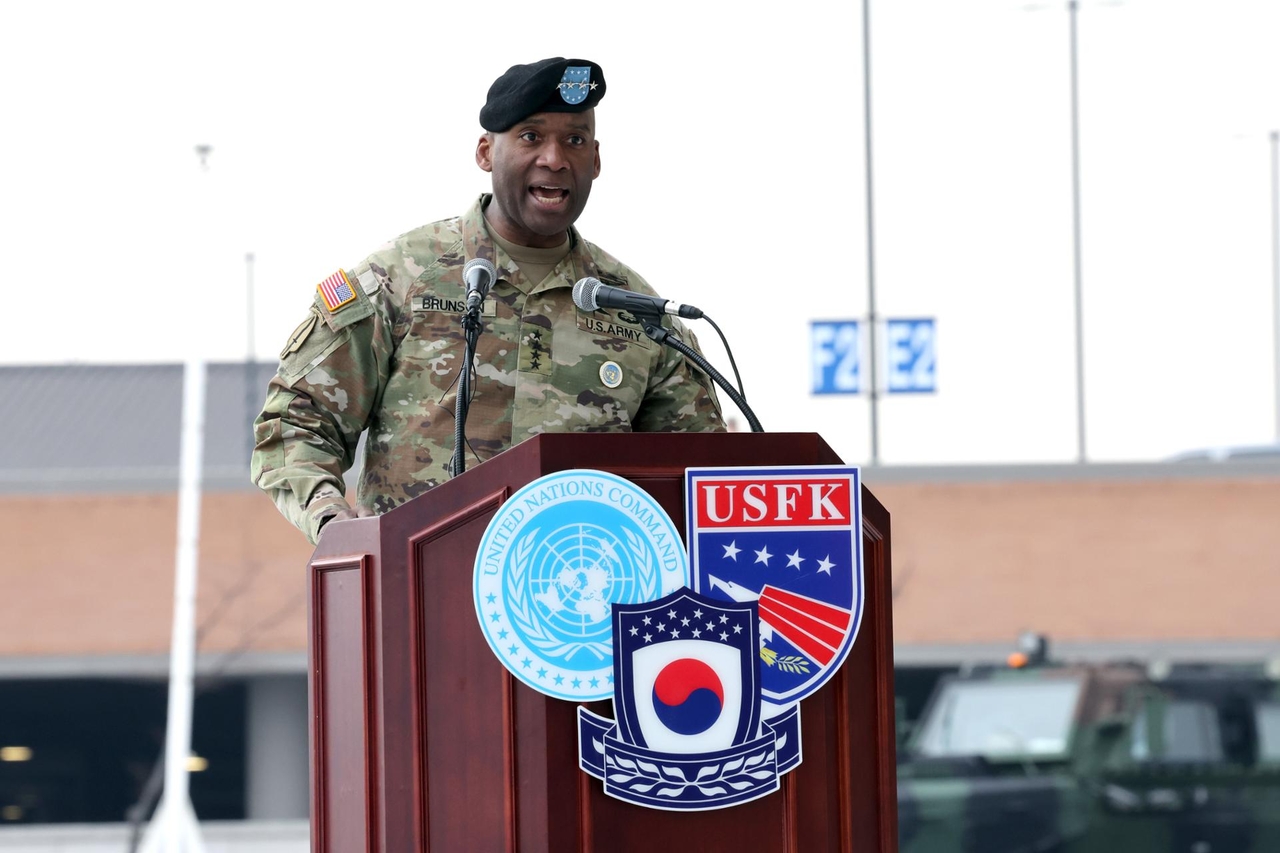
US Army Gen. Xavier Brunson, commander of the 28,500-strong United States Forces Korea, laid out a more concrete timeline for the transfer of wartime operational control to Seoul during congressional hearings in Washington this week.
The plan, however, underscores a strictly conditions-based approach, alongside a growing emphasis on maintaining key capabilities within US Forces Korea, as South Korea assumes a larger role in conventional defense.
Testifying before the House Armed Services Committee on Wednesday, Brunson said the allies are working toward meeting OPCON transition conditions no later than 2029. He added that a roadmap has already been submitted to senior US defense officials.
“I would say that right now, we’ve delivered a roadmap which will get us there not later than second quarter of (fiscal year) 29, and we’ll continue to pursue that,” he said.
His remarks effectively point to a timeline between early and mid-2029, as Washington’s fiscal year runs from October to September.
Still, Brunson underscored that the core of the transition is military readiness, not political timelines.
“We will continue to press for the conditions-based OPCON transfer and ensure that all the conditions are met,” he said during the House hearing.
At a Senate Armed Services Committee hearing Tuesday, Brunson struck a firmer note, saying, “Political expediency does not outpace the conditions,” in an apparent expression of caution against accelerating the transfer for political reasons.
OPCON, which has remained under US authority since the 1950-53 Korean War, has gained renewed attention under the Lee Jae Myung administration, which has made completing the transfer within its five-year term ending in 2030 a key policy goal.
According to government officials in Seoul, the allies are currently seeking to complete the second stage of verification, Full Operational Capability, before this year’s Security Consultative Meeting, which will likely be held in October. Defense ministers are set to review and approve the results at the meeting.
The first stage, Initial Operational Capability, was verified in 2019. The final stage, Full Mission Capability, is widely seen to hinge on political agreement rather than military evaluations, suggesting it could be completed more quickly once the two sides reach consensus.
Should the transfer occur, a four-star South Korean general would lead the allies’ combined forces in wartime, with a US general in a supporting role — a change from the current US-led structure that has fueled concerns Washington could seek to scale back its military presence.
However, Brunson rejected the notion that the process would lead to a simple reduction in forces.
“My focus remains strictly on capabilities over numbers,” he said during the Senate hearing.
“While our presence is a baseline, it’s imperative that we maintain focus on the precise capabilities that must be resident on the peninsula,” he added, emphasizing what he described as a shift “from capacity to capability.”
His remarks point to a possible reconfiguration of roles within the alliance, in which South Korea takes the lead in conventional deterrence while US forces maintain key capabilities.
He added that the allies are in a “good” position for the transition, citing South Korea’s increased defense spending, but stressed that “there’s still more work to be done.”
At the same time, Brunson linked the role of US forces in Korea to a broader regional context.
“The tri-command ... stand ready and capable to support a favorable balance of power across the region ... (and) a free and open Indo-Pacific,” he said, referring to the United Nations Command, Combined Forces Command and United States Forces Korea.
In his written statement submitted to the committees before the hearings, he also stressed that the Korean Peninsula "is key strategic terrain vital to defending the American homeland.” He also unveiled plans to develop a “regional sustainment hub” leveraging South Korea’s defense industrial base.
The concept of a regional sustainment hub reflects a shift from relying on maintenance conducted outside the peninsula to performing more maintenance, repair and overhaul in South Korea, in coordination with local defense firms.
Yet even as military-level preparations advance, the timeline for the transition remains subject to political decisions.
Brunson’s proposed timeline — extending to around the second quarter of fiscal 2029 — effectively pushes the transition beyond the current US presidential term ending in January that year, leaving the final outcome uncertain and dependent on decisions by the next administration.
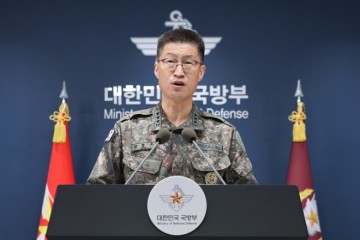
Following Brunson’s remarks, Seoul’s Defense Ministry also said the timeline for the transfer will be addressed at this year’s Security Consultative Meeting, the allies’ annual defense ministerial talks.
At a briefing Thursday, Ministry spokesperson Chung Binna said, “The timing of the transfer will be decided by the defense ministers of the two countries at the SCM based on recommendations from their respective military authorities, and then proposed to the presidents of the two countries.”
She added, “The remarks reflect the position of US Forces Korea, not a decision agreed upon by the two governments.”
She also said, “Seoul and Washington are pursuing the transition in a systematic, stable and consistent manner,” adding that the ministry is working to expedite the process while strengthening coordination with the US.
No specific timeline for the handover was disclosed.
flylikekite@heraldcorp.com