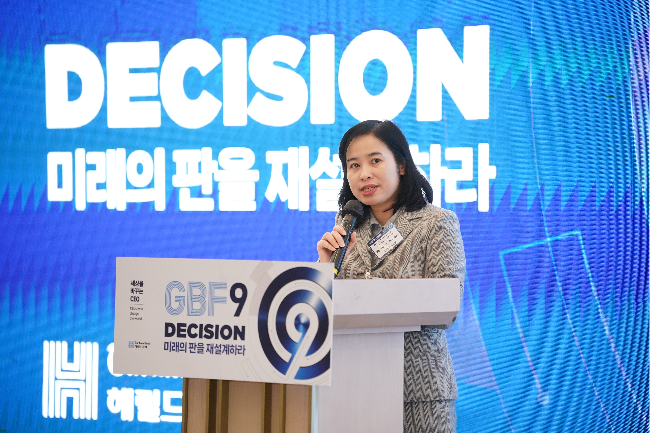
Cooperation between small and medium-sized enterprises is key to deepening future ties and mutual growth between South Korea and Vietnam, Nguyen Thi Thai Binh, deputy chief of mission at the Vietnamese Embassy in Seoul, said Wednesday.
“The future of our cooperation will not be defined by large corporations alone,” Binh said, noting that nearly 10,000 Korean SMEs already operate in Vietnam.
“If large corporations are the backbone of Vietnam-Korea economic relations, then SMEs are the circulatory system,” she added. “Only with a strong SME ecosystem can we build a truly sustainable and comprehensive partnership.”
Speaking at the Global Business Forum hosted by The Korea Herald, Binh proposed three key directions for future bilateral cooperation: Elevating SMEs to the status of “true value-chain partners,” viewing Vietnam as a long-term strategic investment destination, and promoting green and digital cooperation.
She said the Vietnamese government is committed to improving the investment environment, streamlining administrative procedures, reducing business costs, and supporting SMEs and related industries.
“Vietnam encourages stronger links between Korean SMEs and Vietnamese enterprises, particularly in areas such as electronics, semiconductors, supporting industries, logistics and digital commerce,” Binh said.
She highlighted Vietnam’s rapid economic growth, citing increases in the size of its economy, foreign direct investment and total trade volume.
Binh also stressed that Vietnam still had significant growth potential, pointing to its large working-age population, strategic position as a manufacturing hub and role as a gateway connecting Southeast Asian markets with the world.
She added that Vietnam’s growth had coincided with deepening bilateral cooperation with Korea.
According to Binh, South Korea remains the largest foreign investor in Vietnam, while Vietnam is Korea’s largest economic partner among Association of Southeast Asian Nations member states.
“With strong political trust and highly complementary economies, I am confident that Vietnam-Korea cooperation will continue to grow in depth, quality and effectiveness,” she added.
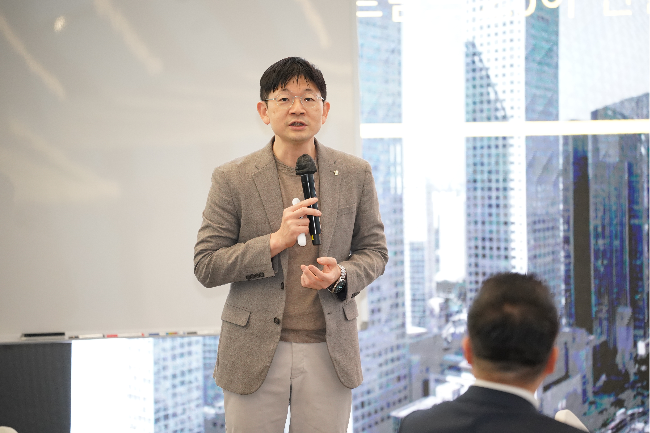
In a separate lecture at the forum, Oh Kun-young, head of Shinhan Bank’s Premier Pathfinder, urged business leaders to consider how the global economic order and markets could change in the aftermath of the conflict in the Middle East.
“When the war will end is a less important question,” Oh said. “The more important question is what business opportunities you have prepared for after the war.”
Oh said markets had eventually adapted to other global crises, such as Russia’s invasion of Ukraine and the COVID-19 pandemic, even though those disruptions did not fully disappear. He said it was more important to pay attention to how global supply chains and markets were reshaped as the world adjusted.
Oh predicted that global oil prices would fall, though not to prewar levels. He cited possible legal disputes between shipping companies and clients, stronger government demand for oil stockpiles, and rising labor and insurance costs for shippers as factors likely to keep prices elevated.
He also said tangible assets such as oil could gain relative value over intangible assets such as technology in a world reshaped by the Iran conflict.
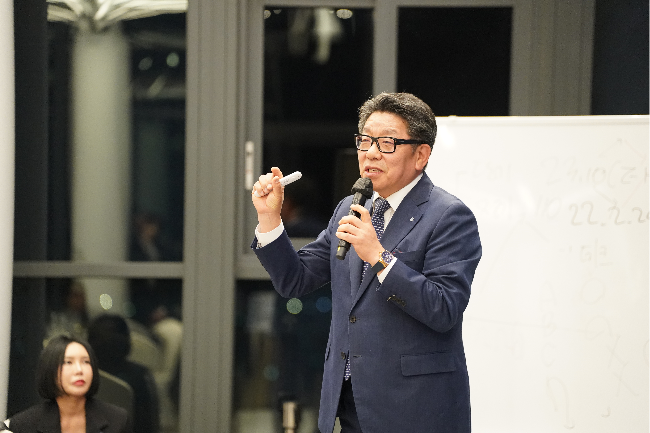
In another lecture, Herald Media Group CEO Choi Jin-young, who also serves as publisher of The Korea Herald, said companies should move toward a more decentralized governance model.
He said that in the emerging era, a leader’s role was not to make every decision personally, but to enable expert-level decision-making while removing bottlenecks.
Choi said business leaders should be asking what kind of future they want to design, adding that the basis of competitiveness has shifted away from working longer, faster and harder, and toward precision, analysis and structural resilience.
seungku99@heraldcorp.com