

After decades of growth in Japan, Shin Ramyun prepares new twists as Nongshim targets $330m in revenue by 2030
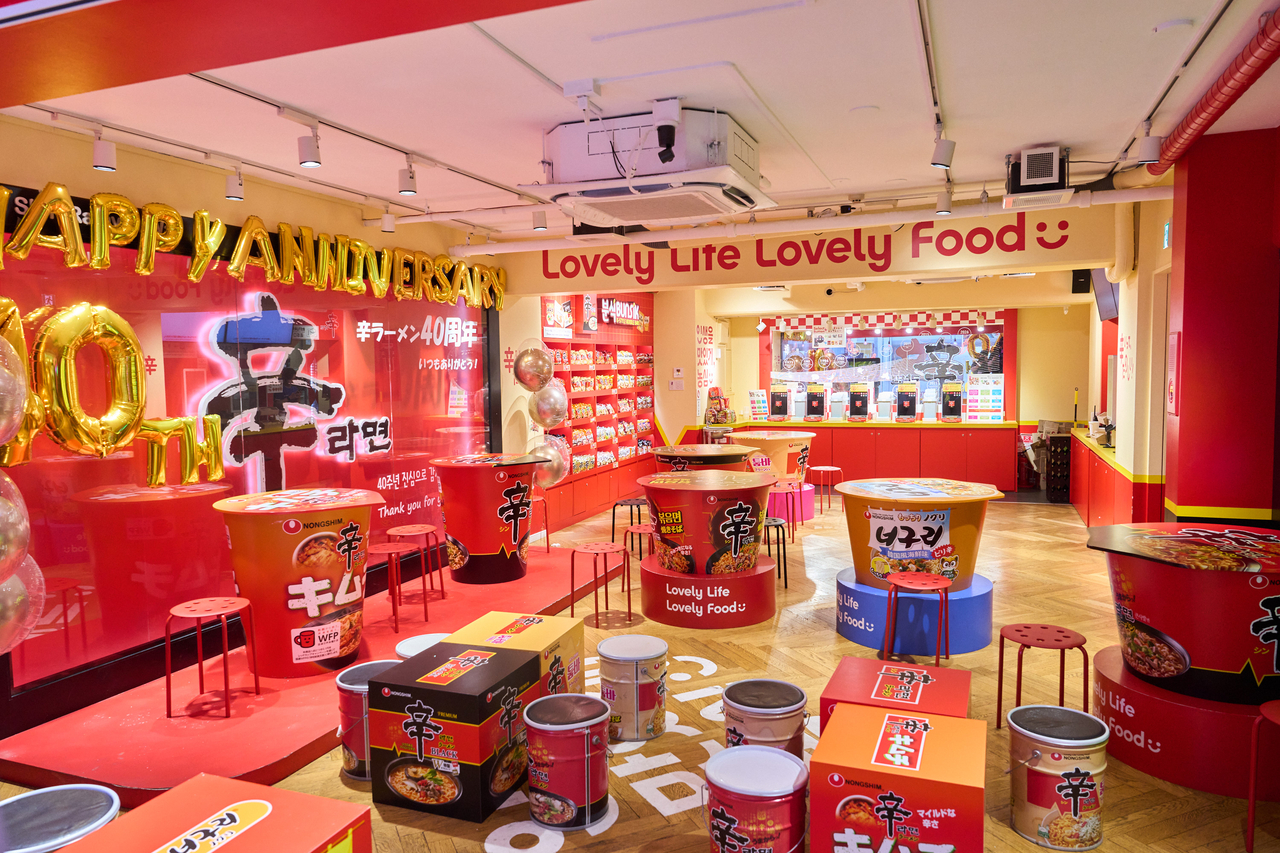
TOKYO — Inside a narrow building on Takeshita Street in Harajuku, Tokyo, a Shin Ramyun-themed space recreates the Korean instant noodle ritual through flavor and design.
Called Shin Ramyun Bunsik — “bunsik” denoting casual Korean street fare — the space lets customers cook bowls in automated machines, watch the broth come alive, and, more often than not, pause for photos before the first bite.
An 18-year-old visitor named Hitoshi, who dropped in for a casual meal with a friend, typifies a new generation of consumers who are unaware of Nongshim but familiar with Shin Ramyun, which he discovered through TikTok.
“Korean ramyeon are spicier than Japanese ones, but in a good way,” he said with a grin, reaching for the original, while his friend Kanaka opted for the creamier Toomba. “Most of my friends know it and have tried it at least once.”
The store not only gives form to Nongshim’s decadeslong campaign to make its signature spicy taste feel familiar in Japan, but also marks a new phase for Shin Ramyun as it branches out from heat into a broader range of flavors.
A market with no heat
Nongshim began pushing its flagship brand into Japan in 1987, a year after its debut at home, with the effort gathering pace after the establishment of a local unit in 2002.
It was not entering a gap so much as trying to create one, in a market defined by rigid flavor bases — miso, soy sauce and pork-bone broth. At the time, spiciness was still an outlier.
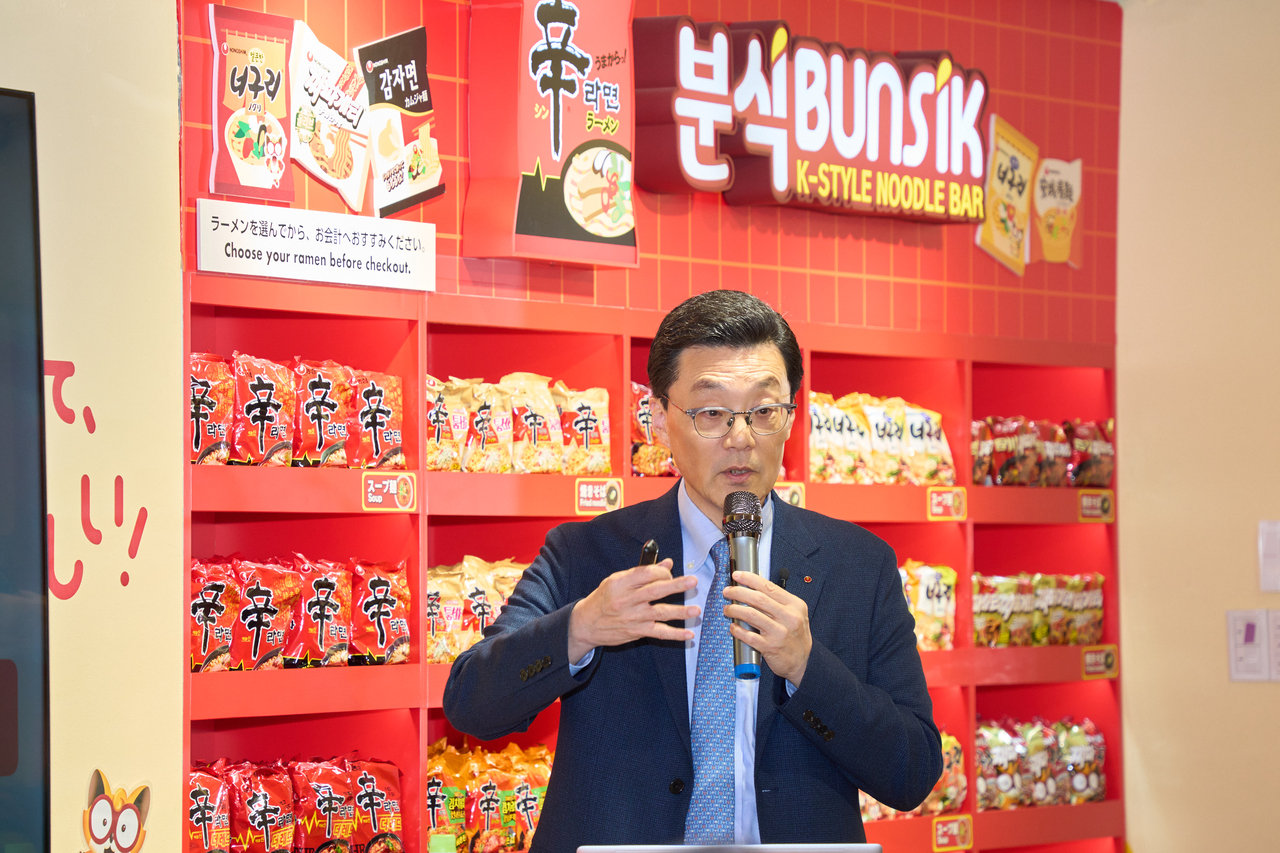
“At the beginning, there was no spicy ramyeon market at all,” said Nongshim Japan head Kim Dae-ha during a media conference on Wednesday. “We faced rejection after rejection from buyers, but we kept bringing the same product, again and again.”
Although early reactions were discouraging, the company held firm on its level of heat, guided by the late founder Shin Choon-ho’s directive to “plant the brand.”
“The principle was clear that if people can’t eat it, we don’t have to sell to them,” Kim remarked. “We were told never to compromise the flavor of Shin Ramyun.”
Through sampling events and street-level promotions, Shin Ramyun began to retrain tastes, with consumers coming to take a liking to it after a few tries, to the extent that the brand outpaced the obscurity of the company behind it.
“Now, even if people don’t know Nongshim, they know Shin Ramyun. That’s how we know the brand has taken root,” Kim quipped.
Shin Ramyun holds about 40 percent of the spicy noodle segment, which makes up roughly 6 percent of Japan’s 700 billion yen ($4.4 billion) instant noodle market. It is also the only segment showing meaningful growth.
Kim regards the shift with a cautious confidence, “As larger Japanese players move into spicy flavors, it’s a challenge for us, but if they help grow the market, it’s not a bad thing.”
Brand planted, now a twist
Nongshim Japan’s sales topped 20 billion yen last year for the first time, growing about 18 percent annually and more than doubling from 9.5 billion yen five years ago.
Nongshim plans to double revenue to 50 billion yen and enter the country’s top five instant noodle makers by 2030, a goal that no longer seems far-fetched.
“We are looking to capture at least 35 to 40 billion yen out of a roughly 700 billion yen market,” Kim noted. “We are firmly at No. 6 now, but there’s still a gap with No. 5, so we’re working to reach 50 billion yen and move up.”
With Shin Ramyun accounting for 80 percent of its Japan sales, the company’s next move is to extend its range, and in doing so, widen the category it helped create.
Shin Ramyun Toomba, creamier and suited to the microwave, has quickly become the second-best-selling variant, with a following among women in their 20s and 30s. It has since found its way into all three of Japan’s major convenience store chains—some 53,000 outlets nationwide — a rare feat for a foreign noodle brand, in Kim’s telling.
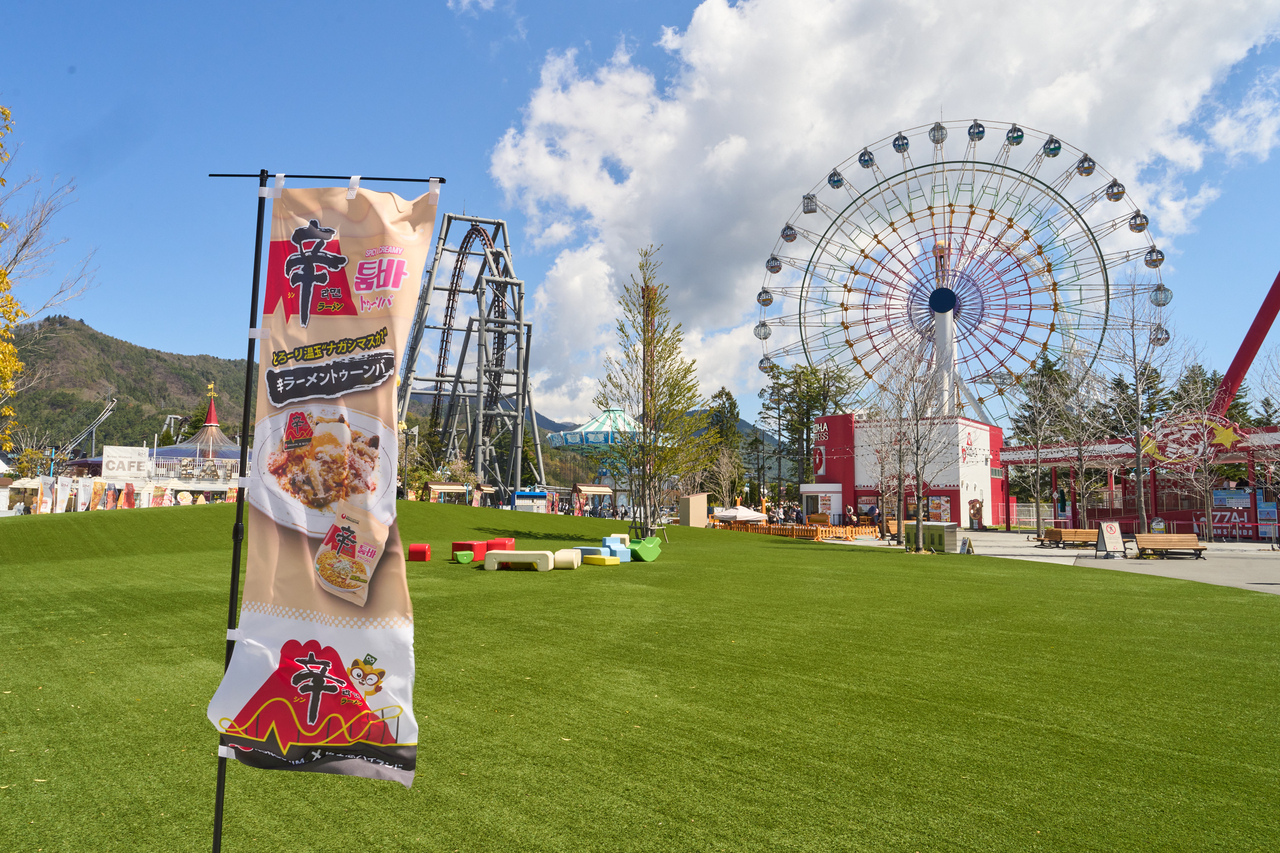
A recent high point for Toomba came at Fuji-Q Highland, where a pop-up eatery serves a handful of Shin Ramyun collaboration menus. “We believed the location was well suited to attracting younger consumers, in that the park is mostly visited by those aged 10 to 30,” a company official said.
minmin@heraldcorp.com