
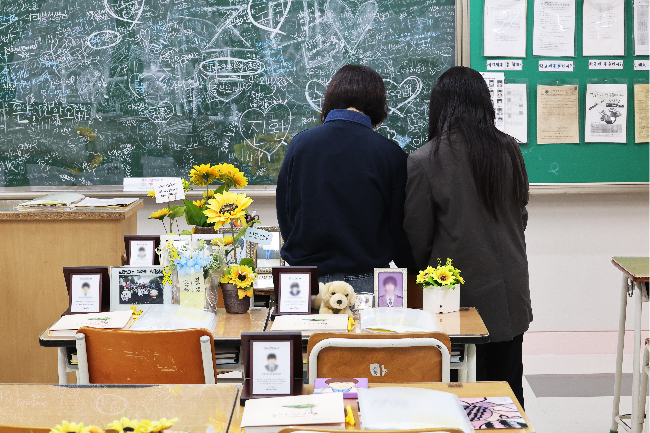
Bereaved families of victims of the 2014 ferry disaster in South Korea have been visiting hospitals more frequently than the general population, a recent study by a local medical school found.
Researchers from the College of Medicine at Chung-Ang University tracked hospital visits of 388 people who lost family members in the sinking of the Sewol and compared them with a control group of 1,552 similar individuals between 2011 and 2022.
The study found that bereaved family members received an average of 5.71 more outpatient treatments between May 2020 and April 2022. They also made 1.56 more visits related to mental health conditions than the control group.
This marked a contrast from the years immediately following the disaster, when there was no significant difference in hospital visits between the two groups.
During the 2020-2022 period, the bereaved families were more than twice as likely to suffer from endocrine and metabolic disorders compared with the control group. The likelihood of digestive system illnesses andneurological conditions nearly 50 percent higher.
“Prolonged psychological distress that remains unresolved can affect the immune system and inflammatory responses, potentially leading to physical illness,” said Lee Won-young, a professor of preventive medicine at Chung-Ang University.
The researchers said prolonged social conflict following the disaster, along with instances of victim-blaming, may have exacerbated the families’ suffering and disrupted the normal grieving process, contributing to adverse health outcomes.
The Sewol ferry disaster, which left 304 people dead or missing, triggered widespread criticism of the Park Geun-hye administration after investigations revealed systemic failures and corruption.
Some members of the public, however, directed criticism at victims’ families, accusing them of politicizing the tragedy and making derogatory remarks about them and the deceased.
A 2016 survey conducted two years after the accident found that 68.5 percent of bereaved families experienced psychological distress, while 46.9 percent reported being subjected to insults.
minsikyoon@heraldcorp.com