Lee says labor market reform requires a ‘new equilibrium’ on flexibility and protection through social dialogue
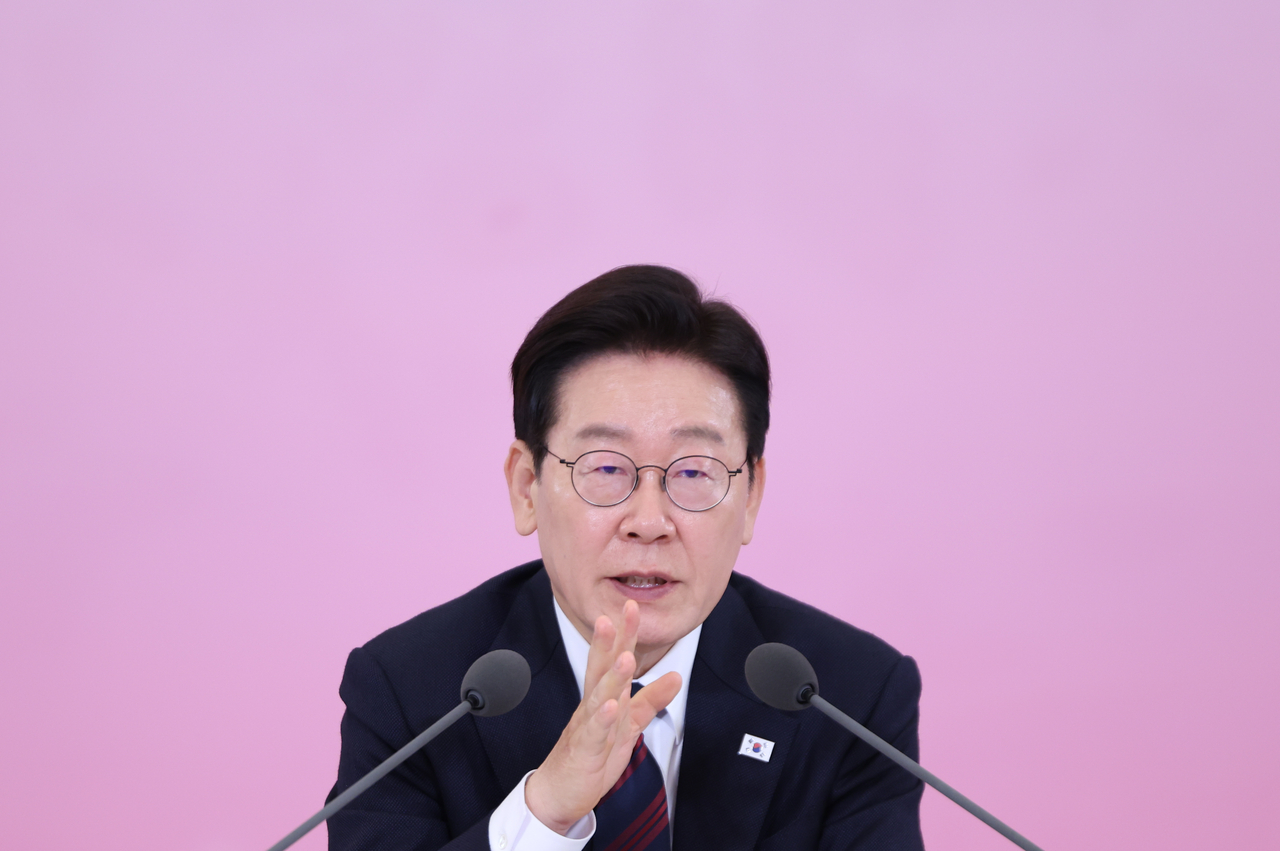
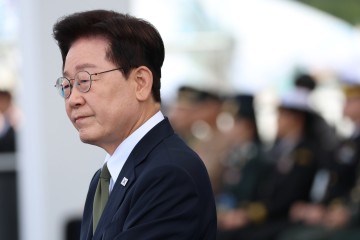
Distortions in South Korea's labor market could be addressed by increasing labor flexibility and social security, President Lee Jae Myung said Thursday.
Lee delivered the remarks while attending a discussion at Cheong Wa Dae on Thursday, marking the inauguration of the Economic, Social and Labor Council under his administration.
It was the first time in about seven years that a sitting president had attended the inauguration of the presidential advisory body, which brings together representatives of labor, business and government to negotiate and forge compromises on contentious labor issues. The last president to do so was President Moon Jae-in in November 2018.
Lee repeatedly underlined that South Korea needs to break a vicious cycle in which workers view dismissal as a matter of survival, while firms, constrained by rigid labor protections, shy away from hiring regular employees.
“For regular workers, losing their job is seen as 'death.' They think that way and even describe it that way, and that reflects reality,” Lee said in his opening remarks. “From a company’s standpoint, once they hire regular employees, they find it difficult to adjust flexibly in any situation, so they end up avoiding regular hiring altogether.”
Furthermore, that rigidity, Lee suggested, has pushed companies to rely more heavily on nonregular workers and subcontractors, deepening the dual structure of the labor market as well as polarization among workers.
Lee said greater labor market flexibility could help break that vicious cycle, but only if it is accompanied by measures to offset what workers stand to lose.
“Everything seems to be caught in a vicious cycle. So how do we break it? Ideally, we could expand labor flexibility,” Lee said, acknowledging that “greater flexibility would place a burden on workers.”
“But this could be turned into a virtuous cycle if a strong social safety net is put in place and companies, in exchange for that flexibility, move toward creating more stable, regular jobs,” Lee added.
After his opening remarks, Lee went on to explain that greater labor flexibility should not be pursued in a way that shifts burdens onto workers, clarifying the preconditions for labor market reform during the meeting.
“One of the key directions in resolving this issue is to create conditions in which workers can accept the level of job flexibility that companies seek,” Lee said. “It cannot be forced, and that would be unjust. Given that I believe the labor side does not yet have sufficient bargaining power, it is not right to pursue this by demanding sacrifices from workers.”
Lee underscored that “we need to create a reasonable environment that everyone can accept rather than one-sided sacrifice.”
“There must be measures that go beyond simply compensating for the problems that would arise if some degree of job flexibility is conceded,” Lee said.
“Strengthening the social safety net comes at a cost, and companies will ultimately benefit from greater labor flexibility. It would therefore be appropriate for them to bear a corresponding share of the burden.”
The remarks pointed to what Lee described as a “new equilibrium” — greater labor flexibility in exchange for stronger worker protections, with offsetting costs borne by society and companies.
Lee underscored that any move toward greater labor flexibility “must have a level of rational justification that reasonable people can accept — that it is fair and necessary for the good of our society as a whole.”
“The key question, then, is where that balance should lie — where this new equilibrium should be set — and that will be a central issue for discussion,” Lee said, acknowledging that the process would be “very challenging” and would “take a great deal of time.”
“However, my conviction is that through such social compromise, everyone can reach a better environment.”
Since taking office, Lee has repeatedly stressed the need for broad social dialogue and consensus on labor flexibility, workers’ fears over job insecurity, how to reinforce the social safety net and how to finance it.
Lee has made the point on several occasions, including at his first Cabinet meeting on June 5 and in November last year during discussions with business leaders on follow-up measures related to US-Korea tariff negotiations.
dagyumji@heraldcorp.com