
British textbook publisher Pearson said it will revise future editions of its textbooks to more accurately depict Africa, following correction requests from the Voluntary Agency Network of Korea.
“The content team is reviewing your suggestions and fixes will be made in any future releases of the titles,” Pearson said in an email response to the group’s recommendations.
VANK, a South Korean internet-based civic group, submitted correction requests in January to major global publishers, including Pearson, Barron's and McGraw Hill, after reviewing how Africa was depicted in seven textbooks.
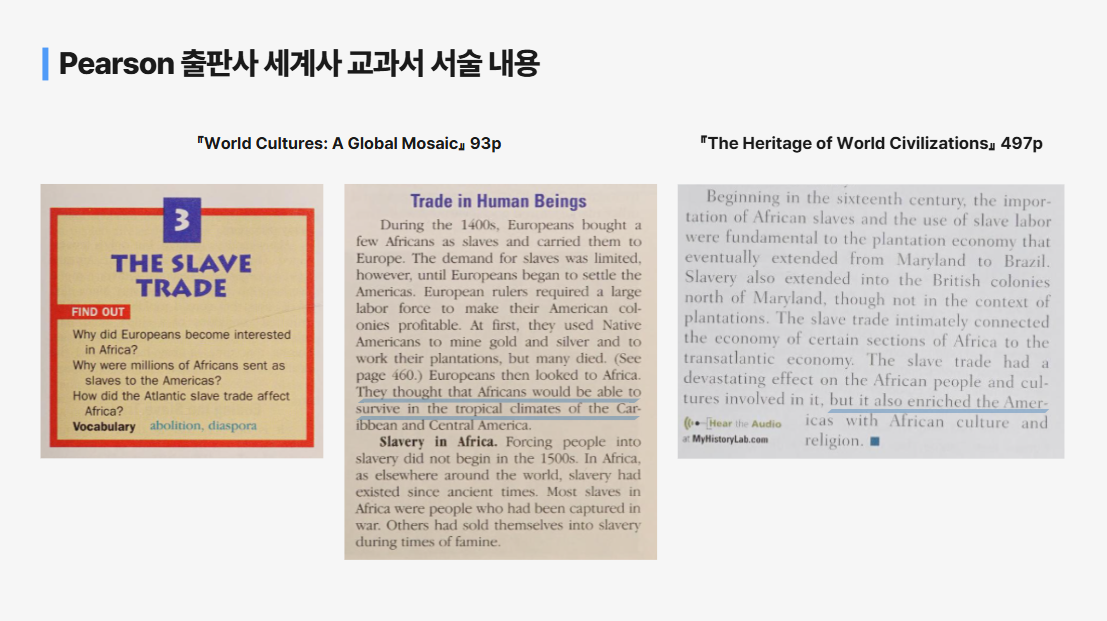
The group said the seventh edition of Pearson’s The Heritage of World Civilizations places excessive emphasis on the economic and developmental aspects of slavery. It criticized the book for stating that slavery “enriched” the Americas with African culture, arguing that such wording detracts from the brutality of the institution.
VANK also raised concerns about another Pearson publication that it said portrays African history primarily from a European perspective.
The group welcomed Pearson’s response and said it hopes concrete revisions will be made in future editions of the textbooks. It added that Pearson’s reply could encourage other global publishers to consider similar corrections.
“Following improvements in the depiction of Africa in Korean textbooks, receiving a positive response from an overseas publisher is a meaningful first step toward raising global awareness,” said VANK CEO Park Ki-tae.
The organization has been running a campaign since 2025 to address what it calls “stereotypical depictions of Africa” in both international and Korean textbooks.
In December 2025, the Ministry of Education decided to revise descriptions of Africa in eight state-certified social studies textbooks after receiving VANK’s recommendations, marking the first time the campaign had led to changes in textbook content.
Lee Se-yeon, a researcher at the organization, said the review process highlighted how even small wording choices in textbooks can shape readers’ perceptions and worldviews.
“Because textbooks are often students’ first introduction to world history, it is important to continually review how different regions are portrayed so that they are understood in a balanced way,” Lee said.
seungku99@heraldcorp.com