Cheong Wa Dae signals need for serious talks on supplementary budget to address Middle East crisis fallout
South Korea plans to impose fuel price caps this week for effectively the first time since 1997, after a sharp run-up in prices that authorities say has occurred even before any Middle East supply disruption has hit the country.
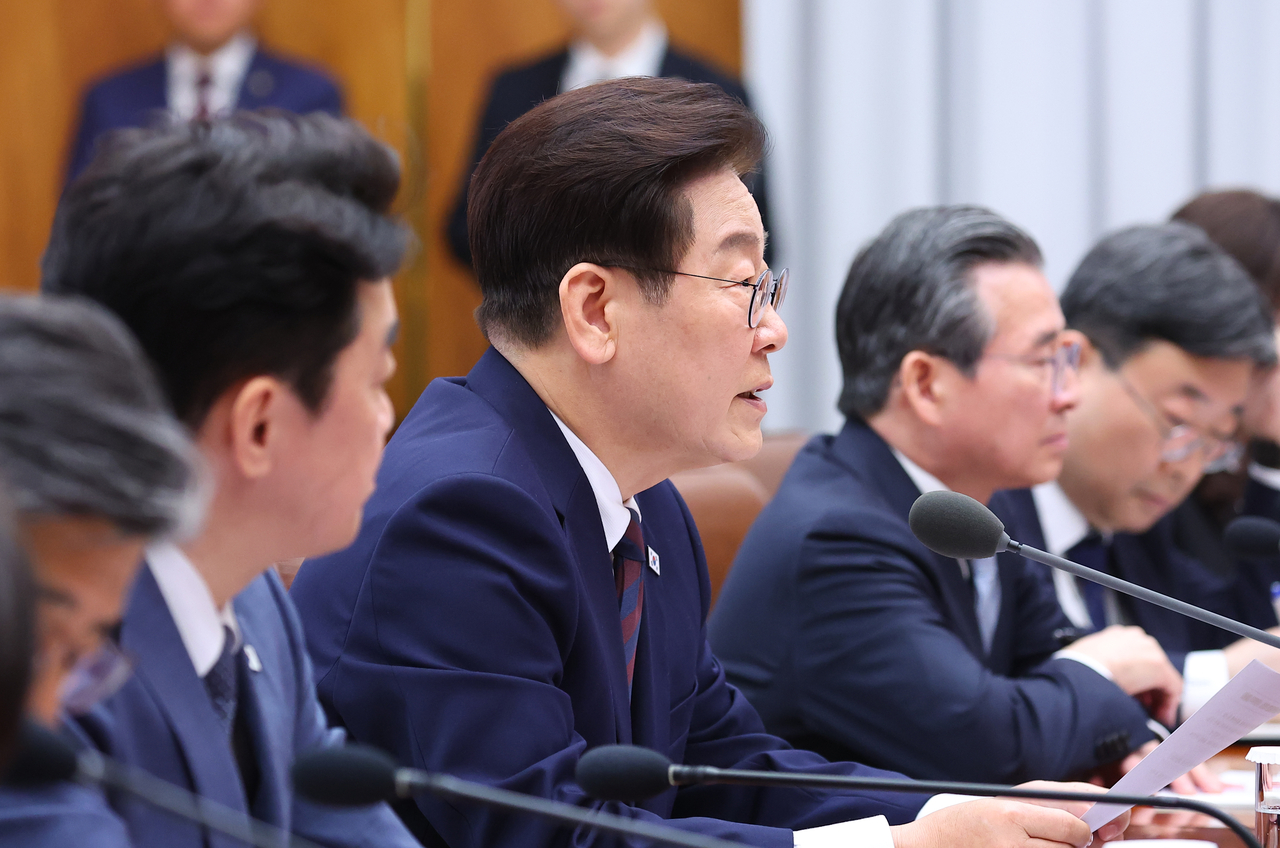
President Lee Jae Myung ordered the measure’s swift implementation in opening remarks at a 90-minute emergency economic response meeting held Monday at Cheong Wa Dae, as the government moved to contain the fallout from the war triggered by joint US and Israeli strikes on Iran on Feb. 28.
The meeting brought together ministers and vice ministers from 11 ministries and agencies, who reviewed the conflict’s potential impact on the real economy, oil and gas supplies, prices, financial markets, and exchange rates, before holding in-depth discussions on a broader government response.
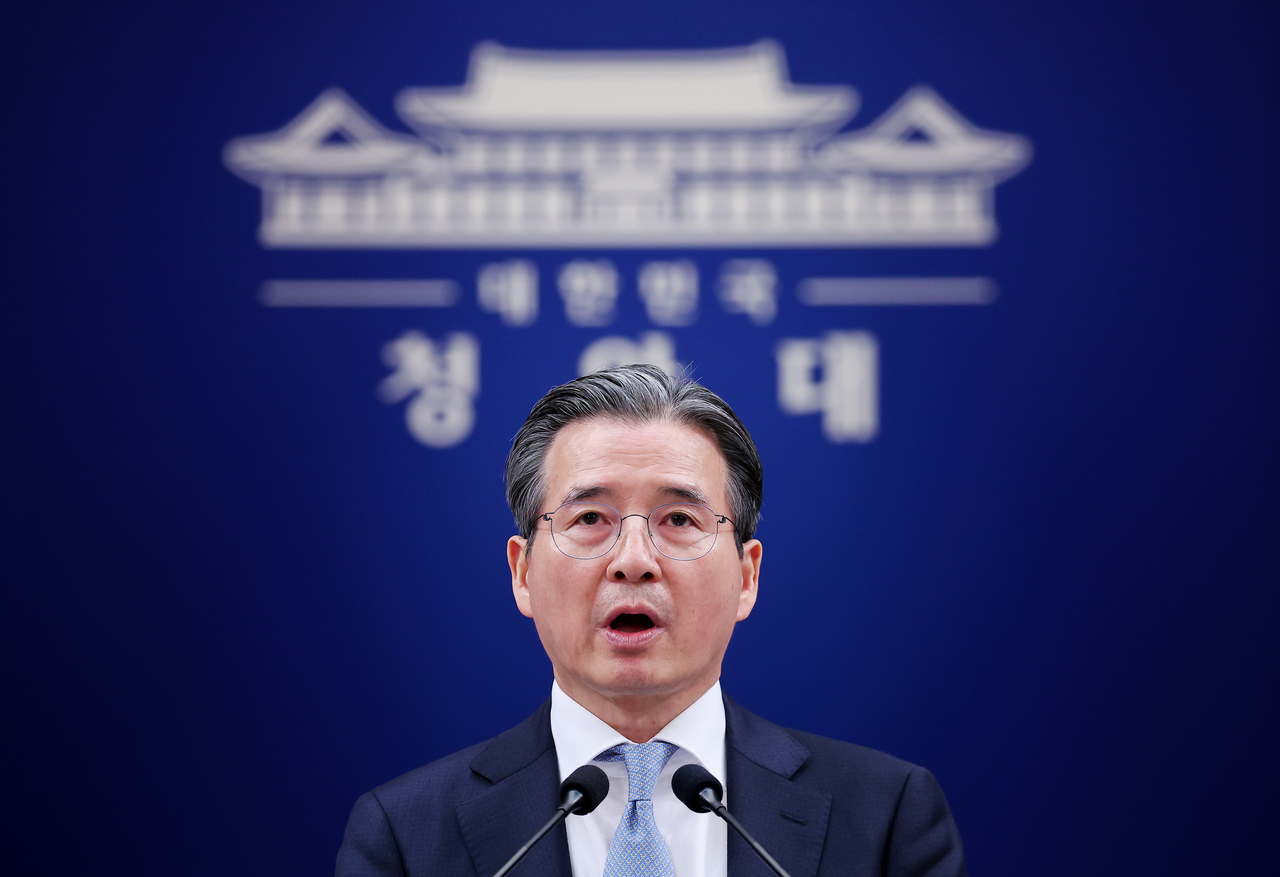
Kim Yong-beom, the presidential chief of staff for policy, said officials focused on the rapid rise in domestic fuel prices; the government is particularly concerned about what it called "asymmetric pricing" by refiners and gas stations — quick to raise prices, slow to bring them down.
The emergency meeting “discussed concrete steps to impose a fuel price cap to prevent abnormal pricing of petroleum products and make prices more predictable,” said Kim, adding that “President Lee ordered the measure to be pushed forward as swiftly as possible.”
“Accordingly, the Industry Ministry plans to swiftly proceed with the necessary procedures, including issuing a public notice, so that a (fuel) price ceiling can be implemented within this week under the Petroleum Business Act,” Kim said during a press briefing following the meeting.
Kim explained that once implemented, the price ceiling would operate on a two-week cycle.
The measure would resurrect a government-imposed petroleum price ceiling, a tool that has been practically obsolete since South Korea liberalized petroleum prices in January 1997. The legal basis is Article 23 of the Petroleum and Alternative Fuel Business Act, enacted in 1970, which was invoked during the oil shocks of the 1970s and the Gulf War in the early 1990s.
According to Kim, Lee "instructed that ways to ease the burden on economic actors resulting from rising fuel prices, including measures to expand the scope of the fuel tax cut and direct support measures for fuel consumers, be reviewed broadly and in detail."
Regarding the timeline, Kim said that "a fuel tax cut can be implemented relatively quickly, whereas programs that directly support individuals face funding constraints and require some time to put in place."
Seoul reviews worst case energy scenarios
Kim added the "government also reviewed contingency measures for oil and gas supplies under a range of scenarios at Monday’s meeting, including a worst-case disruption."
South Korea’s crude imports of around 1.7 million barrels a day could be affected by a closure of the Strait of Hormuz, Kim said, but noted that the country holds 190 million barrels in strategic petroleum reserves. This is enough to last 208 days under International Energy Agency standards.
“Even so, the government is preparing for the possibility that the Middle East situation could be prolonged,” Kim said.
Seoul could also exercise priority purchase rights over 20 million barrels jointly stockpiled with oil-producing countries and redirect overseas output from the state-run Korea National Oil Corp. to the domestic market if needed.
"The government and the private sector would make an all-out effort to secure alternative supply lines bypassing Hormuz through countries," said Kim.
“We will secure supplies that do not need to pass through the Strait of Hormuz through countries with which we maintain strategic cooperative ties," Kim said. "In the medium to long term, we will diversify crude import sources beyond the Middle East so that even a prolonged crisis does not lead to supply disruptions."
South Korea imports about 94 percent of its energy, with roughly 70 percent of its crude oil imports passing through the Strait of Hormuz, a critical shipping lane effectively blocked by Iran.
Asked whether the government could move preemptively to draw up a supplementary budget if the conflict in the Middle East drags on, Kim suggested that the matter would need to be seriously discussed.
“The top priority now is to ensure that the South Korean economy gets through this shock without suffering major damage,” Kim said. “If additional resources are needed to do that, then we are in a situation where those options must be seriously weighed.”
Kim noted that sticking rigidly to existing fiscal limits would make it impossible to introduce a fuel price ceiling, leaving the government with little room to respond to the current crisis.
“But the current oil-price situation has been judged serious enough to warrant a price-ceiling response,” he said. “Looking at the funding side, several additional financial needs have emerged over the past 10 days. We will need to have serious discussions about how to address them.”
dagyumji@heraldcorp.com