Politicians are coming under fire from civic groups after a merger bill to integrate South Chungcheong Province and Daejeon failed to pass during the February session of the National Assembly.
The February session, which ended Tuesday, had been considered the last window to complete the integration and establish a unified provincial leadership ahead of the June 3 local elections.
The ruling Democratic Party of Korea is seeking one last chance to pass the law in March, despite the already tight schedule. Passage is expected to remain difficult, as the main opposition continues to maintain a firm stance.
Civic groups criticized politicians for pushing the integration effort to this stage without sufficient consideration of potential complications, while have some said the delay could provide a chance to revisit and refine the merger plan.
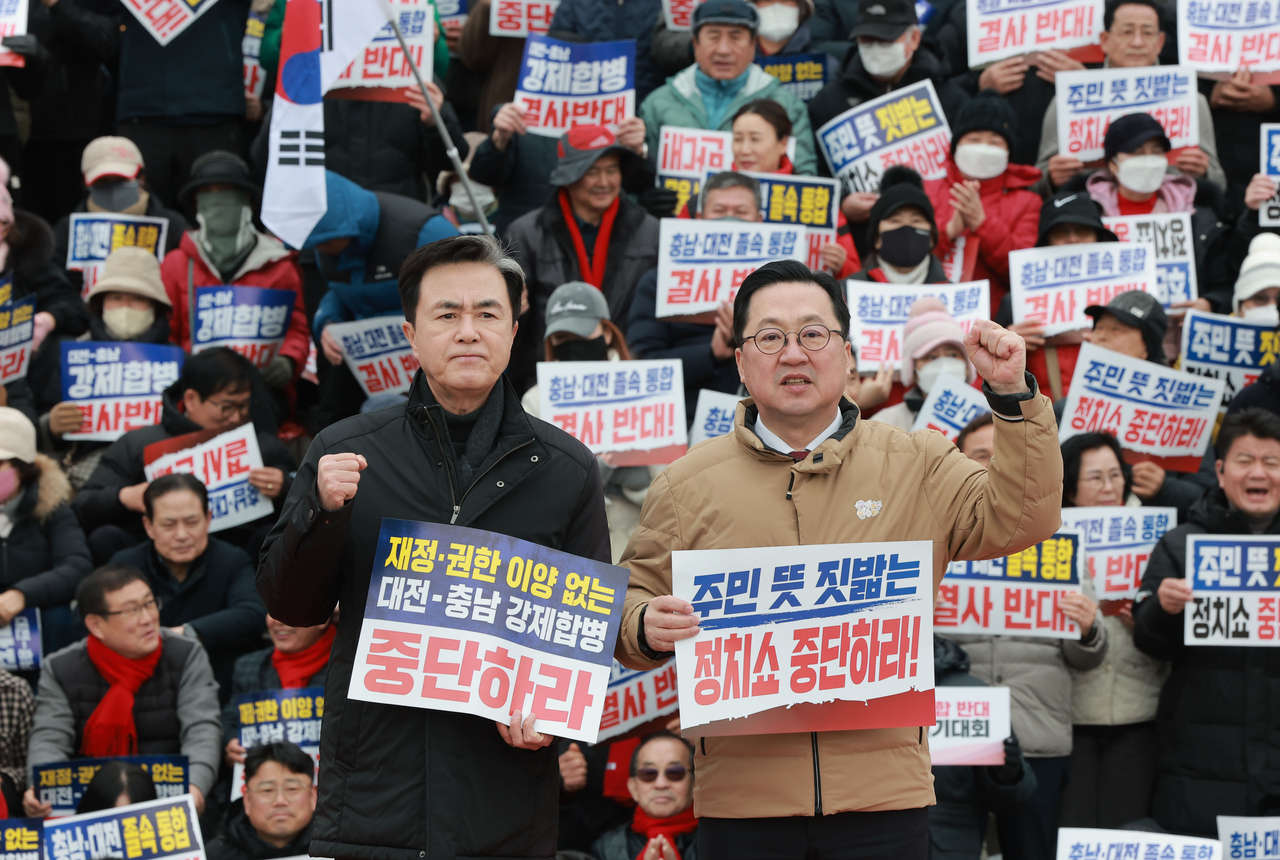
On Wednesday, a coalition of 31 civic groups based in South Chungcheong Province issued a statement blaming politicians for turning the integration talks into a political tug-of-war, driven by what they described as a rushed push for integration between the two municipalities.
“Talks on administrative integration were tarnished by political conflicts over interests and power distribution, as well as calculations tied to local elections,” the coalition said. “Both the ruling and opposition parties share responsibility.”
Criticism has also centered on the shifting stances of the parties.
Daejeon Mayor Lee Jang-woo and South Chungcheong Province Gov. Kim Tae-heum, both from the main opposition People Power Party, initially announced their push for integration in November. The proposal was the first among three regional blocs across Korea exploring municipal integration.
However, the two leaders later adopted a more cautious tone, arguing that the integration plan pushed by the ruling party fails to sufficiently guarantee the transfer of regulatory authority from Seoul or the financial support promised by the central government as an incentive.
The ruling party has also drawn criticism for pushing the integration on a tight timeline ahead of the election, shifting from its previously cautious stance to warning about the consequences of failing to complete the merger.
“The integration plan itself was problematic, as the merger bill was pushed without becoming a public agenda where civic groups and education communities could be heard,” the Daejeon branch of the Korean Teachers and Education Workers Union said.
“When the People Power Party supported the plan, the Democratic Party opposed it. But when the situation reversed, both parties changed their stance completely, causing disappointment.”
The derailment of the plan, despite the government’s promotion of large-scale incentives such as a 20 trillion won ($13.6 billion) support package, is expected to affect the upcoming elections, as political parties continue to blame each other for the failure.
However, some civic groups say the delay could allow a more thorough review of the integration plan, which could raise unprecedented issues across sectors as it would significantly expand the new municipal government’s regulatory authority.
“We can decide on the merger after observing the integration discussions between Gwangju and South Jeolla Province, which have only recently entered a visible stage, and carefully analyzing both the advantages and disadvantages,” the Daejeon branch of the Korea Federation for Environmental Movements said.
“The new integrated municipal government is expected to hold concentrated power over development projects. However, the bill currently under consideration lacks sufficient checks and balances, so environmental assessments and safeguards should also be put in place.”
forestjs@heraldcorp.com