
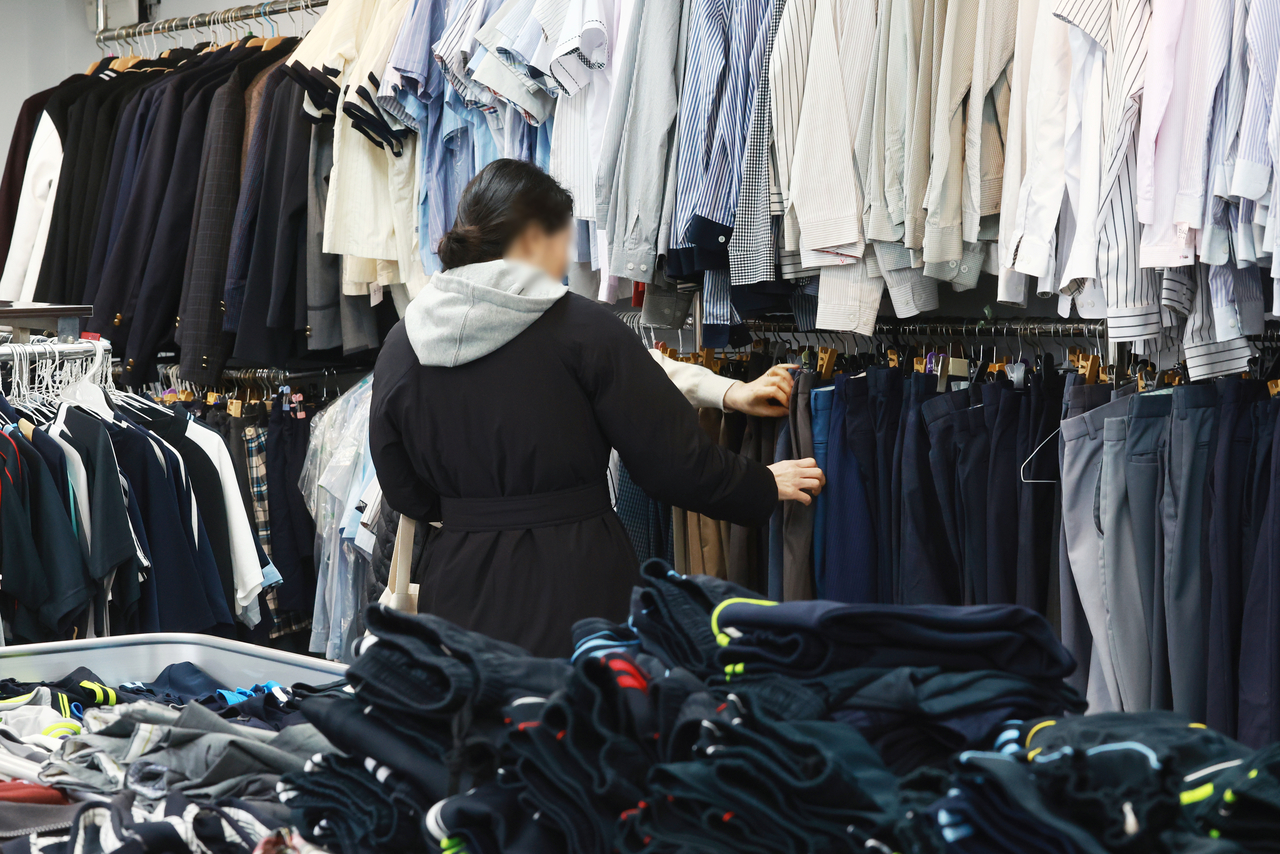
South Korea is moving to phase out traditional formal school uniforms, amid growing concerns over high costs.
The Education Ministry said Thursday it will conduct a nationwide survey of middle and high school uniform prices and push to replace formal-style uniforms with more practical attire.
The ministry plans to inspect about 5,700 middle and high schools through March 16. Officials will review uniform prices, bidding methods, selected contractors and contract amounts to assess whether prices are appropriate.
The move follows remarks by President Lee Jae Myung on Feb. 12, when he said the cost of purchasing a school uniform has recently approached 600,000 won ($417), and instructed relevant ministries to examine pricing practices.
Currently, 17 metropolitan and provincial education offices jointly set an annual price ceiling for formal-style uniforms. This year’s cap remains unchanged from last year at 344,530 won. However, the ceiling applies only to formal attire. When casual uniforms and sportswear are included, total expenses often exceed 600,000 won, according to officials.
The ministry plans to set separate item-based price ceilings within the first half of the year, covering T-shirts, pants and other daily wear items. The existing cap system, previously limited to formal uniforms, will be expanded to cover additional categories.
Schools will also be encouraged to discontinue mandatory formal uniforms and adopt casual-style uniforms or sportswear as primary attire.
School uniforms have long symbolized discipline and school identity in South Korea, with formal designs and strict dress codes long enforced. In recent years, however, dress regulations have eased amid growing emphasis on student rights, and more schools have shifted toward comparatively practical, casual-centered uniform systems.
The government also plans to diversify financial support for uniform purchases. Of the 17 education offices nationwide, 13 currently provide support worth 300,000 to 400,000 won, typically covering formal uniforms. Under the new plan, assistance will be provided in cash or voucher form, allowing students to choose necessary items.
The “school-managed purchase system,” introduced in 2015 to lower prices through competitive bidding, will also be reviewed. While the system was intended to enhance quality and reduce costs, concerns have persisted over alleged bid-rigging among uniform suppliers.
The Fair Trade Commission has launched an investigation into suspected collusion involving four major uniform brands and around 40 local dealerships nationwide. FTC Chair Joo Byung-ki said at a task force meeting on Thursday that the agency would “strictly sanction any violations of the law and root out chronic collusive practices.”
ylee221@heraldcorp.com


