
Thaddaeus Ropac Seoul features 4 Asia-based artists on dynamics of perception
Thaddaeus Ropac Seoul presents "Distancing," a group exhibition featuring works by four Asia-based artists that explore how distance shapes perception across image, material and time.
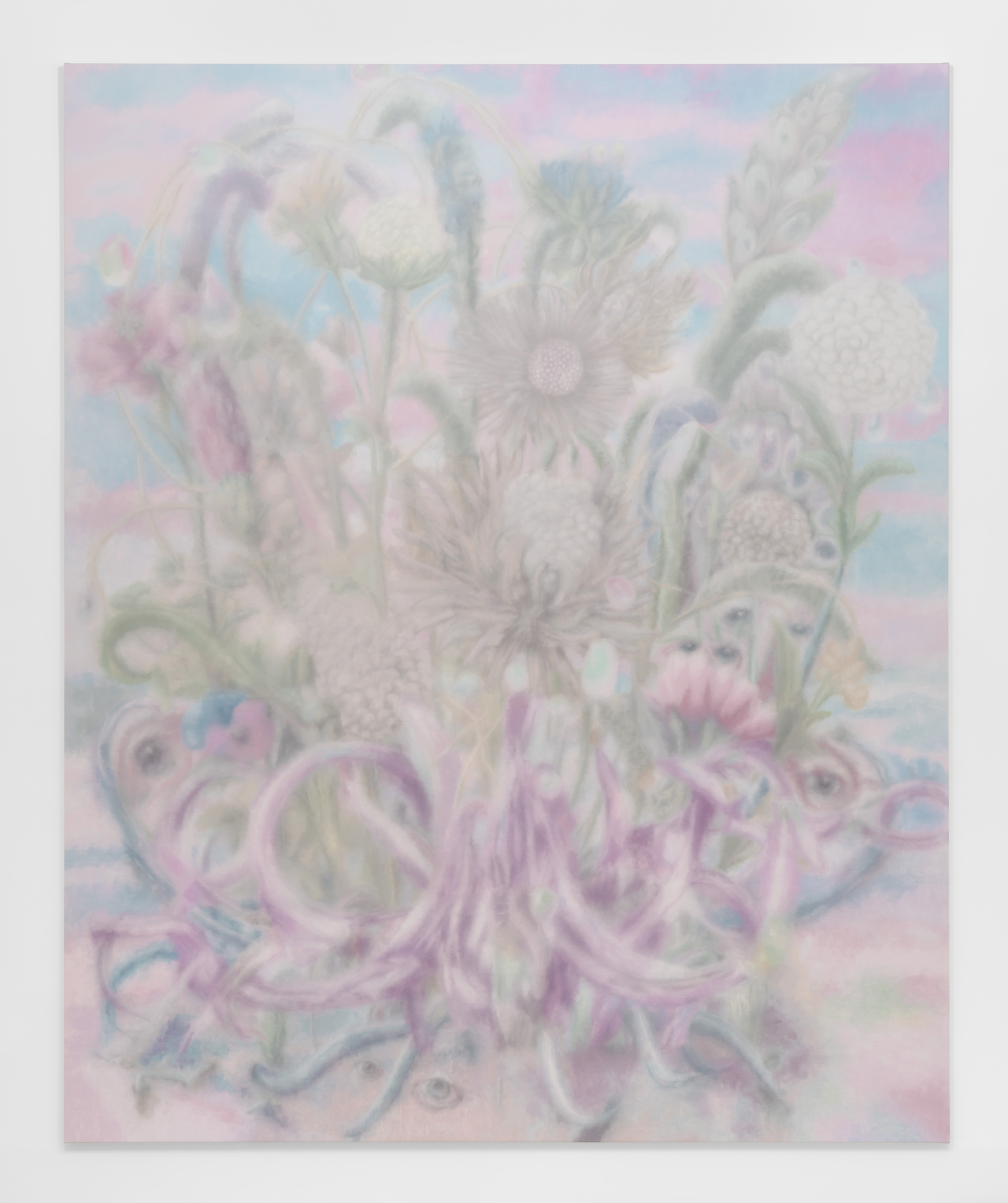
Korean artist Lim No-sik continues drawing memories from his roots, whose father is a farmer in Yeoju, Gyeonggi Province. While he used to use sanding techniques, resulting canvas surface that feels like pottery, this time Lim used a different way, using oil pastels.
Corporeal and botanical forms do not appear in sharp relief — rather, they diffuse faintly through the canvas in layers of blue and pink pastels.
Lim, who was trained in traditional East Asian painting, interprets one of its defining characteristics as a quiet strength: “an energy that feels both soft in appearance and powerfully present,” the artist told The Korea Herald on Tuesday.
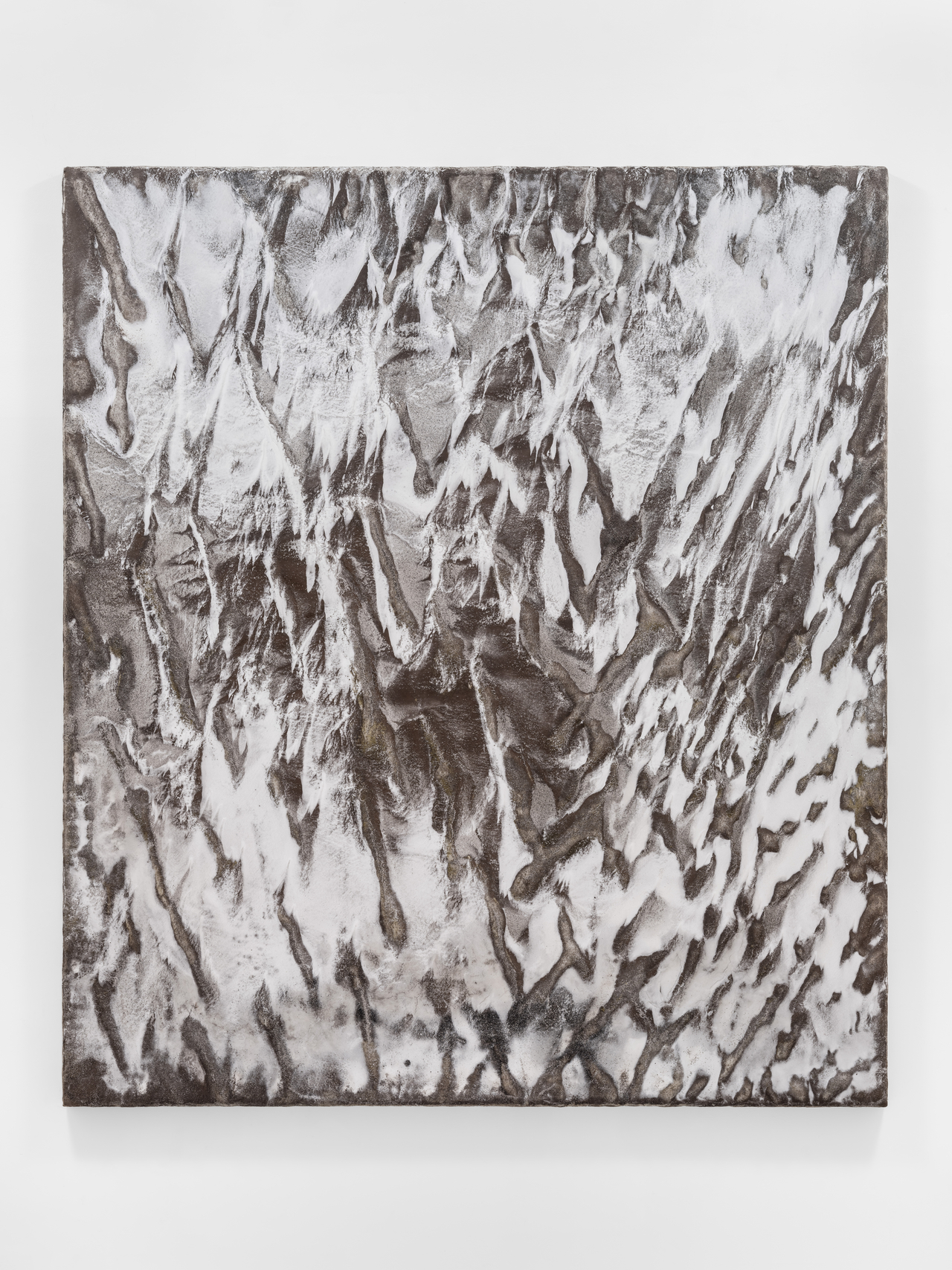
Kim Ju-ree’s works explore the relationship between the body, material and surrounding space. Working primarily in clay, Kim’s sculptures reflect fundamental cycles of making, buildup and decay.
Her work centers on the moment when water and earth merge into a single mass, which inevitably changes and breaks down as moisture evaporates over time.
“The material is constantly reacting to its environment, as factors such as humidity in the air continue to affect its condition, allowing it to remain in a state of ongoing change,” Kim told the reporters at the gallery Tuesday.
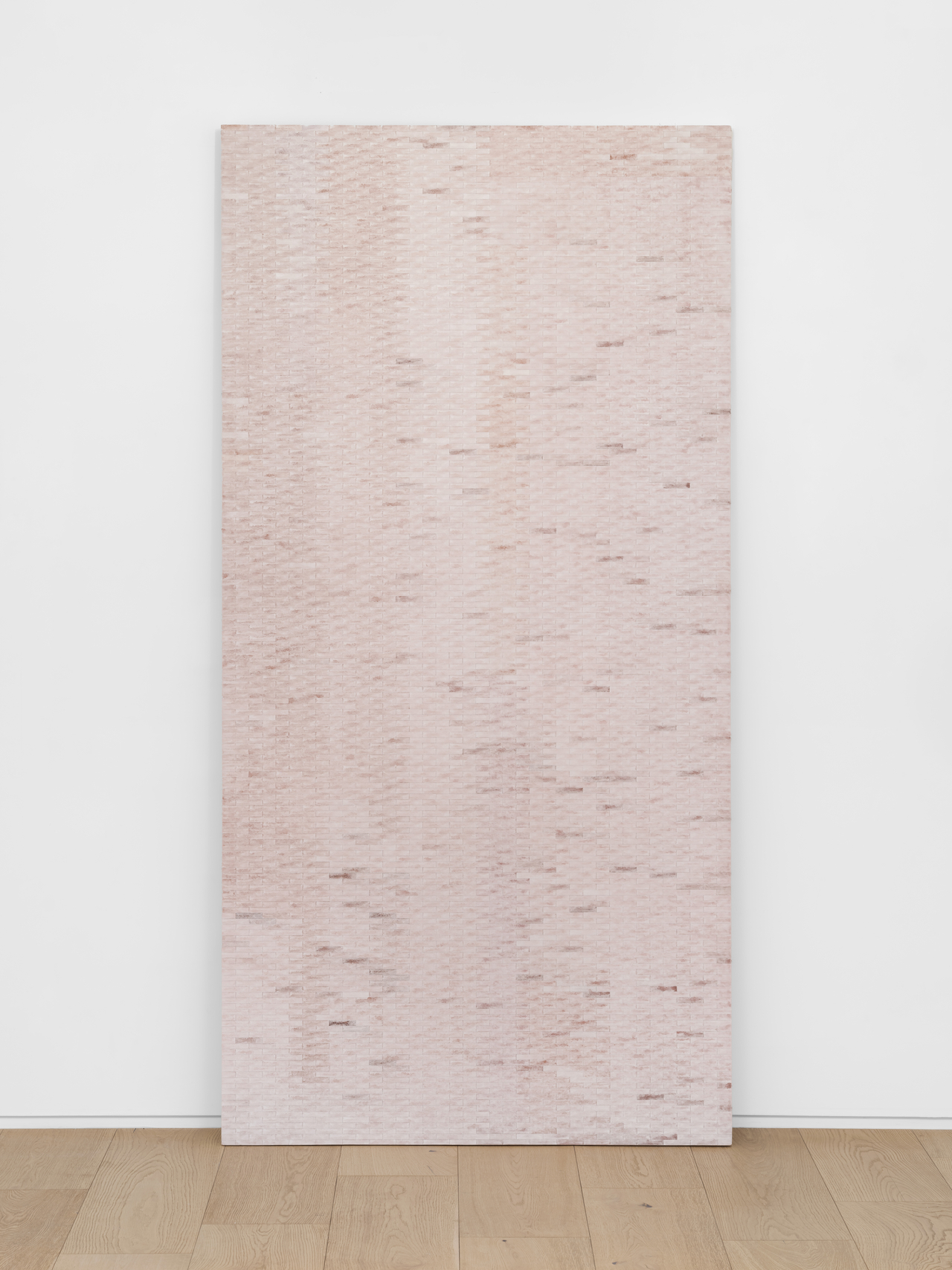
Filipino artist Maria Taniguchi’s brick paintings, encountered at the entrance of the exhibition, create a subtle distance between the image and viewer. Built from repeated brick-like units, her canvases emphasize the gradual accumulation of time.
Each canvas begins with a pencil drawing of a familiar brick pattern, with every unit painted individually using a small brush — a process through which Taniguchi explores how our perception of and relationship with everyday objects has evolved over time.
She has worked on brick painting since 2008.
Japanese artist Imazu Kei, who is based in Indonesia, shows paintings that extend the sense of distance into another dimension shaped by time, history and the body.
Drawing historical and bodily references, Imazu’s fragmented images trace how the past continues to recognize itself in the present.
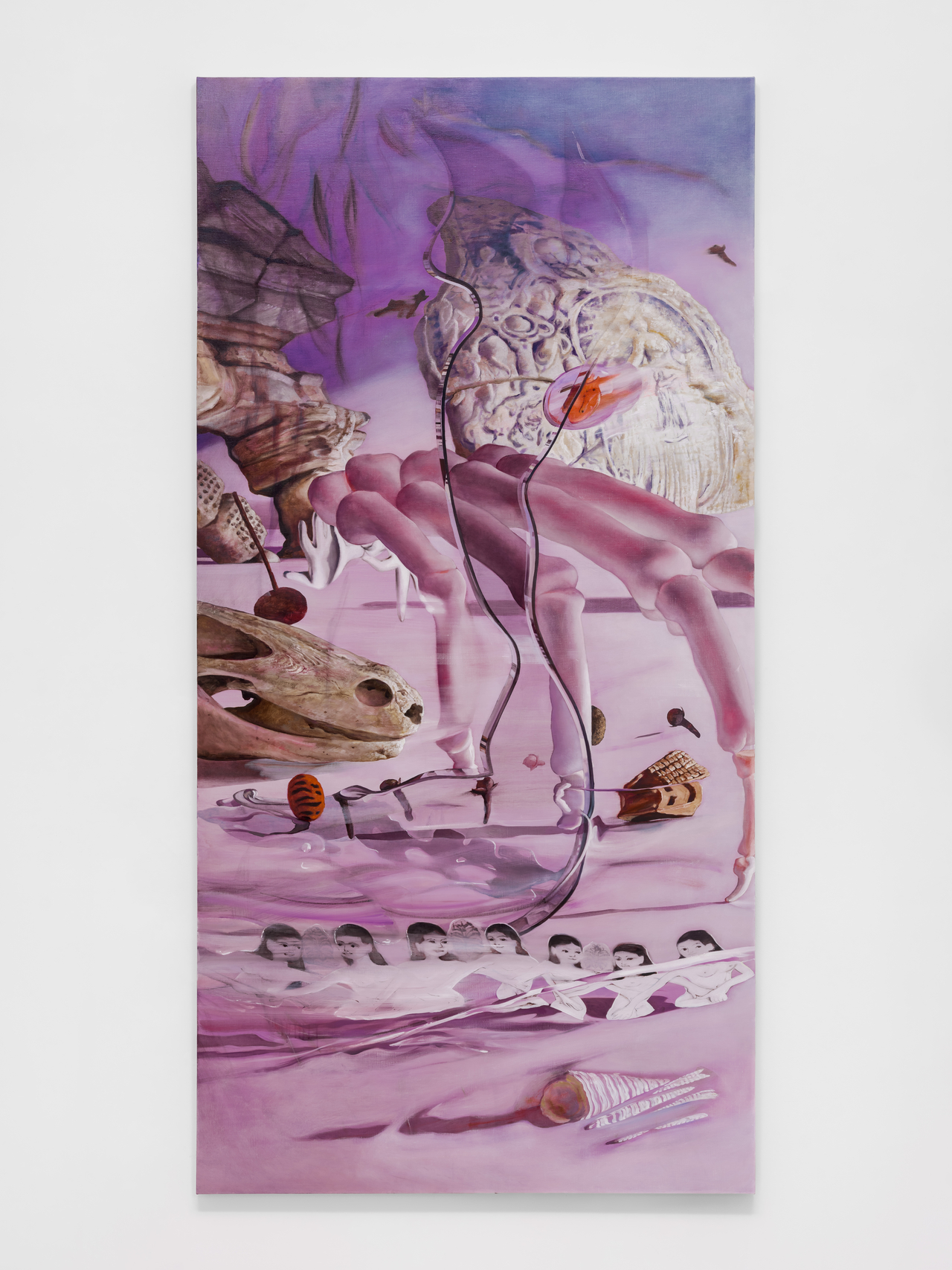
“Through Maria Taniguchi’s works, the exhibition introduces a perceptual distance between image and viewer. This shifts into the material realm in the works of Lim No-sik and Kim Ju-ree, before Imazu Kei expands the notion of distancing into a temporal one — between past and present,” said Kim Hannah, director of exhibition at the gallery.
The exhibition runs through May 2 at Thaddaeus Ropac gallery in Seoul. The European gallery opened the Seoul space in 2021 at Hannam-dong neighborhood, expanding its presence in Asian region.
yunapark@heraldcorp.com