
Seoul Mayor Oh Se-hoon defended his innocence and pressed his housing agenda Wednesday, weeks before an appellate ruling that could put his hold on office at risk.
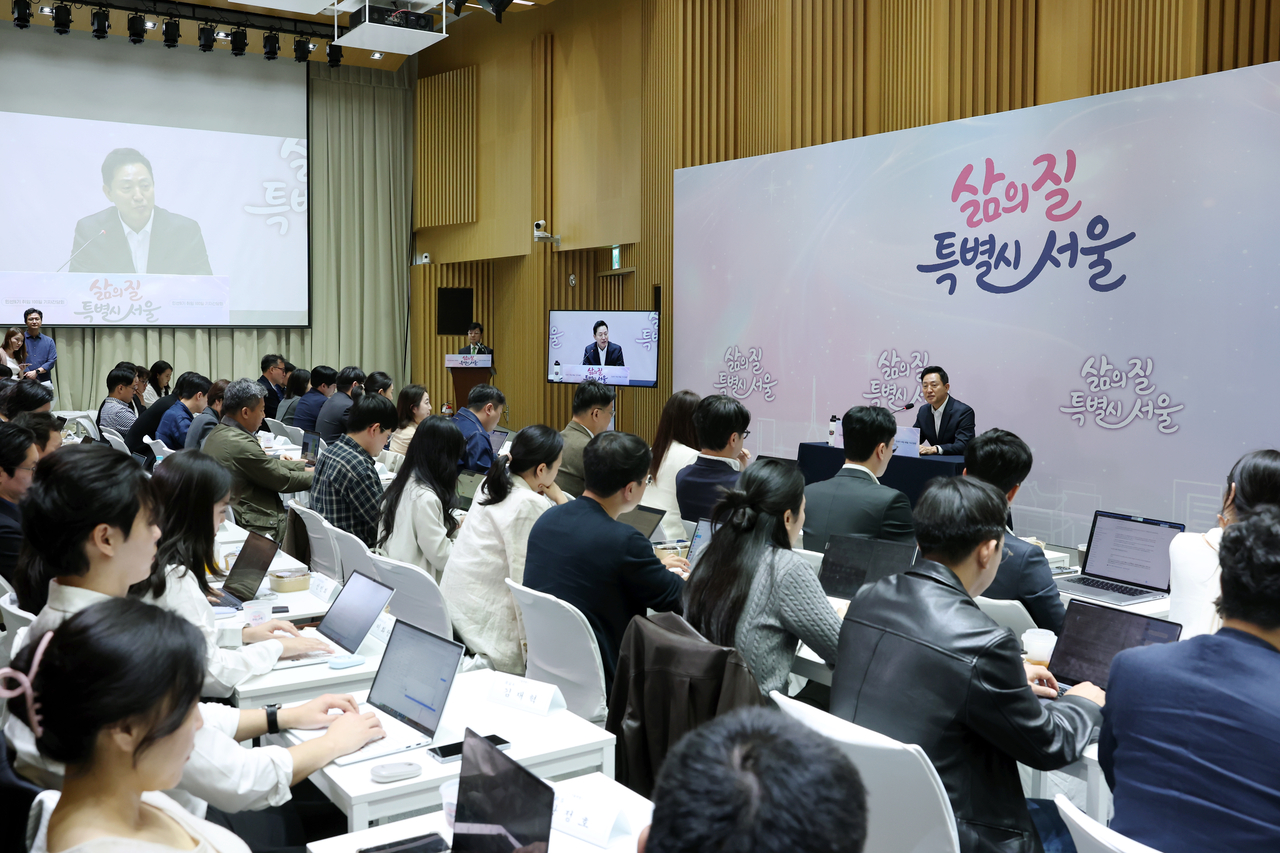
Speaking at a press conference marking the first 100 days of his latest term following his reelection in June, Oh expressed regret over the trial.
“A substantial amount of new evidence that did not emerge at the first trial has been submitted on appeal,” he said. “I am awaiting the outcome with humility. The truth always comes to light.”
Oh is appealing a lower court ruling that fined him 10 million won ($7,500) for violating the Political Funds Act. The appellate ruling is scheduled for Oct. 23. He could lose his office if the conviction and sentence are upheld in a final ruling.

Rising rents, mounting pressure
Housing was another major topic at the press conference, amid concerns over rising monthly rents, jeonse deposits and home prices in Seoul.
Oh described the central government’s recent decline in public support as “a cry of anguish from the public” over housing costs.
“When housing costs rise, households have less money left for other living expenses. That is why addressing housing problems is so important. A government that fails to stabilize the rental market will struggle to earn public approval,” he said.
Jeonse deposits in Seoul rose 5.91 percent in the first eight months of the year, the steepest increase for the period in 15 years, according to the Korea Real Estate Board. Jeonse is a rental arrangement in which tenants pay a large refundable deposit instead of monthly rent.
Seoul apartment rents also rose 5.15 percent in the first seven months of the year, more than four times the increase a year earlier, with average monthly rent exceeding 1.6 million won in July.
Oh reiterated that redevelopment and reconstruction are the city’s primary means of addressing its housing shortage. Seoul aims to begin construction on 310,000 homes through such projects by 2031 by streamlining the development process.
He said housing approvals totaled approximately 40,000 units from January through August, up about 40 percent from a year earlier, but argued that central government support remained insufficient.
“We can achieve the target if the central government and Seoul work together,” he said. “We have requested changes to several regulations, but when we look at what support has actually been provided, we have to ask what the central government has actually done to help.”
Seoul has asked the government to temporarily lift restrictions on transferring rights to new apartments in redevelopment and reconstruction projects, and to allow more floor space on each site to make the projects more financially viable.
“With a new land minister now in place, I have requested a meeting and will emphasize these issues again,” Oh said.
The private sector accounted for about 90 percent of Seoul’s housing supply over the past 20 years, compared with roughly 10 percent from the public sector, according to the mayor.
“The government’s emphasis on public-sector housing supply offers only a very limited solution for Seoul. That is why Seoul has repeatedly called for policies that encourage private-sector housing supply,” he said.
Improving everyday life
Oh, Seoul’s longest-serving mayor, also emphasized the importance of urban space and design in improving residents’ quality of life.
“Quality of life improves when everyday surroundings improve. That is why I have consistently stressed the power of urban space over the past 20 years,” he said.
“Through the Han River Renaissance project, we created green spaces and places for leisure along riverbanks that had been surrounded by concrete. Changes to urban space enhance a city’s appeal while also improving residents’ quality of life.”
Oh said Seoul has become a destination for international visitors and now has well-established infrastructure. The next priority, he said, is to improve residents’ emotional well-being and address loneliness as the country becomes a super-aged society.
“This is something Seoul must continue to address even after I complete my term in about four years and leave office,” he said.
yunapark@heraldcorp.com