
Education Ministry to discuss school uniform simplification measures after president's concern about expensive school uniforms
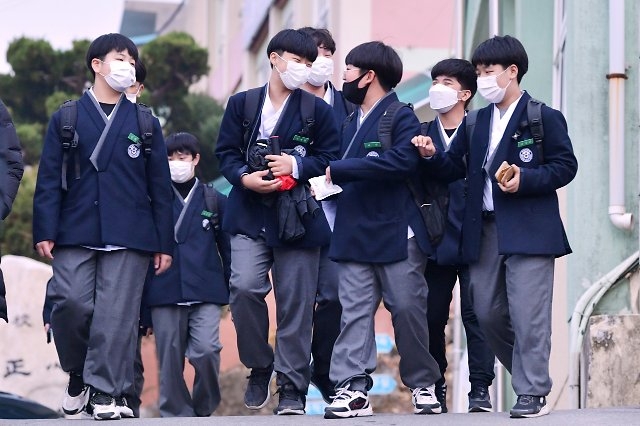
The Ministry of Education said Friday it will conduct a nationwide survey of school uniform prices after President Lee Jae Myung raised concerns over what he described as excessively high costs.
“It recently came to my attention that school uniforms can cost up to 600,000 won ($415),” Lee said on Feb. 12. “It would be meaningful to review the appropriateness of school uniform prices before the new semester begins.”
Lee’s remarks come amid the government’s broader push to curb inflation. Alongside school uniforms, Lee cited flour, sugar and women’s sanitary products as items heavily affected by rising prices. The Korea Fair Trade Commission on Feb. 18 also included school uniforms among key items for price stabilization.
According to the Education Ministry, the survey will examine uniform prices across all 17 regional education offices. The ministry said the review aims to better understand pricing structures and identify potential measures to ease the financial burden on households.
Education Minister Choi Kyo-jin also suggested the government may consider encouraging more practical uniform designs. He hinted at the possibility of promoting casual-style uniforms over traditional suit-style attire, citing student comfort.
Historical roots
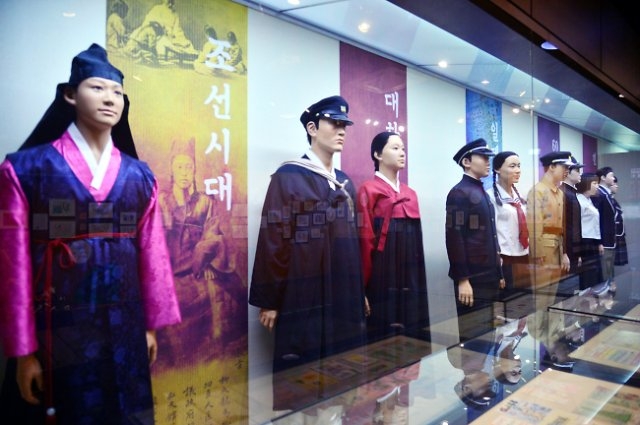
The tradition of student uniforms in Korea dates back centuries, to students of the Sungkyunkwan -- the highest educational institution during the late Goryeo and Joseon periods -- who wore blue-collared hanbok as early as the 15th century.
Modern-style uniforms emerged in the late 19th century. Ewha Hakdang introduced uniforms for female students in 1886, while Paichai Hakdang adopted Western suit-inspired designs in 1897.
Uniform policies shifted significantly during the Japanese colonial period, from the traditional Korean durumagi overcoat and hat to the Japanese-styled gakuran shirt, and later to designs more closely resembling military attire during the Sino-Japanese War in 1937.
After Korea’s liberation in 1945, uniforms remained common but evolved in design -- from black suits directly after liberation, to black military attire during the Korean War, and back to strict formal attire under Korea's authoritarian regimes.
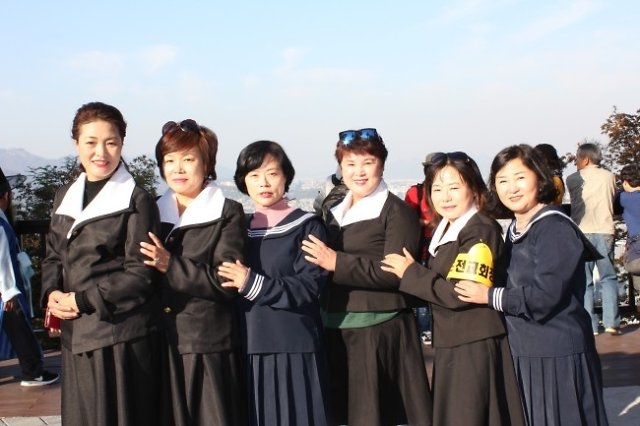
In 1983, the government abolished uniforms for middle and high school students, citing changing social attitudes ahead of the 1986 Seoul Asian Games. The decision, however, was met with resistance from parents, leading authorities to reverse course in 1985 and recommend that schools reintroduce uniforms at their discretion.
School uniforms in South Korea today and how much they cost
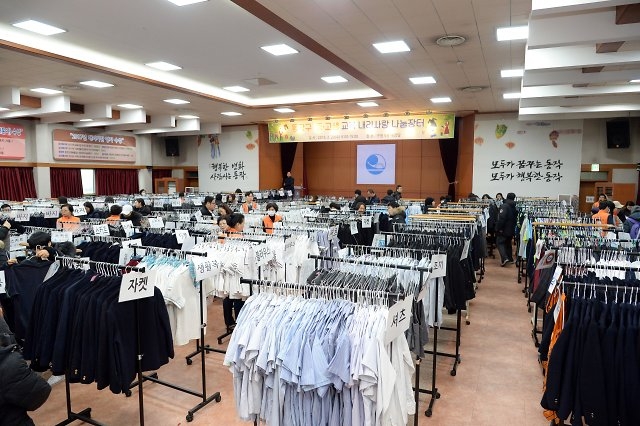
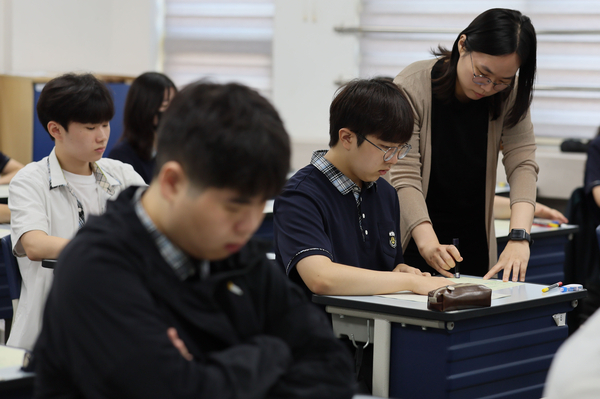
Most South Korean middle and high school students wear uniforms, although schools in many regions, including Seoul, are not legally required to adopt them.
Students typically wear separate summer and winter uniforms, often with designated athletic wear for physical education classes.
Uniform designs vary widely by school. Korean Minjok Leadership Academy, for instance, is known for its hanbok-inspired attire, while Korea Art High School has drawn attention for its distinctive colors.
Uniform providers are selected by the school principal through a bid. The selected provider must supply the uniforms within a price ceiling set by the local education office each year.
Each region provides subsidies for parents purchasing uniforms. Some districts cover the full cost of uniforms, while others provide vouchers worth 300,000 and 400,000 won. This incentivizes providers to keep the price above the total value of the subsidy.
A school in Seongbuk-gu, Seoul, notified its parents that its uniform cost 330,000 won, with 300,000 won covered by a city voucher. However, parents were encouraged to purchase additional cardigans and sweaters, which cost 68,000 won each.
Although the cardigans and sweaters were labeled as being optional, students were required to wear them under their jackets -- effectively making them mandatory.
Another school in Seongnam, Gyeonggi Province, told its parents that 400,000 won of the 410,000 won price tag of their uniforms would be covered by the city. However, it also recommended parents purchase a hoodie, winter and summer athletic clothes, and fleece-lined pants for an additional 125,000 won.
Expected policy discussions
Education circles say Lee’s recent remarks may accelerate discussions on simplifying uniform designs.
The Education Ministry said it plans to meet with regional education offices Monday to explore potential policy directions for simplifying uniforms, while maintaining that decisions ultimately rest with individual schools.
The ministry added it will also hold consultations with parents to gather opinions, with price stabilization emerging as a key policy objective.
Public opinion on uniforms remains divided. While supporters cite convenience, comfort and reduced peer pressure, others argue for greater flexibility.
Meanwhile, some say a comprehensive review, including full autonomy on uniforms, should be on the table for discussion.
“Given that debates over school uniforms have resurfaced, broader social discussions on allowing students to wear casual clothes are necessary,” said Hyun Kyung-hee, spokesperson for the Korean Teachers and Education Workers Union.
Some local education offices, such as that of Gyeonggi Province, have already floated reforms last year, allowing schools to scrap dress codes altogether.
seungku99@heraldcorp.com


