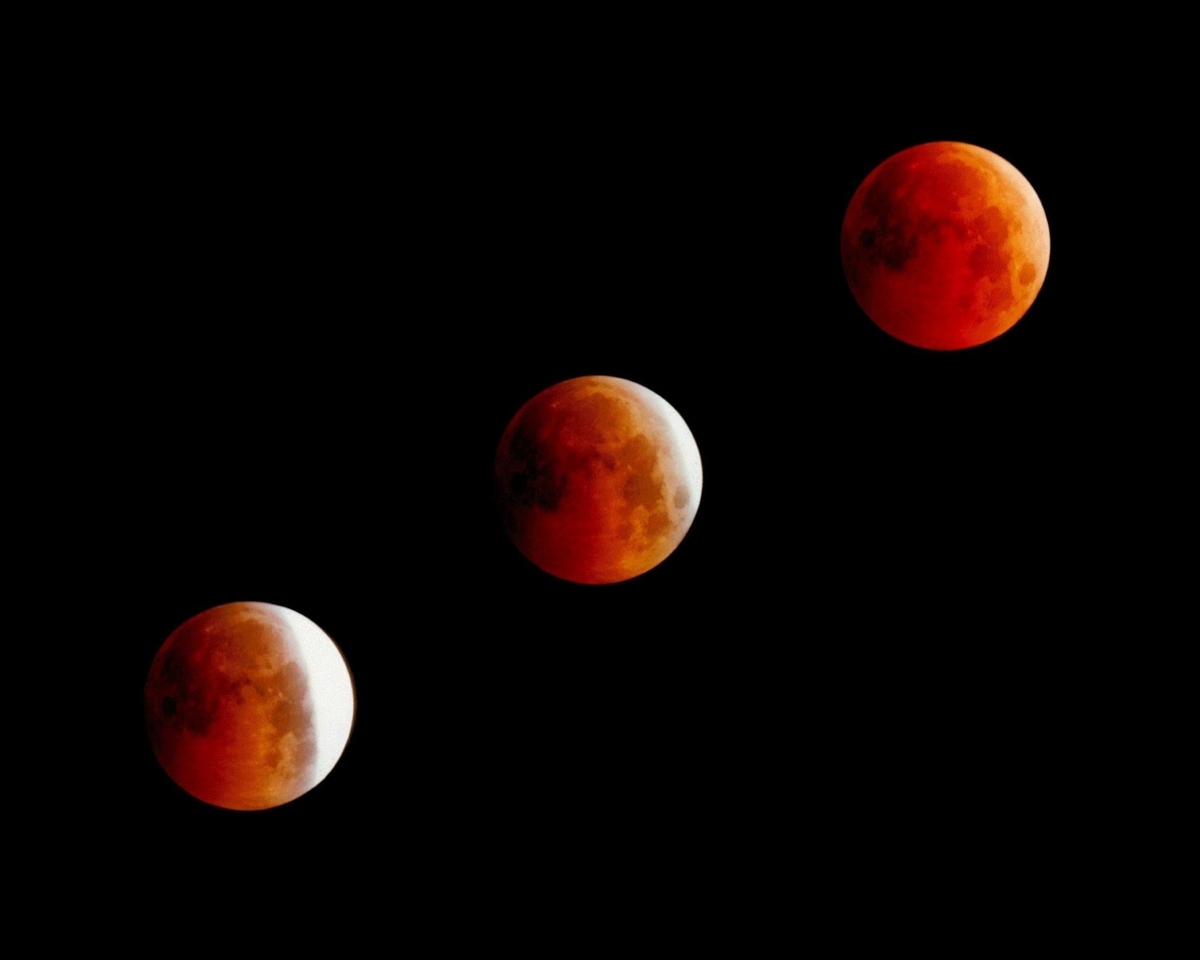
On March 3, as South Korea marks Jeongwol Daeboreum, the first full moon of the lunar year, skywatchers will witness a rare spectacle: a total lunar eclipse, in which the moon slips entirely into the Earth’s shadow.
Often called a “blood moon,” the phenomenon occurs when the moon passes into Earth’s shadow and sunlight, filtered through the planet’s atmosphere, bends and scatters shorter blue wavelengths before reaching the moon. The remaining red and orange light casts the moon in copper and crimson hues, giving it a dusky glow.
In Seoul, the moon is expected to rise at 6:16 p.m. A partial eclipse will begin at 6:49 p.m., with totality from 8:04 p.m. to 9:03 p.m. The eclipse will end at 10:18 p.m. Weather permitting, the entire sequence will be visible to the naked eye, low in the eastern sky.
Across the capital, the Joseon-era royal palace of Changgyeonggung and several science centers are planning special programs to mark the occasion, offering residents a chance to gather and watch the full moon darken and glow red above the city.
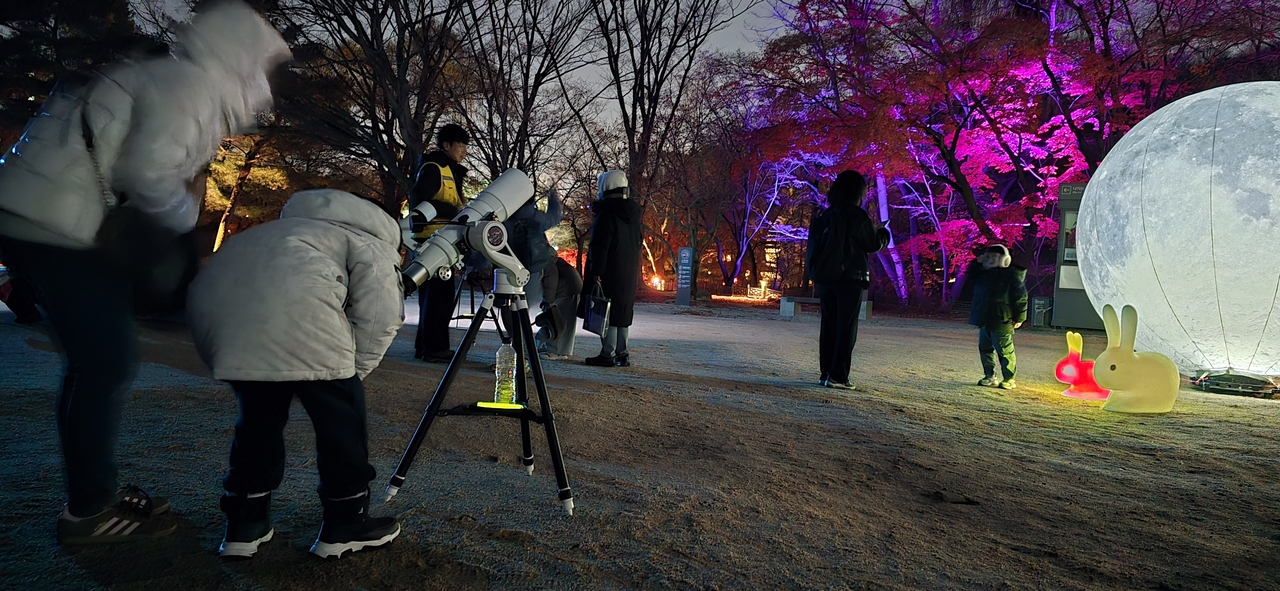
From Feb. 24 to March 2 at Changgyeonggung, a large illuminated moon installation will allow visitors to photograph the holiday’s first full moon between 6 p.m. and 8:30 p.m.
On Feb. 24 and 25, an evening telescope observation event will take place in front of Yanghwadang Hall. Participation does not require advance reservation.
The National Children's Science Center in Jongno-gu will hold a ticketed science class from 7:30 p.m. to 8:20 p.m. on the moon and lunar eclipses, followed by telescope observation of the moon, Jupiter and winter constellations. Reservations open Friday at 3 p.m. with an admission fee of 7,000 won. The museum’s regular exhibition halls will be closed that day.
In Nowon-gu, the Nowon Cosmos Science Center will offer open-air telescope viewing from 7:30 p.m. at Junggye Neighborhood Park, along with hands-on activities such as constellation badge-making and LED recreations of jwibulnori, a traditional folk game in which participants whirl small cans of fire to symbolically burn away misfortune and pests before the spring planting season. No reservations are required.
At Gangseo Byeolbit Universe Center in western Seoul, the eclipse will be celebrated under the theme “Hide-and-Seek with the Moon.” Beginning at 6 p.m., a one-hour astronomy class will explore the mechanics of total lunar eclipses and introduce the constellations visible that evening.
A workshop will guide participants through the phases of the moon, followed by a craft session to create moon-themed eco-bags. From 7:30 p.m., telescopes will be set up at Banghwa Neighborhood Park for a public viewing. Reservations are required through the center’s website.
Organizers caution that events may be canceled in the event of rain, snow or heavy cloud cover. Visitors are advised to check each venue’s social media accounts for weather updates.
hwangdh@heraldcorp.com