

Residents rank trillion won megaprojects and local sourcing commitments as the top milestones shaping Yongin’s future
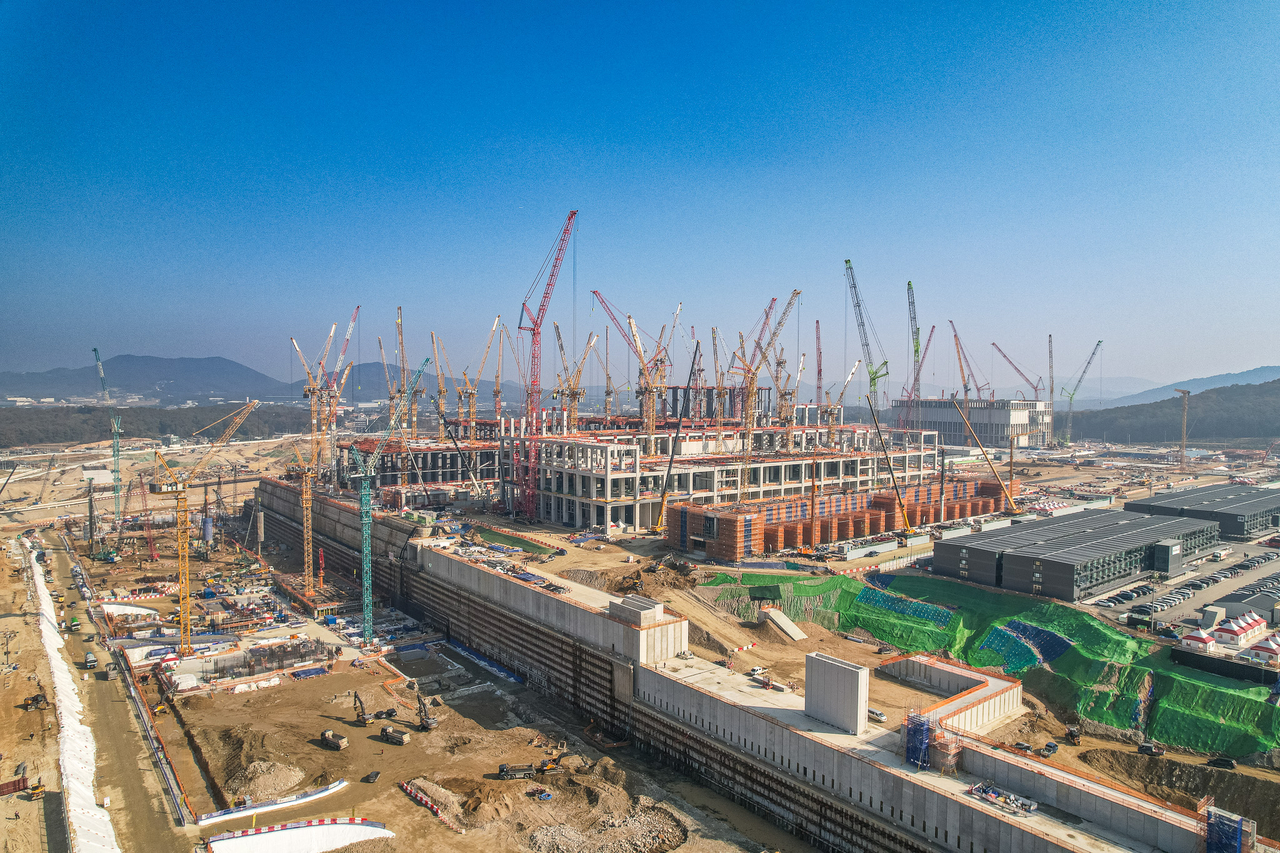
A year of unprecedented semiconductor investment continues to reshape Yongin, with residents identifying the chip boom as the city’s most consequential development — and the one most likely to define its direction in the years ahead.
The nearly 1,000 trillion won ($681 billion) in commitments from SK hynix and Samsung Electronics was ranked as Yongin’s top news of 2025, highlighting both the scale of the city’s industrial transformation and the extensive economic ripple effects expected to follow.
In a poll of 2,604 participants, including residents, public officials and local media workers, the semiconductor megaprojects drew 1,337 votes, far outpacing developments in culture, transportation and everyday life.
City officials said the results show how strongly the chip industry’s rapid expansion is shaping public expectations and Yongin’s broader economic trajectory.
Public sees chip boom reshaping Yongin
The recognition centers on the investment packages announced last year by SK hynix and Samsung, each committing hundreds of trillions of won to new semiconductor facilities in Yongin.
SK hynix’s plan calls for 600 trillion won to build a semiconductor cluster in the city’s southern districts. Samsung Electronics will invest 360 trillion won to construct an advanced system semiconductor national industrial complex in the southwest, while allocating an additional 20 trillion won to strengthen research and development at its Giheung campus.
Combined, the projects bring roughly 1,000 trillion won of semiconductor investment to Yongin — the largest concentration of chip-related capital in Korea.
Second place in the poll also went to a semiconductor-related development: SK hynix’s decision to procure 450 billion won worth of construction materials, labor and services from companies based in Yongin.
City officials said the strong showing reflected rising public interest in local economic spillovers from the megaprojects, particularly as construction ramps up across multiple phases.
Local sourcing delivers economic lift
SK hynix’s 450 billion won local procurement commitment is expected to provide tangible benefits to hundreds of local firms as construction continues.
According to Yongin officials, the sourcing plan stems from a 2024 agreement between the city and SK Ecoplant, the project’s main contractor, requiring the use of Yongin-based labor, equipment and materials during the first two years of construction.
The policy covers the initial fabrication plant, with five additional phases planned.
“During the two years required to build the first fabrication plant, SK committed to using Yongin-based labor, equipment and materials,” said city Mayor Lee Sang-il.
“The city will continue to request that the same approach be applied to subsequent fabrication plants.”
Local businesses that are expected to benefit include construction materials suppliers, heavy-equipment rental companies, transport operators, logistics firms, engineering subcontractors and service providers catering to the cluster’s workforce.
Ripple effects expected across the city
Samsung Electronics’ 360 trillion won system semiconductor complex, also under construction, is expected to adopt similar local sourcing practices, amplifying the economic impact.
Once Samsung begins full-scale construction, Yongin officials expect the ripple effects across the city to be substantial. The SK megaproject alone is projected to require a cumulative labor input of about 3 million workers over two years, according to city estimates.
That influx is anticipated to drive new demand for restaurants, housing, lodging, transportation and local services.
“As workers stay, dine and spend their leisure time in Yongin, this will provide a significant boost to the local economy,” Lee said.
A city reshaped by semicondictors
For many residents, the combined momentum — record-breaking investment, local procurement agreements and new transport infrastructure — signals that Yongin is shifting from a Seoul-adjacent city into a major industrial center with its own economic identity.
The poll’s results suggest that residents increasingly view the chip boom not only as a national industrial milestone but also as a force that will change daily life in Yongin — from jobs and small-business activity to mobility, cultural amenities and city branding.
With construction advancing on both megaprojects and supporting infrastructure now in motion, city officials expect semiconductor-driven growth to remain at the forefront of public attention through 2026 and beyond.
fob140@heraldcorp.com
forestjs@heraldcorp.com