

The Korean Pharmaceutical Association said on Tuesday that so-called "outlet pharmacies" selling over-the-counter drugs pose a serious public safety risk, warning that medicines containing precursors for illegal drugs could be sold in large quantities without proper oversight by pharmacists.
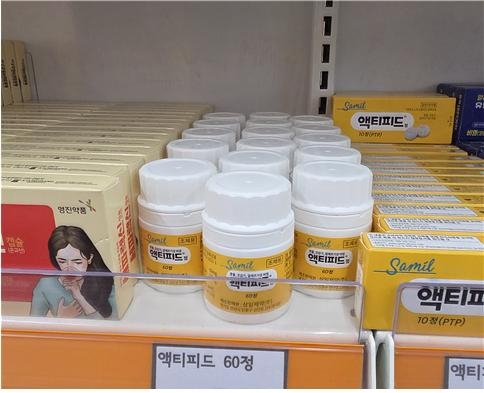
The association said it had confirmed that a medicine containing pseudoephedrine was displayed in bulk at an outlet pharmacy, allowing customers to purchase it freely without pharmacist supervision. Pseudoephedrine is used to relieve nasal congestion caused by colds or rhinitis, but it can also be diverted for the production of illegal drugs such as methamphetamine, the association said.
The product was reportedly sold in bottles containing 60 doses, exceeding the maximum quantity permitted for over-the-counter sales under current guidelines issued by the Ministry of Food and Drug Safety.
“Selling medicines that contain ingredients requiring professional supervision through mass displays and unrestricted consumer choice poses a direct threat to public safety,” a KPA official said.
“The indiscriminate sale of products containing pseudoephedrine is a public health issue that cannot be overlooked, particularly in relation to drug-related crimes and youth protection.”
Outlet pharmacies, which feature sales floors spanning several hundred square meters and large, warehouse-like shelving, offer a wide range of medicines and health supplements that do not require a prescription. Such stores have been expanding across Korea since the first one opened in Seongnam, Gyeonggi Province, in June.
While these pharmacies have gained popularity among consumers due to their lower prices, pharmacist groups have consistently raised concerns that the business model encourages indiscriminate purchasing and misuse of medicines that should be sold with professional guidance.
KPA President Kwon Young-hee warned that the emergence of outlet pharmacies could accelerate the entry of large capital into the pharmacy sector, threatening small neighborhood pharmacies.
“To block potential problems at an early stage, it is necessary to reorganize relevant pharmaceutical laws and establish clear licensing standards,” Kwon said during a parliamentary audit in October. “This should include thorough prior reviews of funding sources, license leasing and ownership structures.”
forestjs@heraldcorp.com


![[World Class] HUFS bets on Songdo, AI to redefine what a global university can do](https://wimg.heraldcorp.com/news/cms/2026/10/18/news-p.v1.20260930.7e4dbeacfc1d4d16848c0e2a441c04e6_R.jpg?type=h&h=120)
