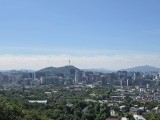
The controversy over urban development near Jongmyo Shrine has become one of the most troubling cultural debates in Korea today. The damage is affecting Korea’s international reputation at a moment when the world is paying close attention to our cultural heritage.
After the successful APEC Summit in Gyeongju, North Gyeongsang Province, where Korea presented itself as a nation that cherishes traditional culture, such a sudden regression in Seoul’s approach to heritage conservation is both baffling and self-inflicted. Korea’s traditional culture is understood globally as the very foundation of Hallyu. At a time when cultural prestige has become a pillar of national strength, it is precisely common sense that we must return to.
To understand the dispute, we must review how the issue unfolded. Jongmyo is not an ordinary monument; it is the Joseon royal ancestral shrine where the spirit tablets of kings and queens were enshrined for over five centuries. It remains, even in today’s democracy, a spiritual home that carries an important part of Korea’s identity. Redevelopment around the area is not inherently objectionable. In fact, a reasonable compromise was already reached in 2018, when the redevelopment plan was adjusted to protect Jongmyo’s historic landscape while still allowing for urban renewal. The agreement at the time set a height limit of 55 meters for buildings on the northern side of the redevelopment zone.
The problem began when the Seoul Metropolitan Government revised the plan and raised the height limit to 101 meters, nearly double the previously agreed level. This shift, pushed forward without sufficient consensus, triggered national uproar and deepened concerns that Seoul had chosen confrontation over coordination in a matter that demands sensitivity and restraint.
At the heart of the current dispute are three central questions. First, cultural heritage preservation and local development are not mutually exclusive. The 2018 compromise is living proof that the two can coexist. Heritage conservation provides a framework for sensible development. It identifies what cannot be replaced and therefore must be protected before other aspects of urban planning proceed.
Second, the idea that local development requires doubling the building height reflects not a structural necessity but a lack of creativity at City Hall. Delivering economic benefits to locals is the city’s job. Failing to do so within the reasonable constraints of heritage conservation does not justify discarding those constraints altogether. Development is flexible; creativity has no shortage of options; cultural heritage, once damaged, is gone forever.
Third, heritage preservation is ultimately a cultural and professional matter, not a political one. Once political incentives intrude, decisions become distorted, public trust erodes and controversies deepen. Many observers suspect that the sudden easing of height restrictions was influenced by the upcoming local elections. Even if the mayor denies political motives, the timing is so unfortunate that the old saying applies: Do not tie your shoelaces in a melon field, nor adjust your hat under a pear tree. It inevitably raises suspicion.
From a broader perspective, Korea is now recognized as a country that has successfully transformed itself from a poor nation to an economic, cultural and technological leader. Hallyu did not emerge overnight. Its roots lie in centuries of accumulated culture, rituals and aesthetics. At the APEC Summit in Gyeongju, the global spotlight on the 1,500-year-old Silla golden crowns reminded the world that Korea’s soft power is grounded in its cultural depth. Cultural heritage has helped lift Korea into the ranks of advanced nations; Seoul, as the capital, is its primary beneficiary.
Cities that faced similar dilemmas long before Seoul already learned the necessary lesson. In the 1970s, Paris built the 210-meter Montparnasse Tower in its historic center. The backlash was so severe that the city imposed strict height limits in the historic core, shifting all high-rise development to La Defense, some 5 kilometers west of the city center. As a result, Paris preserved its centuries-old urban landscape while simultaneously building a world-class modern business district. The city today thrives precisely because it has respected the distinction between heritage space and development space.
Kyoto, Japan, chose an even stricter path. When development pressures intensified in the 1980s, citizens insisted that traditional landscapes were Kyoto’s identity. The city enacted sweeping height restrictions for buildings — 31 meters across most districts and even lower near major heritage sites. The outcome speaks for itself: Far from stifling growth, these rules strengthened Kyoto’s value as a global cultural city. Kyoto proved that raising buildings is not the only way to boost prosperity.
Why, then, is it so difficult for Seoul to learn such lessons? The 2018 compromise already showed that the issue was not “development versus no development.” It was simply about height. A jump from 55 meters to 101 meters in seven years — particularly around a UNESCO World Heritage site — was bound to shock cultural experts and the public alike. It is hard to understand why the city cannot preserve the “distinctive landscape” around Jongmyo while still finding ways to secure economic benefits. That is precisely what capable urban governance is for. High-rise construction is not the only model for local development, and certainly not the wisest one near an irreplaceable cultural treasure.
Seoul must look beyond short-term thinking. Korea’s rise as a cultural power did not come from neglecting its heritage but from cherishing it. Cultural assets are not obstacles to development but foundations of national prestige. Disturbing the surroundings of a shrine that contains the spiritual legacy of more than 500 years of Joseon history is not something to be approached with impulsive changes and political timing. Returning from 101 meters to the commonsense range around 55 meters is not a concession; it is a restoration of reason. Korea’s future as a cultural nation depends not on how high we build, but on how wisely we preserve what cannot be rebuilt. I hope the city recovers its common sense somewhere between 55 meters and 101 meters.
Wang Son-taek
Wang Son-taek is an adjunct professor at Sogang University. He is a former diplomatic correspondent at YTN and a former research associate at Yeosijae. The views expressed here are the writer’s own. — Ed.
khnews@heraldcorp.com