A presidential committee approved a state goal to reduce greenhouse gas emissions by 53 percent to 61 percent from the 2018 levels by 2035, slightly higher than the government initially proposed last week.
South Korea's new emission target is set to be endorsed by the Cabinet on Tuesday. The goal will then be announced at the 30th United Nations Climate Change Conference (COP30) in Belem, Brazil, which kicks off on Tuesday, according to the Presidential Commission on Carbon Neutrality and Green Growth.
The decision came four days after the Ministry of Environment proposed two scenarios, ranging between 50 percent and 60 percent and 53 percent and 60 percent.
By industry, the power generation and transport sectors are expected to see the steepest cuts, with emissions projected to fall 68.8-75.3 percent and 60.2-62.8 percent from 2018 levels, respectively.
Those in the power generation sector will be expected to phase out coal-fired power and expand their renewable energy grid, while those in the transport sector will be expected to expand the manufacturing of electric and hydrogen-run vehicles, improve fuel efficiency for internal combustion engines, and enhance public transit use.
Energy-intensive industries in manufacturing, such as steel, are projected to see the smallest reductions — between 24.3 and 31 percent — a move seen as a response to recent criticism of the government’s climate goals. Industry representatives have argued since the release of two NDC proposals on Nov. 6 that even a 48 percent target would be difficult to meet.
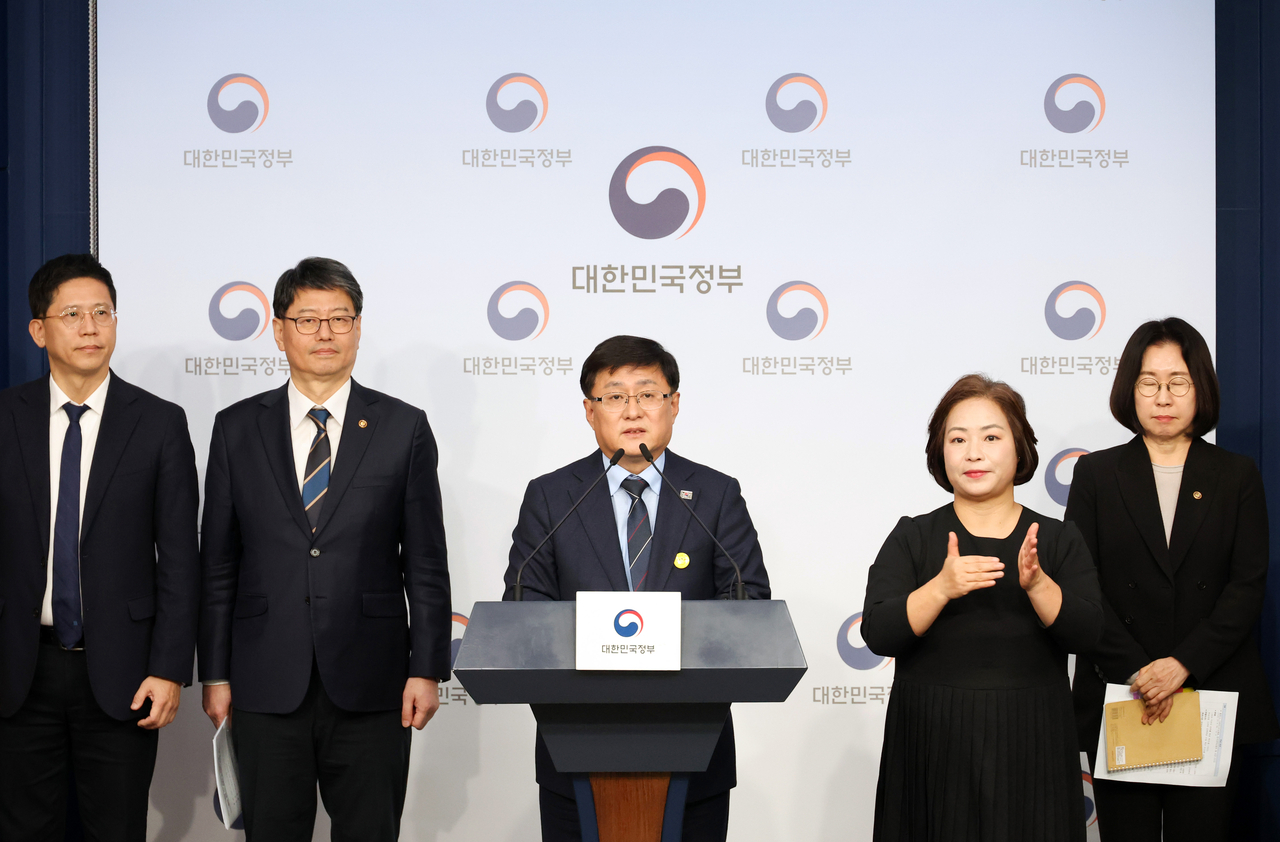
“There was no choice but to minimize (greenhouse gas emissions goals) for companies in the manufacturing industry, as too few investments have been made in the past to suddenly decarbonize manufacturing industries by a significant amount,” Climate Minister Kim Sung-whan told the press during a press briefing held after the plenary session on Monday.
Kim added that specifics on what methods the industries will be advised to follow to make the cuts and how the government will provide assistance will be revealed later on.
Two Nationally Determined Contributions proposals revealed by the government on Nov. 6, were met with criticism from both industries and environmental activists. One side argued the goal was too ambitious while the other argued it was too lenient.
When asked at Monday’s press briefing whether the government believes a social consensus has been reached on the new greenhouse gas reduction target, Kim said the NDC’s range-based goal represents a form of consensus that “accommodates diverse perspectives.”
lee.jungjoo@heraldcorp.com