
South Korean shipbuilding firm Hanwha Ocean’s Philly Shipyard has emerged as a focal point in Seoul’s decadeslong pursuit of a nuclear-powered submarine, following US President Donald Trump’s suggestion that Korea could build one at the Pennsylvania facility.
The statement raised expectations in Seoul, but experts warn that the shipyard currently lacks the infrastructure, capacity and regulatory approval needed for submarine construction, even though Hanwha is a leading builder of conventional submarines at home.
Trump's remark sparks debate
“South Korea will build its nuclear submarines right here, at the historic Philadelphia Shipyard. Shipbuilding in our country will soon make a big comeback,” Trump said in a post on Truth Social on Oct. 30.
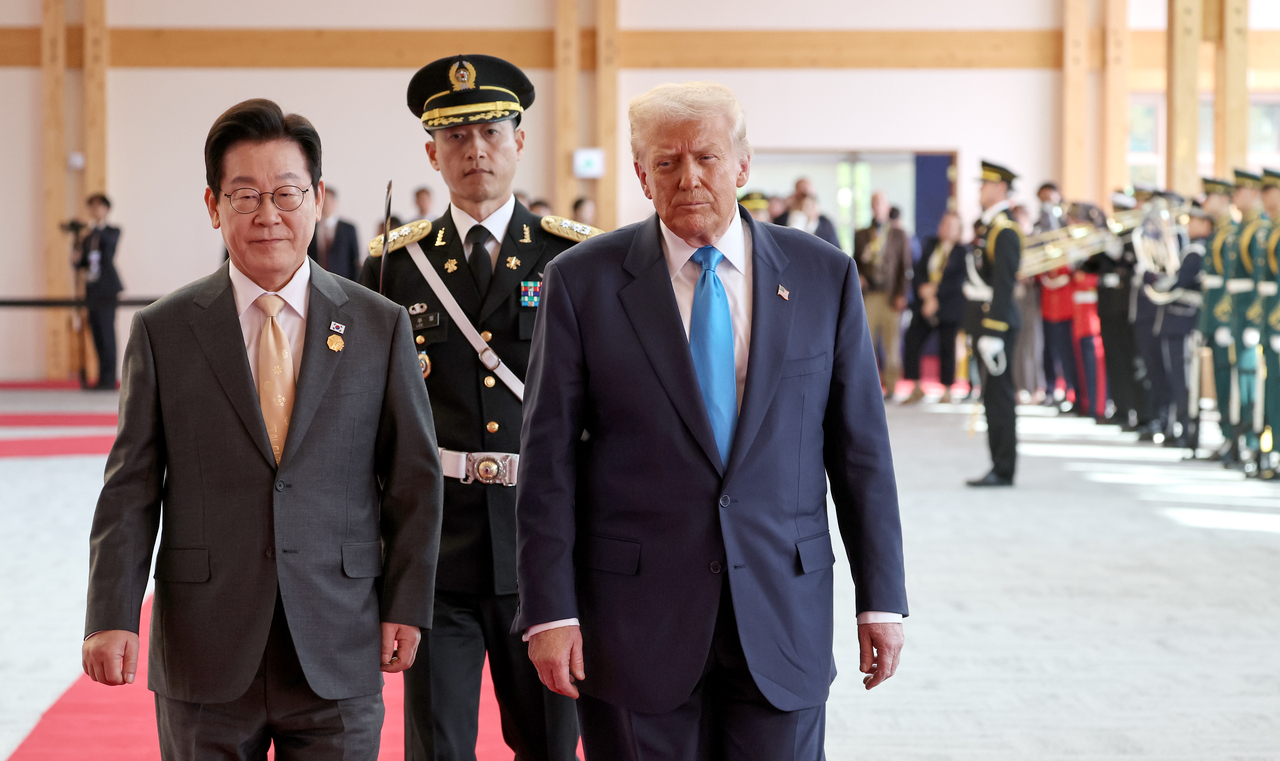
For years, South Korea has sought US consent to obtain enriched nuclear fuel needed for reactor-powered submarines, citing the growing threat from North Korea. Trump’s remarks, following President Lee Jae Myung’s request during the bilateral summit, have been interpreted as offering political room for progress.
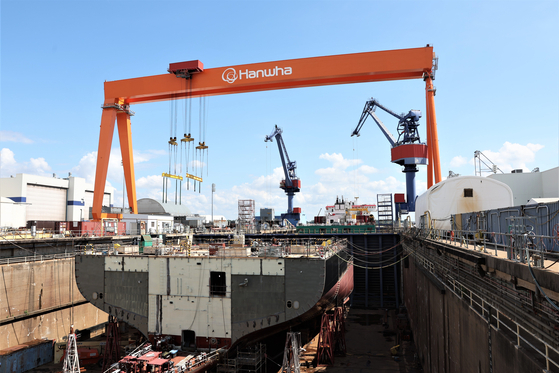
However, analysts note that the Philadelphia facility, which Hanwha acquired in 2024, does not currently build ships at scale, let alone nuclear-powered submarines, which require highly specialized dry docks, handling systems and safety controls.
Facility and cost constraints
The yard currently has two medium-sized docks and an annual capacity of under 1.5 ships. Hanwha has announced $5 billion in additional investment to expand its production capacity to 20 ships, but much larger upgrades would be necessary to construct submarines and manage radioactive reactor components.
“Nuclear-powered submarines are at least around 6,000 tons, far larger than what even submarine docks in Korea can currently build, which is around 3,000 tons,” said an industry source who requested anonymity.
“Production in the US already costs far more due to higher wages and infrastructure needs, and adding submarine-specific facilities would be an even greater burden for Hanwha.”
Main opposition People Power Party lawmaker Yu Yong-weon also pointed out that “strong reinforced-concrete structures capable of withstanding thousands of tons of weight and large-scale enclosures to cover the submarines are essential, but Philly Shipyard lacks them.”
The plan could also face workforce deployment challenges. Although Hanwha emphasizes that the shipyard is operational, building new facilities would require sending Korean engineers and technicians, raising concerns about visas and labor approvals — issues that have slowed Korean industrial projects in the US before.
Moon Keun-sik, a Hanyang University professor who worked on Korean Navy submarine projects for 22 years, warned that the timeline could stretch far longer than expected.
“Administrative paperwork, factory construction and US defense contractor designation — preliminary steps — could add up to ten additional years to building a submarine in the US,” Moon said. “During such a long period, advances in global defense technology and political shifts in the US could significantly alter the situation.”
Government seeks clarity
The Korean government welcomed Trump’s approval of a nuclear-powered submarine program, while expressing a supportive stance toward building it domestically.
Defense Minister Ahn Gyu-back said that details of the project, including its location, remain subject to discussion following Trump’s social media post.
Asked on Wednesday about domestic construction, Ahn pointed to the limited capacity of Philly Shipyard and said, “We have accumulated technologies and studied know-how over the past 30 years on nuclear-powered submarines, so I think it is reasonable (to build them domestically).”
He also noted that Korea has completed most of the required submarine technologies, with the supply of nuclear fuel being the final unresolved element. Seoul aims to build its own nuclear-powered submarine in the 2030s, potentially sooner than a US-based construction timeline.
“Korean shipbuilders are already competing with global companies in submarine construction, and small modular reactor technology, similar to that used in submarines, is also under development,” an industry source said. “However, regulatory issues, such as the transfer of nuclear fuel, are lagging behind technological development.”
Alliance, politics and strategic risks
Some experts believe the US may seek to use the submarine project as leverage.
“The mere fact that negotiations over nuclear fuel are even possible is surprising. But it seems the US wants Korea to buy fuel from them, possibly purchase submarines from them as well, while making Hanwha develop the shipyard by itself,” said Choi Ki-il, professor of military studies at Sangji University.
He noted that Australia’s nuclear submarine acquisition under AUKUS has been repeatedly delayed due to US defense export controls, suggesting Korea could face similar hurdles.
Analysts caution that linking Korea’s strategic submarine program too closely to revitalizing a US commercial shipyard could complicate national security planning.
“The acquisition of nuclear-powered submarines is crucial for Korea,” Moon said. “Using it as a pretext for shipbuilding development while US production capacity remains inadequate could hurt public opinion on the alliance.”
forestjs@heraldcorp.com