
New CEO eyes 2027 turnaround through vaccine pipelines, global partnerships
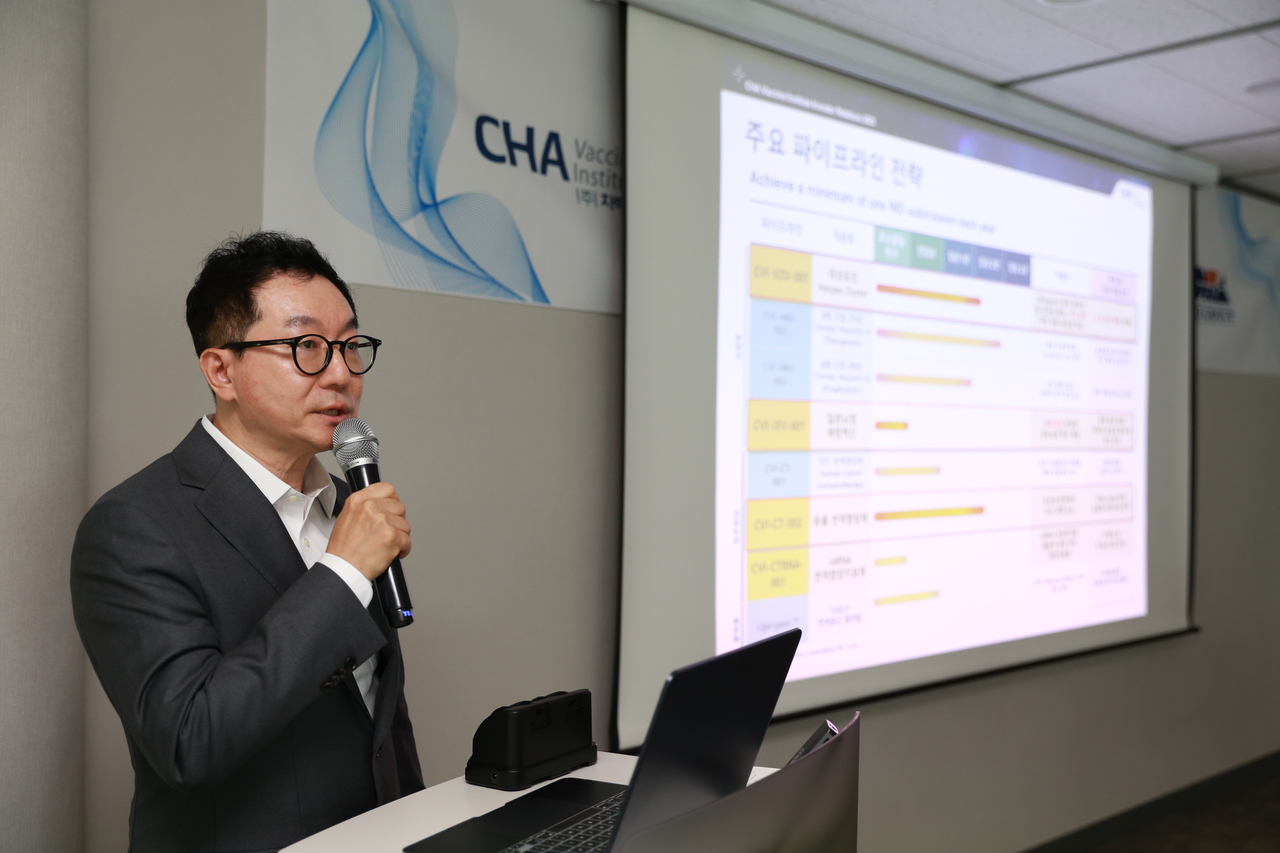
The Cha Vaccine Institute has vowed to focus on developing pipelines with high chances of commercialization and bolstering immune-boosting platforms for global expansion to drive mid- to long-term growth.
“Turning around the company’s low valuation is what I have been focusing the most on since taking the office,” said Han Seung-il, CEO of Cha Vaccine Institute, in his first press conference since his top leadership appointment in August, in Seoul on Wednesday. Han spent more than 20 years at Pfizer before joining the Cha Vaccine Institute in June.
“We plan to secure revenue and operating profit in the near future through creating clinical trial-based achievements and global partnerships and to strengthen Cha Vaccine Institute’s trust in the market.”
The Korean biotechnology company pointed to three pipelines with better likeliness for commercialization: CVI-VZV-001, a recombinant vaccine candidate designed to prevent shingles and alleviate postherpetic neuralgia; CVI-CT-002, a cancer immunotherapy candidate intended to target mammary cancer in dogs; and CVI-JEV-001, a Japanese encephalitis virus vaccine candidate.
According to the Cha Vaccine Institute, it plans to push for outlicensing and global partnerships of CVI-VZV-001 next year when it enters Phase 2 clinical trials. The Korean vaccine developer aims to complete Phase 3 clinical trials of CVI-CT-002 and launch a product by 2027. However, the firm did not reveal a targeted timeline for CVI-JEV-002.
As the Cha Vaccine Institute concentrates its resources on research and development for a swift turnaround, the CEO also underlined that the firm will strengthen global cooperation based on strategic partnerships, outlicensing and local production in collaboration with local companies.
“In cases of the Middle East and Latin America, they have vaccine companies and distributors after the COVID-19 pandemic,” said Han. “But they now realized that vaccines can be weaponized and governments have a need for buying technology. We have been receiving offers on that end.”
The Cha Vaccine Institute, which went public on Korea’s tech-heavy secondary bourse Kosdaq in October 2021, has undergone a steady decline in market valuation, with the stock price falling to as low as 2,360 won ($1.65) per share in April this year after peaking at 14,900 won per share upon its listing. Although the company logged operating losses of 6.5 billion won, 6.4 billion won and 7.7 billion won in the last three years, it said it expects to begin generating more meaningful revenue from 2027.
hwkan@heraldcorp.com