
Other than frustration at surging migration, Latin America has not merited the same level of attention in Washington as the Middle East, Europe or Asia in recent history. That indifference has ended with the second Trump administration, but the nature of our renewed attention is not exactly what many of our neighbors might have hoped for.
Rather than a shared interest in prosperity and stability across the hemisphere, President Donald Trump seems intent on showcasing America’s power to promote his favored autocratic leaders and bring perceived enemies to heel. How these actions promote the interests of American citizens, however, remains unclear.
It feels like a flashback to the Monroe Doctrine, the foreign policy approach introduced by President James Monroe in 1823. He indicated that the United States would not interfere with internal affairs in Europe if European powers stopped meddling in the Western Hemisphere. The message was not exactly anti-colonial, but rather an articulation of spheres of influence, and this hemisphere, Monroe asserted, was for the United States to shape as it pleased.
Trump’s heavy-handed approach to our southern neighbors is built on the same assumption.
In Brazil, Trump has wielded America’s economic power ruthlessly in an effort to thwart accountability for Brazil’s former president, Jair Bolsonaro. In July, Trump imposed some of the highest tariffs in the world -- totaling 50 percent -- in retaliation for Bolsonaro’s prosecution for attempting to maintain power through a coup after losing reelection in 2022.
Trump has justified most of his tariffs as necessary to correct trade deficits, which he asserts are unfair. But the United States in fact has a trade surplus with Brazil. Trump made clear in an executive order that this one was specifically for Brazil’s "political persecution” of his authoritarian ally. Brazil’s current president has thus far refused to cave to the pressure, strongly defending his country’s democratic process and rule of law.
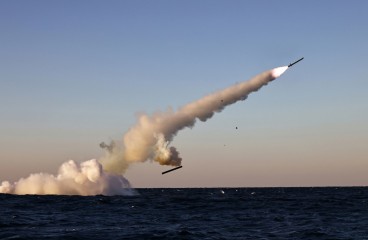
In the Caribbean, Trump’s aggression has come in actual acts of war. Under the guise of a literal war on drugs, the US military has destroyed five boats off the coast of Venezuela, killing 27 civilians to date. The administration has offered no evidence to support its claims that the targeted boats were trafficking narcotics and no legal justification for attacking the boats, even if those claims were true.
Other than frustration at surging migration, Latin America has not merited the same level of attention in Washington as the Middle East, Europe or Asia in recent history. That indifference has ended with the second Trump administration, but the nature of our renewed attention is not exactly what many of our neighbors might have hoped for.
Rather than a shared interest in prosperity and stability across the hemisphere, President Donald Trump seems intent on showcasing America’s power to promote his favored autocratic leaders and bring perceived enemies to heel. How these actions promote the interests of American citizens, however, remains unclear.
It feels like a flashback to the Monroe Doctrine, the foreign policy approach introduced by President James Monroe in 1823. He indicated that the United States would not interfere with internal affairs in Europe if European powers stopped meddling in the Western Hemisphere. The message was not exactly anti-colonial, but rather an articulation of spheres of influence, and this hemisphere, Monroe asserted, was for the United States to shape as it pleased.
Trump’s heavy-handed approach to our southern neighbors is built on the same assumption.
In Brazil, Trump has wielded America’s economic power ruthlessly in an effort to thwart accountability for Brazil’s former president, Jair Bolsonaro. In July, Trump imposed some of the highest tariffs in the world -- totaling 50 percent -- in retaliation for Bolsonaro’s prosecution for attempting to maintain power through a coup after losing reelection in 2022.
Trump has justified most of his tariffs as necessary to correct trade deficits, which he asserts are unfair. But the United States in fact has a trade surplus with Brazil. Trump made clear in an executive order that this one was specifically for Brazil’s “ political persecution” of his authoritarian ally. Brazil’s current president has thus far refused to cave to the pressure, strongly defending his country’s democratic process and rule of law.
In the Caribbean, Trump’s aggression has come in actual acts of war. Under the guise of a literal war on drugs, the US military has destroyed five boats off the coast of Venezuela, killing 27 civilians to date. The administration has offered no evidence to support its claims that the targeted boats were trafficking narcotics and no legal justification for attacking the boats, even if those claims were true.
Elizabeth Shackelford
Elizabeth Shackelford is a program director with the Institute for Global Affairs and a foreign affairs columnist for The Chicago Tribune. She also is a distinguished lecturer with the Dickey Center at Dartmouth College. The views expressed here are the writer's own. -- Ed.
(Tribune Content Agency)
khnews@heraldcorp.com