South Korea will launch a full-scale investigation into the legality of the arrests and the human rights conditions surrounding the detention of 317 Korean workers by US immigration authorities, the Foreign Ministry said Monday.
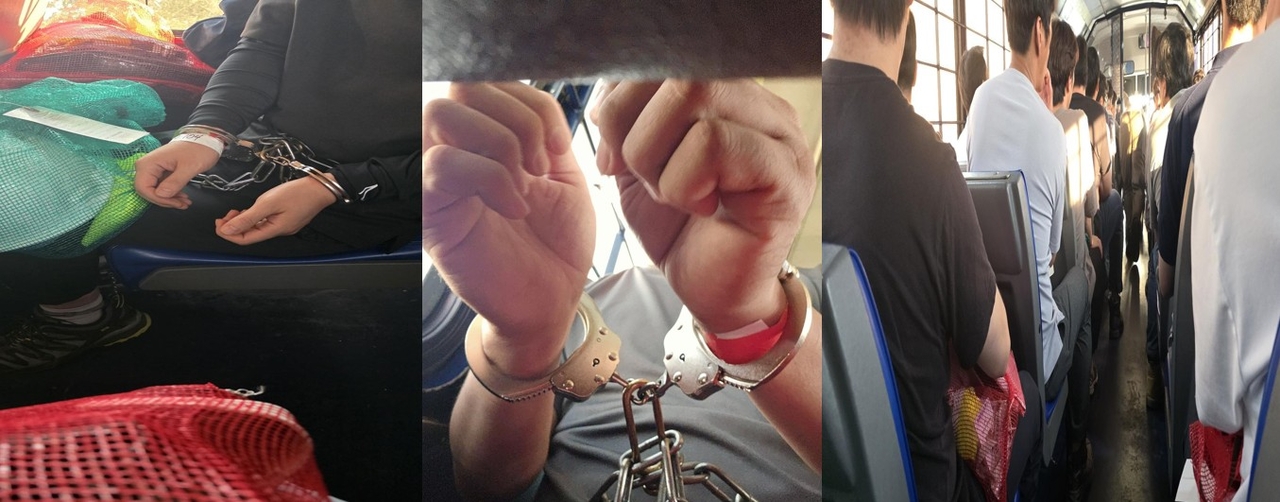
Since a total of 316 South Koreans returned home on Friday, testimonies have poured in alleging abusive conditions at detention facilities in Georgia, including human rights violations and racist remarks by US Immigration and Customs Enforcement officials directed at the Korean detainees.
“We still need fact-finding regarding what activities our workers were engaged in, the situation at the time of the raid, who among them were unjustly arrested and detained and what kinds of human rights violations occurred inside the detention facilities,” a Foreign Ministry official said on condition of anonymity during a closed-door briefing.
“We will continue holding meetings with LG Energy Solution and other related companies to gain a more accurate understanding of the facts, and if there are additional demands to be raised with the US side, we plan to raise them.”
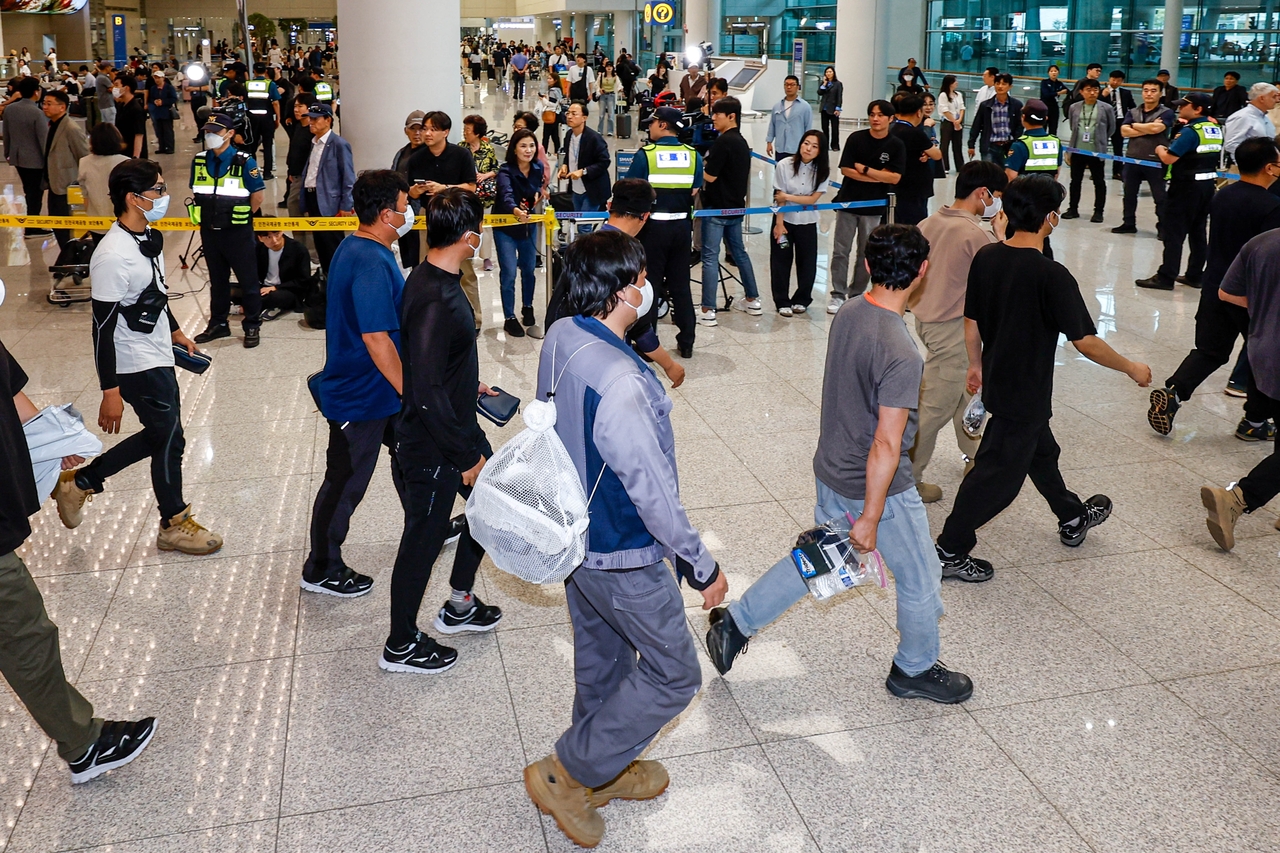
A total of 317 South Koreans — 307 men and 10 women — were among 475 people detained in the Sept. 4 immigration raid in Georgia at an electric vehicle battery plant being built by HL-GA Battery Co., a joint venture between Hyundai Motor Group and LG Energy Solution.
The men were held at an ICE detention facility in Folkston, southern Georgia, while the women — including one who was pregnant — were held at the nearby Stewart Detention Center.
Every Korean had returned home as of Friday, except for one who had applied for a green card and held a valid work permit. The worker remained in detention to proceed with immigration hearings after the others were released.
The Foreign Ministry official explained that negotiations between Seoul and Washington over the unprecedented mass detention of Korean workers took place intensively over just a few days — from Sept. 6 through Sept. 9 — leaving Seoul with limited bandwidth to fully grasp the situation.
Under these circumstances, the Foreign Ministry considers thorough fact-finding essential.
Most of the detained Korean workers had entered the US on nonimmigrant short-term business visas — either B-1 visas or Electronic System for Travel Authorization permits — which are meant for brief business visits rather than employment.
The official further explained that Seoul still seeks a full explanation as to why legally employed B-1 visa holders were detained.
Seoul intends to verify details concerning all 316 South Koreans, though the ministry cannot mandate South Korean companies to undergo a full-scale probe or set its timing, according to the official.
The official stressed that South Korean companies employing the workers should take the lead first in investigating the circumstances surrounding their employees.
“They went to the US as employees of these companies. They received visas as company workers and engaged in labor under that status. So, above all, we believe it is important for the companies to first understand the situation,” the official said.
“If necessary, our government will step in to hear their accounts and address any human rights violations that may have occurred.”
The official also underscored the importance of documentation to help prevent a recurrence of such incidents.
“Both South Korea and the US have come to share the recognition that this incident stems from structural problems. In that sense, we are considering turning it into an opportunity by documenting various related cases,” the official said.
“Although we do not yet know the appropriate format or channel, we will make sure to raise this issue in our consultations with the US.”
Working-level consultations are underway between the Foreign Ministry and US Embassy in Seoul to create a bilateral visa working group, in a step aimed at addressing what Seoul considers the root cause of the crisis, another Foreign Ministry official said on condition of anonymity.
Seoul also proposed establishing an informal consultative mechanism between ICE’s Atlanta Field Office and the Korean Consulate General in Atlanta to prevent similar incidents in the future, the first unnamed official explained, adding that ICE responded positively to the suggestion.
dagyumji@heraldcorp.com