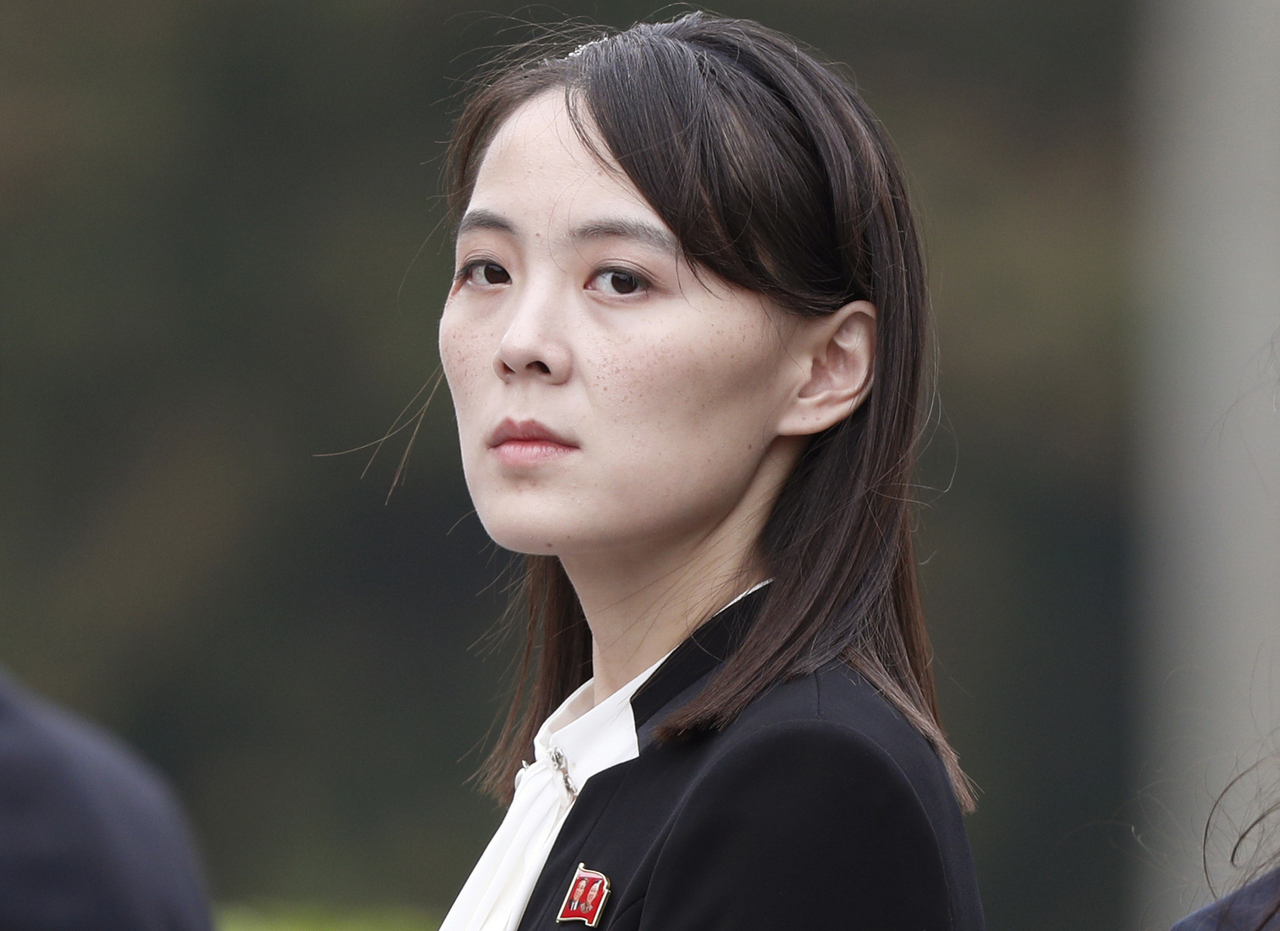
North Korean leader Kim Jong-un on Tuesday conveyed his inter-Korean policy plan through his sister Kim Yo-jong, who handed it down during a meeting with key Foreign Ministry officials while denouncing Seoul’s olive-branch offer as “deceptive,” state media reported Wednesday.
Seoul swiftly rejected the charge.
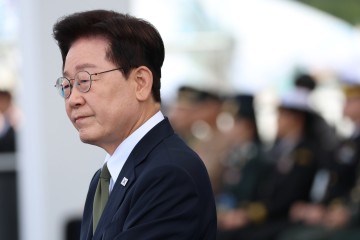
The presidential office said, "It is regrettable that a North Korean official distorts and misrepresents our sincere efforts." President Lee Jae Myung’s office also pledged to "move beyond an era of hostility and confrontation, restore mutual trust, and open a new era of peaceful coexistence and joint growth on the Korean Peninsula."
North Korea’s latest statement was part of a series of high-level denouncements of the Lee administration’s conciliatory inter-Korean policy, while pointing to the ongoing Ulchi Freedom Shield exercise between South Korea and the US as “hostility” toward North Korea.
Kim Yo-jong, vice department director of the Party Central Committee, “conveyed and assigned the head of state’s foreign policy plan at a consultative meeting with director generals of the Foreign Ministry,” state-run Korean Central News Agency reported Wednesday in a Korean-language dispatch.
At the same time, Kim “sharply criticized the essence of the Republic of Korea government’s deceptive ‘appeasement offensive’ and its two-faced nature,” KCNA added, referring to South Korea by its official name.
“Clarifying once again on this occasion, the ROK cannot become our state’s diplomatic counterpart,” Kim was quoted as saying in the KCNA report.
“The DPRK Foreign Ministry must duly seek well-targeted countermeasures regarding relations with the most hostile state and with the states that listen to its agitation, based on the conclusion of our head of state, who pointed out the true nature of the ROK," Kim said. DPRK stands for North Korea's official name, the Democratic People's Republic of Korea.
KCNA reported that Kim Yo-jong "analyzed Seoul’s behavior of pretending as if the ROK’s policy toward the DPRK is making a ‘rapid U-turn'" during the meeting.
Kim specifically dismissed President Lee’s Aug. 15 National Liberation Day speech, in which Lee pledged to respect the North Korean system, not to pursue unification by absorption and clarified South Korea's intent not to conduct any hostile acts.
Then, Kim denounced the Lee administration for “parroting” its predecessors’ rhetoric by describing the annual combined military exercises between South Korea and the United States as defensive.
“This is a passage that vividly reflects the double-faced character of the Seoul authorities, whose inside and outside are different," Kim was quoted as saying in the KCNA report. "Whoever in the ROK it may be, one must not forget the fact that they are America’s top-class running dog.”
Mounting pressure before Lee-Trump summit
Lim Eul-chul, a professor at Kyungnam University’s Institute for Far Eastern Studies in Seoul, assessed that “Kim Yo-jong’s core message is essentially a propaganda line.”
“The point is that as long as the South Korean government remains subordinate to the US, it cannot create a new history of sustainable and peaceful inter-Korean relations," Lim said.
“North Korea is seeking to push the Lee Jae Myung administration into making a more drastic shift from its hostile policy toward the North — including the suspension of ROK-US military exercises — by exerting maximum pressure on the administration.”
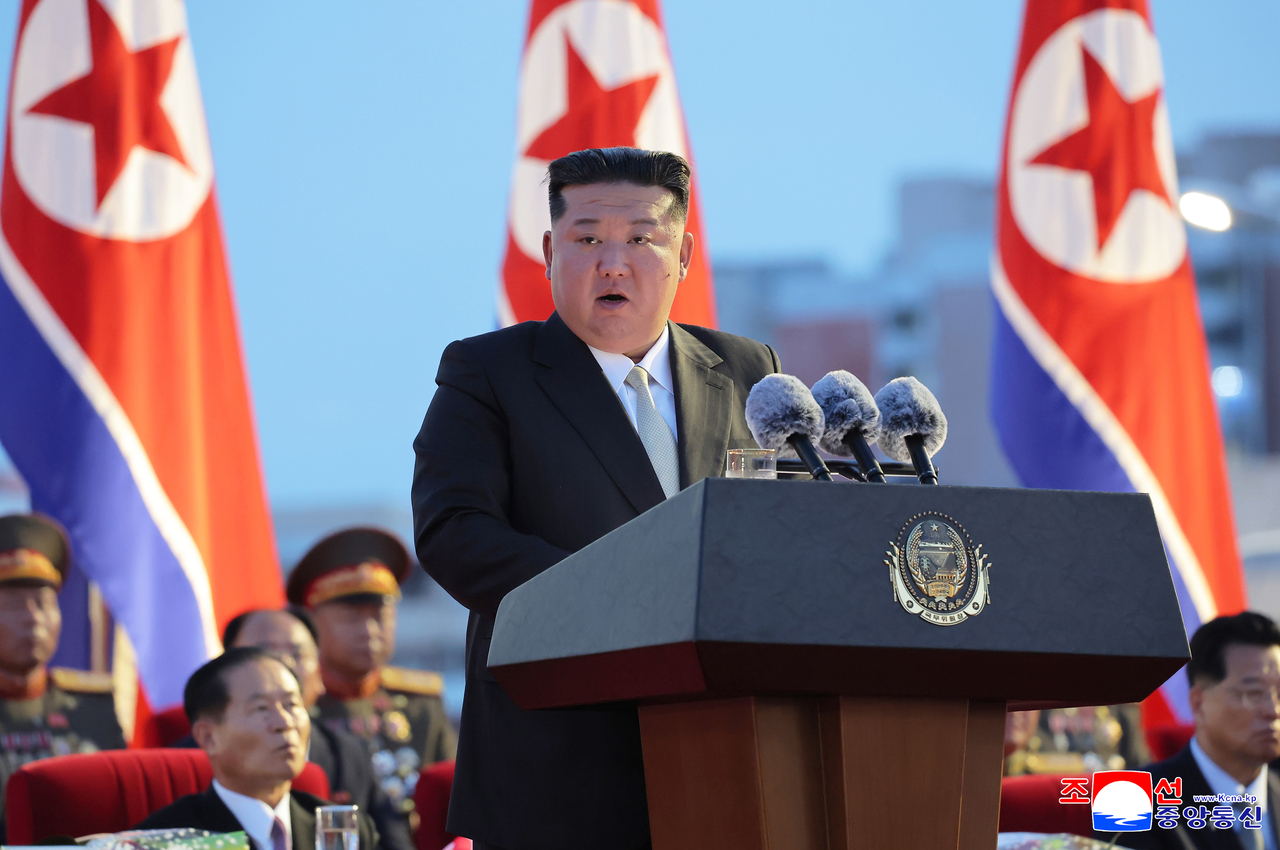
The latest remarks followed Kim Jong-un’s order — issued Monday, the first day of the Ulchi Freedom Shield regular exercises between South Korea and the US — calling for a rapid nuclear buildup and denouncing the combined drills.
On Aug. 14, Kim Yo-jong had similarly criticized the exercises, claiming that the Lee administration’s policy toward North Korea “has not changed in the least and cannot change.”
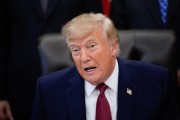
The string of denunciatory statements comes ahead of the first summit between President Lee and US President Donald Trump on Aug. 25 in Washington.
Lim further explained that the outcomes of the Lee-Trump summit “are expected to have a significant impact on inter-Korean relations.”
“The key question is whether the results will show weakened dependence on the US and greater diplomatic autonomy vis-a-vis the US,” Lim said. “However, North Korea is likely well aware of the structural constraints and dilemmas the Lee administration faces.”
dagyumji@heraldcorp.com