
Korea’s top shipbuilders are moving to build vessels in the United States and India to capture rising demand for naval and strategic shipbuilding, but their plans hinge on government support to avoid the same pitfalls that plagued earlier overseas ventures, experts said.
HD Hyundai, Korea’s largest shipbuilder, recently partnered with India’s state-run Cochin Shipyard, following tie-ups earlier this year with US builders Huntington Ingalls and Edison Chouest Offshore.
Hanwha Ocean, backed by an 800 billion won ($582 million) rights offering from parent company Hanwha Aerospace, is also pursuing further global expansion after acquiring the Philly Shipyard in Pennsylvania last year.
Both firms aim to secure early access to growing demand for naval and commercial vessels, as countries seek to collaborate with Korean shipbuilders to counter China’s expanding dominance in global shipbuilding.
The US aims to build a 250-ship commercial fleet under an April legislative proposal, with top Navy and trade officials meeting Korean executives this year. India has also set a goal to become the world’s fifth-largest shipbuilder by 2047, with high-profile delegates visiting Korean yards in December.
Major obstacles remain
Despite intentions to support Korean firms, however, the countries face major challenges in local shipbuilding, lacking the infrastructure and workforce for large-scale commercial or naval vessels.
The US builds only about five commercial vessels a year, compared with a global capacity of roughly 1,300. India accounts for less than 1 percent of the world’s shipbuilding output.
Such limited domestic industries mean the countries lack not only experienced shipbuilders, but also local suppliers of essential components, which can constitute around 60 percent of a vessel’s value.
“Even if they operate a yard overseas, the first challenge they will face is a lack of process know-how and skilled workers,” said Kim Myung-hyun, an ocean engineering professor at Pusan National University.
Industry sources warn that building up such capabilities can take decades, as seen in Korea and China.
“Ship manufacturing, where adapting to diverse orders is key, still relies heavily on skilled labor trained on-site,” said an industry veteran. “Even with a shared language and culture, training new workers takes time, so imagine how much harder it is overseas.”
Without detailed policy, haste can backfire
The US and India are stepping up shipbuilding support, with US President Donald Trump in March proposing tax breaks and a dedicated White House office, while India has pledged $2.2 billion to boost capacity.
Yet experts say policy details remain vague. “It’s unclear how much US naval demand will benefit Korean shipbuilders or what roles they would play even if they invest,” said Yang Jong-seo of the Korea Eximbank’s Overseas Economy Institute.
Other challenges, such as regulations, the role of Korean workers and local participation, still need to be worked out, potentially requiring formal government talks to avoid Korean firms being sidelined.
Doubts have grown since a Wall Street Journal report earlier this month on the US National Security Council cutting maritime coordination staff, raising concerns over Washington’s long-term commitment.
Memories of past failures also linger.
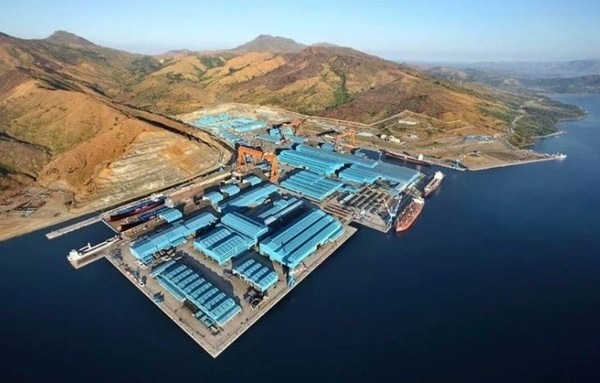
Korean shipbuilders lost billions in the 2010s through unsuccessful ventures in Romania, the Philippines and China. Daewoo Shipbuilding & Marine Engineering, now Hanwha Ocean, sold its Romanian yard at a steep loss. Hanjin Heavy Industries & Construction and STX Offshore & Shipbuilding, once ranked among the world’s top 10 shipbuilders, eventually collapsed.
“If shipbuilders rush to invest in local shipbuilding, the host countries may place more burdens on Korean firms, knowing they cannot easily withdraw. It’s essential to negotiate terms carefully, based on thorough study of local conditions and known risks,” Yang added.
forestjs@heraldcorp.com