New NATO defense spending target likely to raise pressure on Korea’s military budget
South Korea and NATO have agreed to establish a working-level consultative body to enhance cooperation in the defense industry as part of broader efforts to expand Seoul’s role in NATO’s next-generation capability initiatives, National Security Adviser Wi Sung-lac said Thursday after returning from the NATO summit.
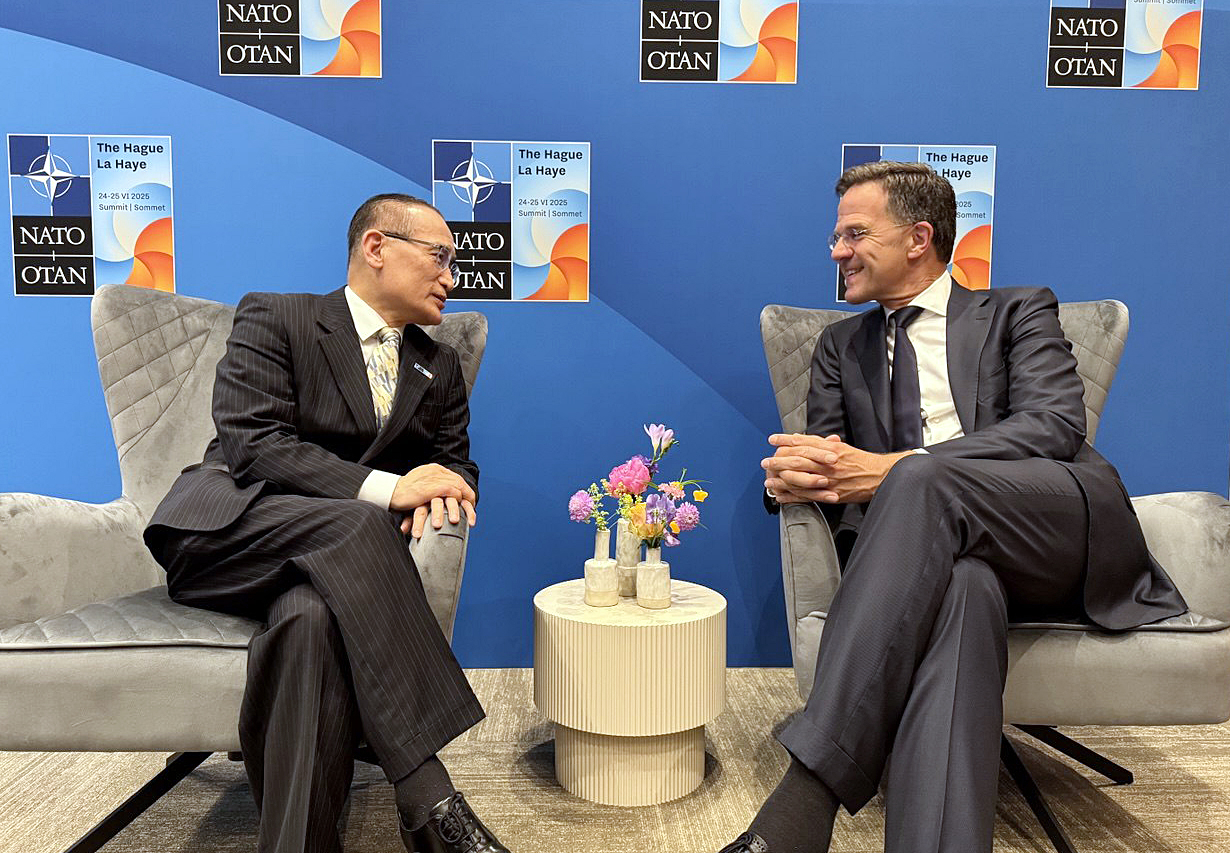
During his trip to The Hague, where he attended the NATO summit in place of President Lee Jae Myung, Wi held a bilateral meeting with NATO Secretary-General Mark Rutte on Wednesday.
"Attending the summit was more than a sign of Korea’s return to the international stage as a democratic country — it was an opportunity to showcase Korea’s renewed vigor across diplomacy, security, the economy and industry," Wi said during a press briefing at the presidential office in Yongsan-gu, central Seoul.
According to Wi, the two sides agreed to launch a director-general-level consultation body to facilitate regular dialogue on defense industry cooperation. They also discussed South Korea’s participation in NATO’s “High-Visibility Project,” a next-generation program focused on the joint development and procurement of advanced military capabilities.
Wi added that the discussions included concrete steps to enhance defense cooperation, particularly in areas such as military standardization for interoperability, defense supply chain resilience, and cutting-edge weapons development.
The move comes as NATO member states adopted a joint communique on Wednesday, agreeing to increase defense spending to 5 percent of gross domestic product by 2035.
The 5 percent goal reflects pressure from US President Donald Trump, who has demanded greater defense spending from NATO allies via both direct and indirect military expenditures — a stance that may also raise expectations for South Korea to increase its contributions.
While the US has not formally asked Seoul to increase its defense spending, pressure is expected to grow — particularly over the cost of deploying strategic US assets on the Korean Peninsula.
At a recent seminar in Seoul, Joseph Yun, charge d'affaires ad interim at the US Embassy, suggested expanding cost-sharing discussions beyond the current Special Measures Agreement — which covers military construction, logistics and personnel expenses for US forces stationed in Korea — to potentially include new categories such as strategic deployments.
In response, South Korea has emphasized that its defense budget — 2.34 percent of GDP, or 59.4 trillion won ($43.7 billion), in 2024 — will be guided by national priorities.
The Foreign Ministry, on June 20, stated that Seoul would determine its defense budget “in consideration of both domestic and external security environments as well as the government’s fiscal capacity.”
During his trip to The Hague, Wi said he held talks with US Secretary of State Marco Rubio, though the discussions did not cover defense cost-sharing.
flylikekite@heraldcorp.com