
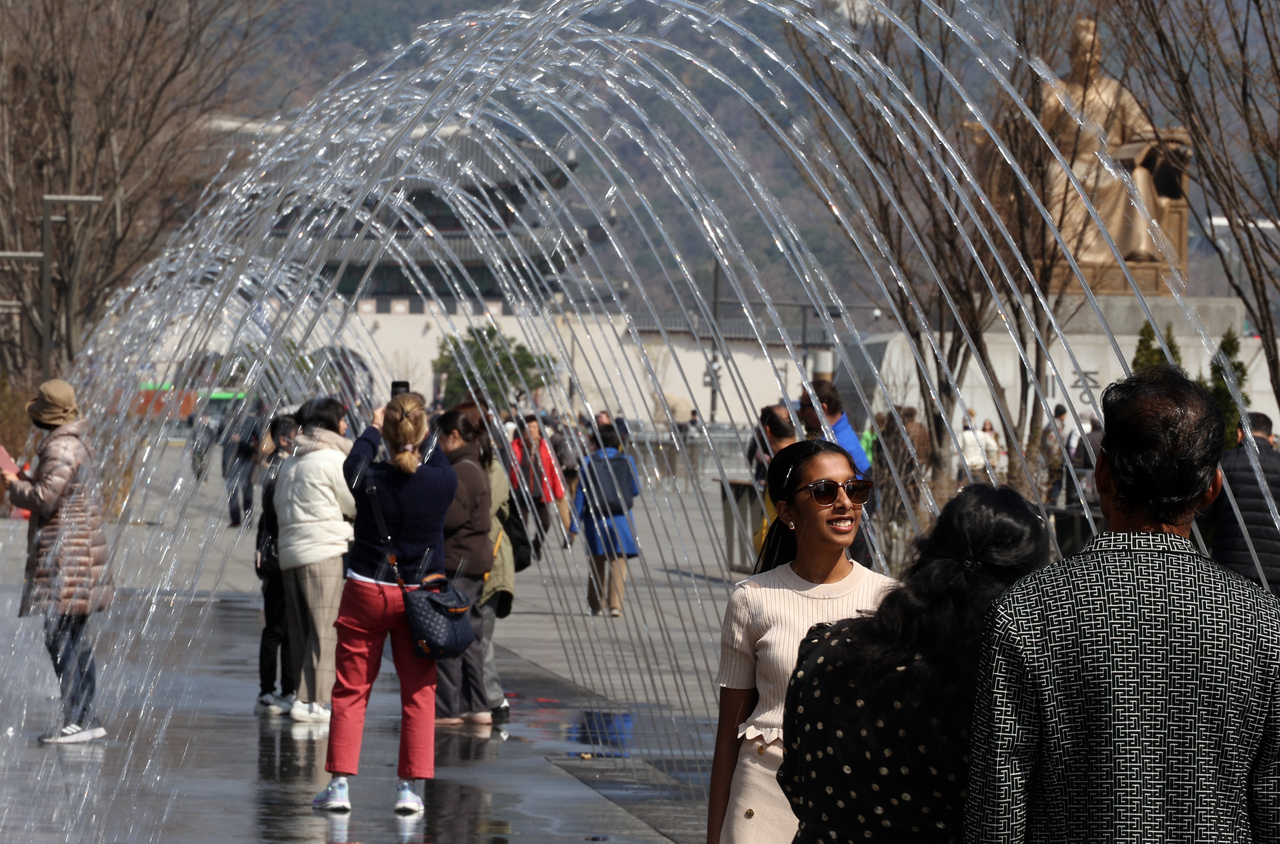
Those caught feeding the pigeons in major public areas such as Gwanghwamun Square, parks along the Hangang River and Seoul Forest will face an up to 1 million won ($672) fine starting in July, Seoul Metropolitan Government said Wednesday.
The new measure enforces a ban on feeding animals legally designated as "harmful wild animals" at 38 spots across the city. The ban is effective across the parks under direct management of the city government and all 11 official Hang River parks. Namsan Park, World Cup Park, Dream Forest in Gangbuk-gu, northern Seoul, and Seoul Grand Park -- a city-run park and zoo located in Gwacheon, Gyeonggi Province, but run by Seoul -- are among the major tourist spots included in this new measure.
A fine of 200,000 won will be imposed on the first offense, which jumps to 500,000 won the second time and 1 million won the third time.
Seoul said the new measure is a response to public complaints about the proliferation of pigeons, which have caused concerns ranging from hygiene issues due to feces and feathers to building erosion and other damage.
The feeding ban follows a January revision of the Wildlife Protection and Management Act that gave heads of regional governments the authority to take such action.
"Harmful wild animals" refers to species designated by the decree of the Ministry of Environment as inflicting harm on either human life or assets.
Pigeons, commonly found in metropolitan areas, along with the oriental turtle dove, are classified as a harmful species due to their excessive population in certain regions.
However, this designation does not permit unrestricted hunting or killing of these animals. Those wishing to hunt them must obtain government authorization for specific periods and areas designated for hunting.
minsikyoon@heraldcorp.com