President Yoon Suk Yeol's attorneys defended his Dec. 3 declaration of martial law, denied the charge that he led an insurrection, and argued that his detention was unlawful, during a pretrial heraing of his criminal trial at the Seoul Central District Court.
The hearing, which began at 10 a.m., saw prosecutors and lawyers for Yoon make arguments, file lists of evidence and witnesses, and set the schedule for his criminal trial, which will take place separately from his impeachment trial.
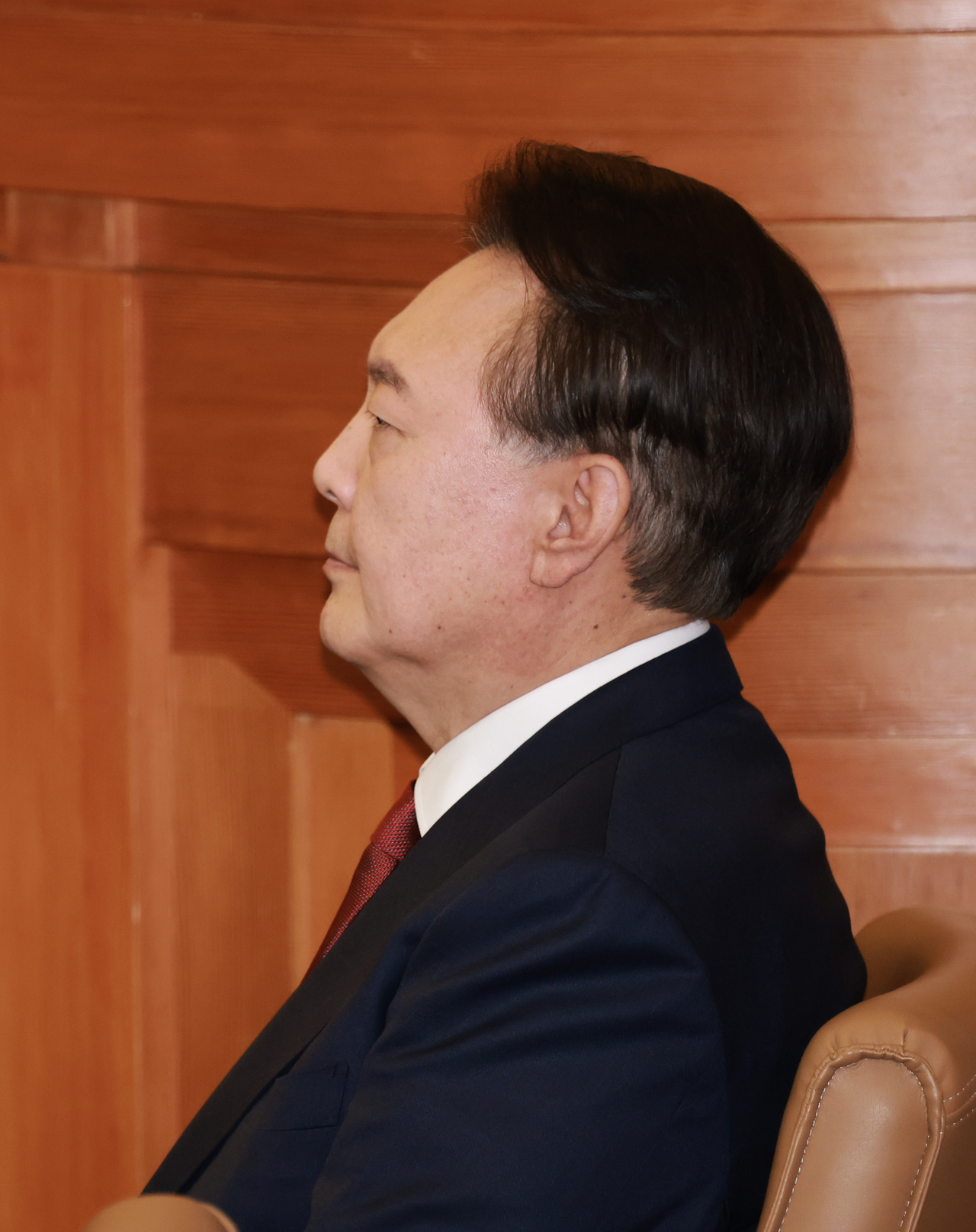
Though he was not required to be present, Yoon appeared for the 13-minute preliminary hearing and also for a subsequent one-hour hearing in which his team argued his request to be released from detention. Throughout the proceedings, however, Yoon remained silent.
During the preliminary hearing, Yoon's legal team did comment on the insurrection charges. However, during the hearing on his detention appeal, his lawyers once again asserted that the insurrection charges did not apply, and argued that Yoon's pretrial detention needs to end.
“The criminal records of the cases investigated by the prosecution are not completely reviewed. It is difficult to state whether we acknowledge the charges,” Yoon's legal representative said during the preliminary hearing, requesting three additional weeks to prepare for the impeached president's criminal trial.
The court approved his legal team’s request, and scheduled the second preparatory hearing for him on March 24.
Yoon's legal team made no remarks about whether his case needs to be reviewed separately or handled together by combining other cases related to Yoon's martial law decree, including those of former Defense Minister Kim Yong-hyun, suspended Korean National Police Agency Commissioner Cho Ji-ho and former Commissioner of the Seoul Metropolitan Police Agency Kim Bong-sik.
But the prosecutors said that the legal procedures of the individual cases need to be handled separately, as the defendants’ degrees of participation in the crime and their respective stances are different.
The prosecutors requested that the court conduct two or three hearings a week for a swift trial, considering the seriousness of the case.
In the hearing on Yoon's request for a revocation of his detention, Kim Hong-il, one of his lawyers, attempted to justify his martial law declaration.
“The emergency martial law declaration was made to appeal to the people about a crisis in which this administration and the judiciary were paralyzed due to the legislative dictatorship of the main opposition party. There was no intention to overthrow the state or state institutions by force,” Kim said. "There was absolutely no intention to create an emergency legislative body or destroy the parliamentary system under the Constitution."
The legal representatives also argued that the grounds for detention no longer exist.
After Yoon was formally arrested and taken into custody by the Corruption Investigation Office for High-ranking Officials on Jan. 15, the prosecutors chose to indict the president on Jan. 26. But the legal team insisted that, as the president's detention was only valid for 10 days, he should have been released beforehand.
However, the prosecutors said the claims contradict the provisions of the Criminal Act and the precedents of the court that issued the arrest warrant.
The prosecution argued that the initial 10-day detention period was extended to Jan. 27 due to the time spent on reviewing Yoon’s request concerning the legality of his detention on Jan. 16 and a hearing prior to Yoon’s formal arrest on Jan. 18.
The court requested both the prosecution and Yoon’s legal representatives to submit a separate document to deliver additional opinions about the detention period within 10 days.
“It is difficult to say when the decision will be made on detention revocation, but we will make our decision after careful consideration,” the court said.
Many expected the president to deliver arguments over the legality of his detention, but Yoon remained silent.
Yoon Kab-keun, another of Yoon’s legal representatives, told the reporters that there was nothing specific for the president to address as the lawyers had fully made their arguments.
Unlike the impeachment trial, Yoon's criminal trial was not televised.
Yoon is the first sitting South Korean president to go on trial for criminal charges, though he is not the first president to be criminally charged.
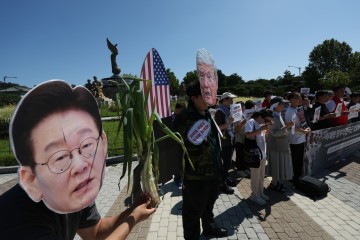
Meanwhile, some 500 protestors held a pro-Yoon rally near the Seoul Central District Court in the early hours of Thursday.
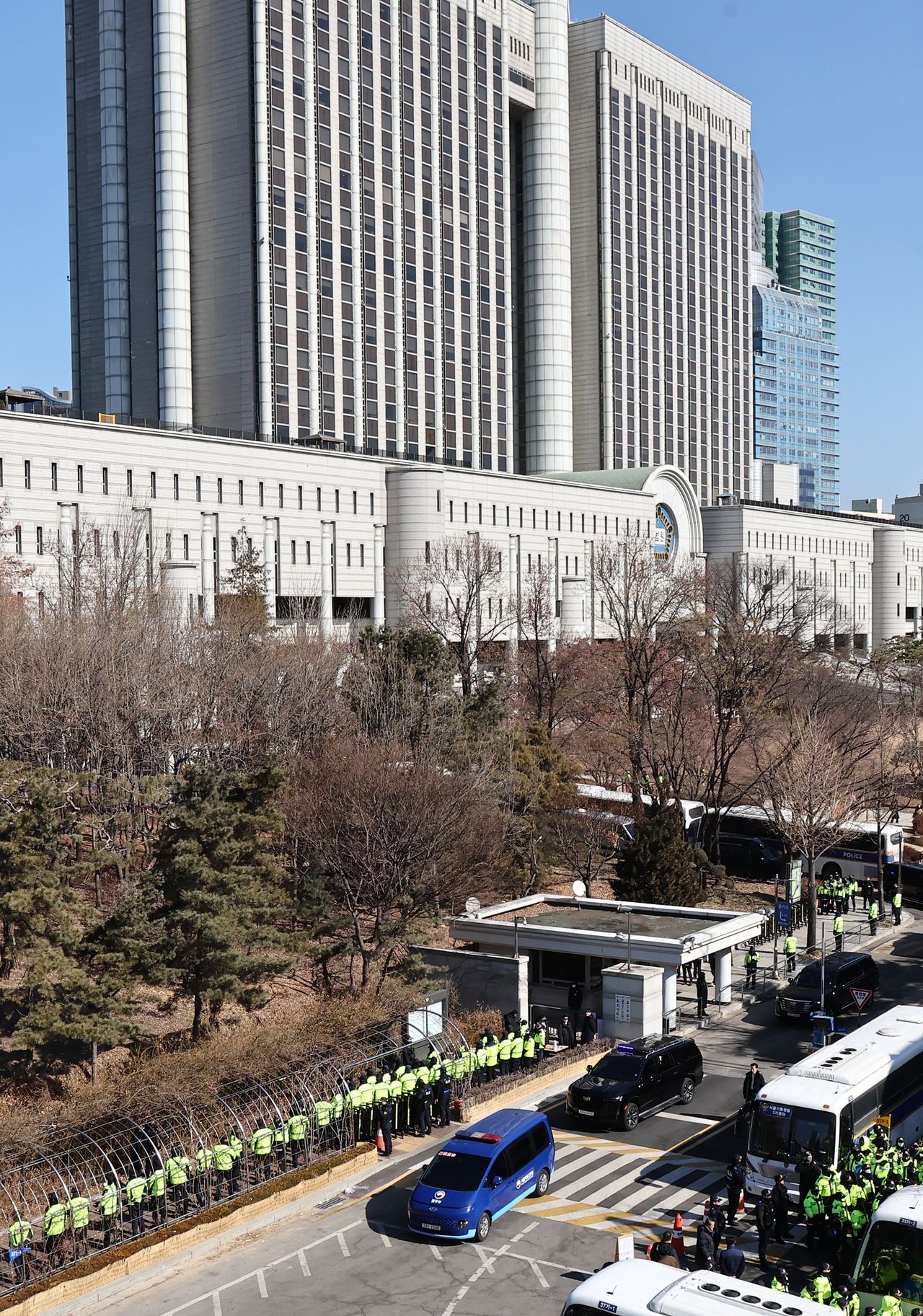
His supporters chanted, “President Yoon Suk Yeol” and “Release the president,” until 11:30 a.m., when the convoy of vehicles carrying Yoon left the Seoul Central District Court and headed to the 10th hearing of his impeachment trial held at the Constitutional Court later in the day.
The police mobilized some 3,200 personnel around the court for crowd control. It installed barriers and made barricades with police buses to maintain order as well. No injuries or physical clashes occurred, according to the police.
sj_lee@heraldcorp.com