
Seoul-Manila FTA gives Korean duo price advantage over Japanese rivals

With South Korea’s bilateral free trade agreement with the Philippines slated to take effect next week, Hyundai Motor Group is poised to challenge its Japanese competitors currently dominating Southeast Asian markets.
Under the free trade deal, Korea and the Philippines will remove tariffs on 94.8 percent and 96.5 percent of imported products, respectively. Among the key trade items, the 5 percent tariff on Korean-made cargo trucks and passenger vehicles powered by internal combustion engines will be lifted immediately. Tariffs on eco-friendly vehicles, such as electric and hybrid cars, are set to be phased out over the next five years.
Industry watchers indicate that the closer economic ties between the two countries could offer a boon for Hyundai Motor Group to expand its presence in the Philippines, potentially shifting the competitive landscape in the Southeast Asian markets overall.
“Although Hyundai Motor Group’s sales volume is relatively small in the Philippines (compared to other emerging markets), the tariff removal might give growth momentum for the company there,” said a source familiar with the matter, on condition of anonymity.
According to market tracker CarGuide.PH, Japanese automakers held six of the top seven sales positions in the Philippines from January to September this year, with Ford Motor Co. being the only non-Japanese brand among the top sellers. Toyota led the market with 159,088 vehicles sold, gobbling up 46.2 percent of the market share, followed by Mitsubishi's 19.2 percent. Nissan, Suzuki, Isuzu and Honda combined for 17.3 percent of the market share, with 59,487 vehicles sold.
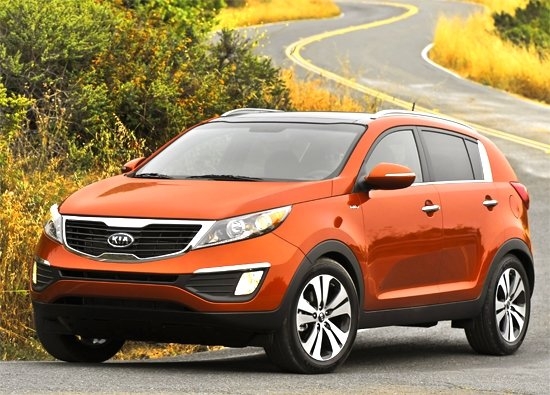
During the same period, Hyundai Motor and its smaller sibling Kia secured the eighth and 10th positions, respectively, selling 8,690 and 4,381 vehicles. The two companies captured a combined market share of 3.8 percent. Hyundai Motor Group said Hyundai’s bestselling models included the Stargazer minivan, Staria minivan and Custo minivan, while Kia’s leading vehicles were the Yi Pao SUV, Pegas sedan and Carnival SUV.
If Hyundai Motor cuts the price of its bestselling vehicles by an amount equivalent to the 5 percent tariff, it could gain a price advantage over competing Japanese car models within the same segment. For instance, the company can reduce the price of the Stargazer with a 1.5-liter gasoline engine, which starts at 1.07 million Philippine pesos ($18,400), to approximately 1 million pesos, undercutting the rival Toyota Avanza minivan with a similar 1.5-liter gasoline option, which is priced at 1.06 million pesos.
“The Southeast Asian automotive market has long been dominated by Japanese companies, which established their foothold early on in the 1960s, posing challenges for Hyundai Motor in its efforts to penetrate the market,” said Lee Hang-koo, head of the Jeonbuk Institute of Automotive Convergence Technology.
“However, upon the repeal of tariffs in the Philippines, Hyundai could actively expand its sales in the Southeast Asian regions. This strategy could help diversify Hyundai’s sales structure, which has heavily relied on North American and European markets, by tapping into emerging markets.”
In a strategic move to accelerate its operations in Southeast Asia, Hyundai Motor Co. announced last month its plan to invest 670 billion won ($458 million) in ramping up production in Malaysia from 2025 to 2030. The company also recently vowed to boost exports from its joint venture in Beijing to emerging markets, including Southeast Asia, by 100,000 units next year.
In 2022, the auto giant completed construction of its auto manufacturing plant in Indonesia, marking its first such facility in the Southeast Asian region, with a planned $1.5 billion investment by 2030. As a major export hub, the plant, with an annual capacity of more than 100,000 vehicles, produces the Creta SUV, Stargazer minivan, Santa Fe SUV, Ioniq 5 electric SUV and Kona electric. These vehicles are exported to over 70 countries, including Southeast Asia, the Middle East, Africa and Latin America.
hyejin2@heraldcorp.com